

Kids' Access to Primary Care Act of 2023 This bill modifies payments for Medicaid primary care services. Specifically, the bill applies a Medicare payment rate floor to Medicaid primary care services that are provided after the date of enactment of the bill and extends the payment rate to additional types of practitioners (e.g., obstetricians). The Centers for Medicare & Medicaid Services must conduct a study on the number of children enrolled in Medicaid, the number of providers receiving payment for primary care services, and associated payment rates before and after the bill's implementation.
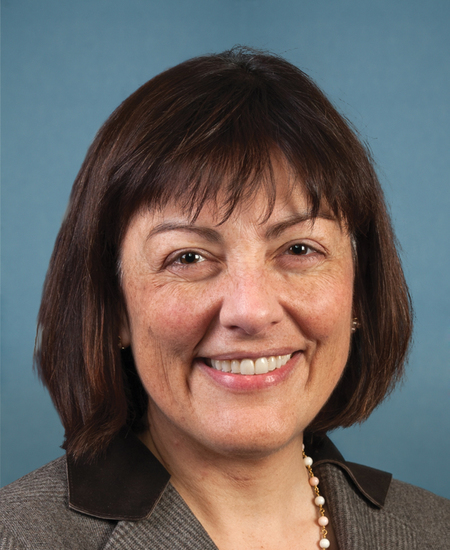
Rep. Suzan K. DelBene
Sponsored bills
Maddy summaryThis bill authorizes a single Congressional Gold Medal to honor all U.S. Army Dustoff crews who served during the Vietnam War (1962-1973). It recognizes their critical role in evacuating nearly 900,000 wounded personnel, including U.S., South Vietnamese, and allied forces, under extreme combat conditions. The medal, designed with input from the Secretary of Defense, will be presented to the U.S. Army Medical Department Museum for permanent display. Duplicate bronze medals may be sold to cover costs, but the primary action is the commemorative recognition of these crews' service.
Maddy summaryHR 1002, the "Saving the Civil Service Act," restricts how federal government positions can be moved between competitive hiring (where most federal jobs are filled through merit-based exams) and non-competitive "excepted service" positions. The bill prevents agencies from moving positions out of the competitive service unless they fit specific schedules in place as of September 2020, requires Office of Personnel Management (OPM) approval for certain transfers, and mandates employee consent for any position transfer between service types. It also limits the number of employees that can be moved from competitive to excepted service during a presidential term - capping it at 1% of an agency's workforce or five employees, whichever is greater. The bill directly affects federal employees and agencies by making it harder to shift positions out of the competitive hiring system without strict oversight.
Maddy summaryHR 987 authorizes the U.S. Mint to produce commemorative coins honoring Golda Meir, Israel's first female Prime Minister, and the 75th anniversary of U.S.-Israel relations. It specifies three coin types: $5 gold coins (max 50,000), $1 silver coins (max 400,000), and half-dollar clad coins (max 750,000), with detailed weight and composition requirements. All coins will include Golda Meir's image, her name, and commemorative inscriptions, and will be sold during 2026. A surcharge ($35 for $5 coins, $10 for $1 coins, $5 for half-dollars) will be paid to the American Friends of Kiryat Sanz Laniado Hospital Inc. to support its hospital operations.
Maddy summaryHR 782 prohibits state officials from interfering with abortion services provided across state lines. It specifically blocks states from restricting: (1) out-of-state patients traveling for legal abortions, (2) providers offering such services, (3) assistance for travel or care, or (4) the interstate shipment of FDA-approved abortion drugs. The bill allows the federal Attorney General or affected individuals to sue violators for injunctions, damages, and attorney fees. It directly affects patients seeking care in other states, healthcare providers, transportation services, and pharmacies handling FDA-approved abortion medications. The law focuses on preventing state laws from blocking access to legally permitted abortion services.
Maddy summaryHR 927, the Supreme Court Ethics Act, establishes new ethics rules and oversight for Supreme Court justices. It requires the Judicial Conference to create a binding code of conduct within one year and mandates the appointment of an Ethics Investigations Counsel to receive public complaints, investigate potential violations, and issue annual public reports. The bill also requires justices to publicly disclose their reasons for recusing themselves or denying recusal motions in cases. These provisions directly affect Supreme Court justices by creating a formal process for handling ethics concerns and increasing transparency around their conduct.
Maddy summaryThis bill makes significant changes to US corporate tax rules to prevent tax avoidance through foreign operations. It requires corporations to calculate foreign income tax liabilities country-by-country, limits interest deductions for large international financial reporting groups, and modifies rules for "inverted corporations" (where US companies move tax residence abroad). The bill also creates new rules treating foreign corporations managed primarily in the US as domestic corporations for tax purposes. These changes aim to close tax loopholes related to outsourcing and foreign tax planning.
Maddy summaryHR 932 repeals two key congressional authorizations for military force in Iraq: the 1991 resolution (Public Law 102-1) and the 2002 resolution (Public Law 107-243). This bill removes the legal foundation that has permitted U.S. military operations in Iraq for over two decades. It directly affects the executive branch’s authority to conduct military actions under these specific resolutions, requiring future operations to seek new congressional approval. The repeal is a procedural change that would end the statutory basis for ongoing military engagement in Iraq without altering other laws or policies.
Presidential Tax Transparency Act This bill requires the President, the Vice President, and certain candidates for President and Vice President to disclose federal income tax returns for the ten most recent taxable years. The returns must be disclosed to the Federal Election Commission (FEC), which must make the returns publicly available after redacting information that is necessary for protecting against identity theft, such as Social Security numbers. If the tax returns are not disclosed to the FEC as required by this bill, the Internal Revenue Service must provide the returns to the FEC upon receiving a written request from the FEC.
Maddy summaryHRES 110 is a non-binding resolution supporting the designation of "Career and Technical Education (CTE) Month" to recognize CTE's role in preparing students for high-demand careers. It encourages educators, school counselors, and parents to promote CTE as a respected pathway for students seeking credentials in fields like healthcare, technology, and skilled trades. The resolution highlights CTE's benefits, including reducing high school dropout rates and aligning education with workforce needs, without creating new funding or policy changes. It directly affects schools, educators, and students by affirming CTE's value in workforce development.