

Maddy summaryThe Advancing Gun Safety Technology Act (HR 6697) creates a federal pilot program to fund small businesses developing gun safety technology. It directly affects small businesses (under 500 employees) that create devices like smart guns, childproof features, or personalized locking systems designed to prevent accidental or unauthorized use of firearms. The program allocates $10 million for fiscal year 2024 to award 3-5 grants, requiring grantees to report progress on building prototypes, testing reliability, planning production, and preparing for commercialization. The bill focuses on supporting the development and market readiness of safety technology, without mandating its use or altering gun ownership laws.
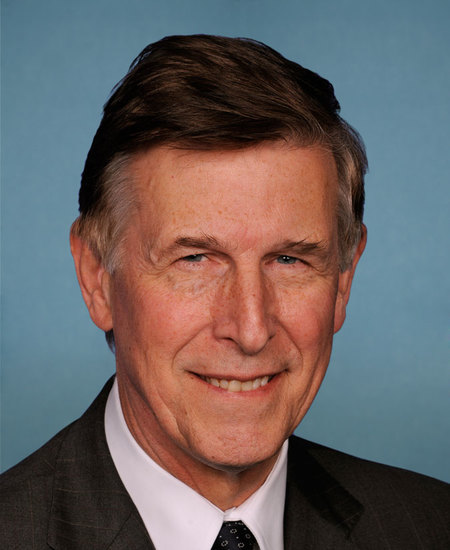
Rep. Donald S. Beyer, Jr.
Sponsored bills
Maddy summaryHR 6654, the Farewell to Foam Act of 2023, bans the sale and distribution of expanded polystyrene foam food containers, packaging peanuts ("loose fill"), and coolers starting January 1, 2026. It directly affects food service providers (like restaurants and schools), manufacturers, distributors, and retailers who sell these foam products. The bill prohibits selling these items, with enforcement starting with a written warning for first violations, followed by escalating civil penalties ($250 for a second violation, up to $1,000 for fourth+ violations), while exempting small businesses with low annual revenue from repeated penalties within a 7-day period.
Maddy summaryThe Clean Competition Act establishes a carbon intensity charge on covered primary goods produced domestically or imported into the United States, affecting companies in specific industries including petroleum refining, steel, cement, and chemical manufacturing. The charge is calculated based on a facility's carbon intensity (greenhouse gas emissions per unit of production) compared to industry averages, with the charge amount determined by how much a facility's carbon intensity exceeds a percentage of the industry average. Domestic producers and importers of covered primary goods will pay charges calculated using an annual carbon price that increases with inflation, with exemptions for goods from least developed countries that produce at least 3% of global exports of that good. The bill also includes a rebate program for exports of covered primary goods and establishes a grant program to help companies invest in technologies that reduce carbon intensity.
Maddy summaryThis bill creates a presumption that certain health conditions are linked to military firefighting service. It applies to veterans who served at least five years in a firefighting military role (e.g., fire suppression specialists) and develop specific illnesses within 15 years of leaving service. The covered conditions include heart disease, lung disease, and multiple cancers (like leukemia, lymphoma, and lung cancer), with the VA automatically presuming service connection for these if they meet the 10% disability threshold. This simplifies benefit claims by shifting the burden of proof to the VA, rather than requiring veterans to prove their illness was caused by service. The law affects military firefighters who served in designated fire-related roles and seek VA disability benefits for qualifying conditions.
Maddy summaryHRES 793 is a resolution passed by the U.S. House of Representatives calling on Hamas to immediately release all 199 hostages taken during Hamas' October 7, 2023 attack on Israel. The resolution condemns Hamas for the attack, the taking of hostages, and threats against hostages, while stating that holding hostages violates international humanitarian law under the Geneva Conventions. It demands the immediate release of all hostages and expresses sympathy for victims and their families. As a symbolic resolution, it does not create legal obligations but formally expresses the House's position.
Maddy summaryHR 6451, the Mental Health Justice Act of 2023, provides $250 million in federal grants to states, tribes, and localities to hire mental health professionals as first responders for specific emergencies. It directs these professionals to replace police in situations involving mental health crises, substance use, or intellectual/developmental disabilities - such as when a 911 caller describes a mental health emergency or a first responder identifies someone needing mental health support. The bill requires grantees to train responders in de-escalation techniques, link individuals to community-based services (not incarceration), and report on outcomes like reduced arrests or use of force. It also mandates data collection on demographics and prevents funneling people into institutional settings, with annual reports to Congress on program effectiveness.
Maddy summaryHRES 881 is a symbolic House resolution commemorating the 50th anniversary of the Endangered Species Act of 1973. It honors the Act's role in preventing the extinction of species like the bald eagle and humpback whale, citing its success in protecting 99% of listed species. The resolution does not create new legal requirements or affect any specific group, as it serves solely as a ceremonial recognition of the Act's conservation achievements.
Maddy summaryThe UNLEADED Act requires the FAA to create an education program about unleaded aviation gasoline for pilots, flight schools, airport operators, maintenance technicians, and fixed-base operators. The program must publish online information on fuel compatibility, availability, required certifications, safety, and federal incentives, plus maintain a real-time tracking system for authorized unleaded fuels. The FAA must also coordinate annual training for fixed-base operator staff on fuel handling and safety. The program runs until December 31, 2030, with annual updates provided to Congress on progress. This directly affects general aviation users transitioning from leaded 100LL fuel to new unleaded alternatives.
Maddy summaryThis bill closes loopholes that allow domestic violence abusers to keep or buy firearms while under restraining orders. It requires courts to issue "firearm surrender orders" when domestic violence restraining orders are issued, mandating that abusers surrender all firearms within 24 hours. The law expands the definition of "intimate partner" to include dating partners and requires law enforcement to remove firearms if abusers don't comply. It also creates a federal grant program to help states implement these policies, directly affecting domestic violence survivors and abusers subject to restraining orders.
Maddy summaryHRES 844 is a symbolic resolution recognizing the religious and historical significance of Diwali, the festival of lights. It specifically acknowledges how Diwali is celebrated by Hindus, Sikhs, and Jains in the U.S., including its meaning for Sikhs (commemorating Guru Hargobind's release) and Jains (marking Lord Mahavira's Nirvana). The resolution expresses respect for Indian-American communities and highlights Diwali's role as a celebration of light over darkness and good over evil. It also affirms religious diversity in India and the U.S. and supports U.S.-India relations. As a non-binding resolution, it does not create legal obligations or affect any policies.