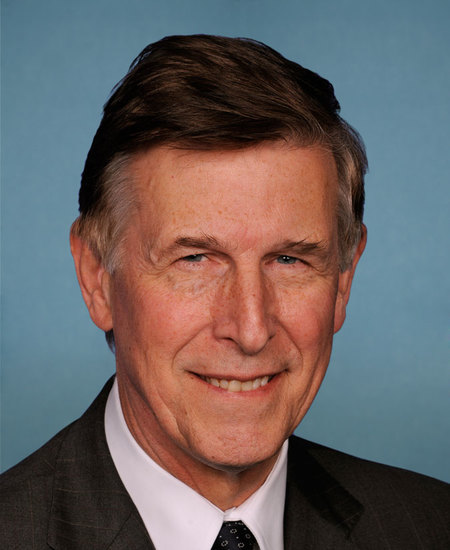
Photo of Donald S. Beyer, Jr.
D United States House · District 8 · Virginia On the 2026 ballot

Rep. Donald S. Beyer, Jr.

Compare
Total votes
2,837
all sessions
Attendance
98%
54 missed
Near the chamber average
With party
98%
of cast votes
Near the chamber average
Bipartisan score
1%
crosses aisle rarely
Near the chamber average
Sponsored
1,315
bills & resolutions
Near the chamber average
Committees
4
assignments
1,315 bills and resolutions

Sponsored bills

Total
1,315
Primary
159
Co-sponsor
1,156
This page
1,315
matching current filters
Co-sponsor HR 7127
In committee · United States House · Co-sponsor
FAIR Act

Maddy summaryHR 7127, the FAIR Act, establishes pay adjustments for federal employees in 2025. It increases base pay by 4% for most federal workers under statutory pay systems and for "prevailing rate" employees (like those in specific geographic areas), while raising locality pay rates by 3.4%. The bill directly affects all federal employees receiving pay under these systems, as it modifies their 2025 salary calculations. These changes are based on statutory formulas under Title 5 of the U.S. Code, with no new policy mechanisms beyond the specified percentage increases. The adjustments apply to pay rates in effect as of the end of fiscal year 2024.

In committee Jan 30, 2024 1 co-sponsor
Primary HR 7106
In committee · United States House · Lead sponsor
National Oceans and Coastal Security Improvements Act of 2024

Maddy summaryThis bill establishes a National Oceans and Coastal Security Fund with $200 million annually from 2025-2029 to support coastal protection and restoration projects. It allocates funds to coastal states, coastal Indian Tribes, and Native Hawaiian organizations through specific formulas based on shoreline miles, population, and other factors. Eligible uses include protecting infrastructure from climate impacts, restoring ecosystems that capture "blue carbon" (carbon stored in coastal ecosystems), and supporting community resilience planning. The bill prohibits using funds for litigation or lobbying and requires annual reporting on funded projects and blue carbon benefits.

In committee Jan 29, 2024 0 co-sponsors
Co-sponsor HR 6747
In committee · United States House · Co-sponsor
Clean Electricity and Transmission Acceleration Act of 2023

Maddy summary# Summary of the Clean Electricity and Transmission Acceleration Act of 2023 This comprehensive legislation establishes significant reforms across environmental policy, energy infrastructure, and community engagement frameworks. Key provisions include: 1. **Environmental Justice Framework**: - Creates an Office of Environmental Justice and External Civil Rights at EPA - Establishes a White House Environmental Justice Interagency Council - Prohibits disparate impact discrimination under Title VI of the Civil Rights Act - Requires community impact reports for Federal actions affecting environmental justice communities 2. **NEPA Reforms**: - Mandates 90-day public comment periods for environmental justice communities - Requires translation of documents into languages spoken by 5%+ of affected communities - Requires assessment of cumulative impacts, including historical pollution - Requires climate change impact assessments using social cost of carbon - Establishes searchable digital archives of NEPA documents 3. **Community Engagement Requirements**: - Creates "Senior Community Engagement Officers" and "Tribal Community Engagement Officers" at all federal agencies - Requires community benefits agreements for major projects - Establishes grants for capacity building in environmental justice communities - Creates an E-NEPA permitting portal for public access to documents 4. **Energy Policy Provisions**: - Includes reforms for FERC (Federal Energy Regulatory Commission) environmental justice liaison - Establishes requirements for intervenor funding at FERC - Contains provisions for transmission planning and infrastructure 5. **Tribal Consultation**: - Strengthens tribal consultation requirements for projects affecting tribal lands - Requires government-to-government relationships with tribal nations The legislation represents a significant shift toward integrating environmental justice considerations throughout the federal permitting and review process, with specific requirements for meaningful community engagement, transparency, and consideration of cumulative impacts on vulnerable populations. It also establishes new funding mechanisms and administrative structures to support these environmental justice goals.

In committee Jan 25, 2024 1 co-sponsor
Co-sponsor HR 7056
In committee · United States House · Co-sponsor
Access to Family Building Act

Maddy summaryHR 7056, the Access to Family Building Act, establishes federal rights for individuals to access assisted reproductive technology (ART) like IVF without unreasonable restrictions, directly affecting patients seeking fertility treatments and health care providers offering ART services. The bill prohibits states from imposing limitations on ART that are more burdensome than those for comparable medical procedures, fail to advance safety, or unduly restrict access, while allowing health and safety regulations that are necessary and least restrictive. It creates federal enforcement mechanisms, including lawsuits by the Attorney General or affected individuals to challenge violating state laws, and preempts conflicting state regulations. The bill explicitly preserves state authority over health/safety regulations and does not alter existing state insurance coverage laws for ART.

In committee Jan 19, 2024 1 co-sponsor
Primary HR 5966
In committee · United States House · Lead sponsor
Off-Chain Digital Commodity Transaction Reporting Act of 2023

Maddy summaryThis bill requires reporting of digital commodity transactions (both on-chain and off-chain) to designated "digital asset repositories of transactions" (DARTs). It mandates that sellers deliver digital commodities to buyers within 24 hours of a transaction, with specific requirements for recording transfers on public ledgers or through trading platforms. The bill establishes a regulatory framework for DARTs, including data collection standards, confidentiality requirements, and oversight by the Commodity Futures Trading Commission. It directly affects digital commodity traders, exchanges, and the newly established DARTs that will manage transaction data. The bill also creates specific requirements for off-chain transactions, defined as contracts not recorded on public ledgers within 24 hours of execution.

In committee Jan 18, 2024 0 co-sponsors
Primary HR 5745
In committee · United States House · Lead sponsor
Digital Asset Market Structure and Investor Protection Act

Digital Asset Market Structure and Investor Protection Act This bill generally addresses the regulatory treatment of digital assets and digital asset securities. The bill grants the Commodities Futures Trading Commission authority over digital assets , which (1) are created electronically or digitally through software code; (2) are programmed with rules that govern the creation, supply, ownership, use, and transfer of the asset; (3) have a secure transaction history; and (4) are capable of being transferred through a decentralized method without an intermediate custodian. Additionally, the bill grants the Securities and Exchange Commission authority over the regulation of digital asset securities , digital assets that provide the holder with (1) equity or debt interest in the issuer, (2) rights to certain payments from the issuer, (3) voting rights in the major corporate actions of the issuer, or (4) liquidation rights in the event of the issuer's liquidation. Digital assets and digital asset securities are subject to the Bank Secrecy Act for anti-money laundering, reporting, and recordkeeping purposes. The Board of Governors of the Federal Reserve System may issue digital currency. However, digital assets, digital asset securities, and fiat-based stablecoins (a digital asset pegged to the U.S. dollar or other fiat currency) are not U.S. legal tender. Digital asset fiat-based stablecoins must be registered with and approved by the Department of the Treasury. Digital assets shall not be covered by the Federal Deposit Insurance Corporation and the National Credit Union Administration depository insurance. The Financial Crimes Enforcement Network must issue rules regarding the use of anonymizing services and other anonymity-enhanced convertible virtual currency services.


In committee Jan 17, 2024 0 co-sponsors
Co-sponsor HRES 963
In committee · United States House · Co-sponsor
Supporting the goals and ideals of Korean American Day.

Maddy summaryHRES 963 is a symbolic resolution honoring Korean American Day, which commemorates the January 13, 1903 arrival of the first large wave of Korean immigrants to the U.S. It recognizes Korean Americans' contributions to U.S. society, including their economic, cultural, and military impacts, and marks the 121st anniversary of this historic migration. The resolution urges all Americans to observe Korean American Day to appreciate these contributions. As a commemorative measure, it does not create new policies or affect specific groups beyond this ceremonial recognition.

In committee Jan 12, 2024 1 co-sponsor
Co-sponsor HR 6936
In committee · United States House · Co-sponsor
Federal Artificial Intelligence Risk Management Act of 2024

Maddy summaryHR 6936, the Federal Artificial Intelligence Risk Management Act of 2024, requires U.S. federal agencies to adopt the National Institute of Standards and Technology's (NIST) AI Risk Management Framework (AI RMF) for all agency use and procurement of artificial intelligence systems. It mandates agencies to integrate the framework into AI development, procurement, and use within 180 days of Office of Management and Budget (OMB) guidance, including requiring AI vendors to attest to meeting specific risk standards before contracts are awarded. The bill also directs NIST to develop voluntary testing standards for AI systems, establishes a federal AI workforce initiative to support agencies, and requires annual reports to Congress on implementation progress. This applies exclusively to federal agencies - not private companies or the public - and focuses on managing AI risks to people and the environment through standardized practices.

In committee Jan 10, 2024 1 co-sponsor
Co-sponsor HR 6929
In committee · United States House · Co-sponsor
Affordable Connectivity Program Extension Act of 2024

Maddy summaryThe Affordable Connectivity Program Extension Act of 2024 allocates $7 billion in funding for the Affordable Connectivity Program (ACP) during fiscal year 2024. The ACP provides subsidies to low-income households to help cover the cost of internet service and connected devices like laptops or tablets. This funding ensures the program can continue supporting eligible households throughout the year, with the money remaining available until fully spent. The bill extends existing program funding without changing eligibility criteria or service requirements.

In committee Jan 10, 2024 1 co-sponsor
Primary HR 6881
In committee · United States House · Lead sponsor
AI Foundation Model Transparency Act of 2023

Maddy summaryThis bill requires large AI model providers (those generating over 100,000 monthly outputs or serving 30,000+ users) to disclose specific transparency details about their foundation models. Covered entities must submit to the FTC and make public information about training data sources, model composition, safety evaluations for high-risk areas (like healthcare, hiring, and finance), and performance metrics. The FTC will establish regulations within 9 months, mandating standardized disclosures on websites and a central FTC portal, using machine-readable formats. Enforcement treats violations as unfair/deceptive practices under the FTC Act, with annual updates to the standards.

In committee Dec 22, 2023 0 co-sponsors
Showing 571 to 580 of 1,315 bills
Previous 1 … 57 58 59 … 132 Next