

Maddy summaryHR 5983, the Clean Water Act of 2023, redefines "protected water resources" under federal law to explicitly include all interstate and intrastate waters (such as intermittent and ephemeral streams), wetlands, and their tributaries. This directly affects federal agencies like the EPA, states managing water quality, and developers or landowners needing permits for activities near these waters. The bill eliminates the Supreme Court’s narrow "navigable waters" definition from Sackett v. EPA (2023), restoring protections for tens of millions of acres of wetlands and millions of miles of small streams. Key mechanisms require the EPA to annually review and adjust exclusions from protections based on scientific evidence, ensuring water bodies critical to drinking water, flood control, and ecosystems remain safeguarded.
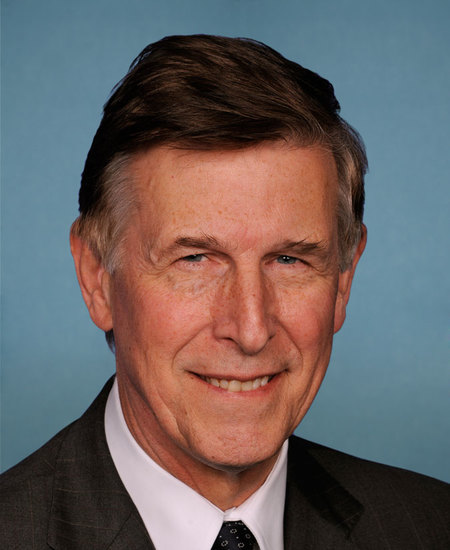
Rep. Donald S. Beyer, Jr.
Sponsored bills
Maddy summaryHR 5937, the National Children’s Museum Act, formally designates the National Children’s Museum (operating as a nonprofit under IRS 501(c)(3)) as the official national children’s museum and secures its space in the Ronald Reagan Building. The bill requires the General Services Administration (GSA) to enter a cooperative agreement providing the museum with rent-free use of its current 32,369-square-foot space (suite C-001) for the duration of its existing lease, subject to the museum maintaining its 501(c)(3) status and using the space as a children’s museum. Funding for this arrangement will come from existing GSA funds (Pennsylvania Avenue Development Corporation or International Trade Center funds), and the museum must submit annual reports on operations and finances to specific congressional committees. This procedural bill primarily affects the museum’s operational stability and space agreement, not broader policy.
Maddy summaryThis bill restores federal student loans for graduate and professional students by temporarily reinstating eligibility for Federal Direct Stafford Loans, which was previously terminated. It applies directly to graduate students who were excluded from these loans, preventing them from accumulating additional debt. The change is temporary, ending on or before June 30, 2023, and modifies specific provisions of the Higher Education Act without requiring additional rulemaking.
Maddy summaryHRES 790 is a non-binding resolution expressing the House of Representatives' sense that U.S. corporations should commit to increasing gender diversity in boards of directors and senior management. It cites multiple studies showing that companies with greater gender diversity (including women of color) tend to have better financial performance, higher returns on investment, and stronger risk management. The resolution urges corporations to fully utilize women's talents in leadership roles, noting that women represent 56% of the workforce but only 30% of S&P 500 board members. As a symbolic resolution, it does not create new legal requirements but highlights research linking diversity to corporate success.
Maddy summaryHRES 771 is a non-binding resolution expressing the U.S. House of Representatives' support for Israel following Hamas' October 7, 2023, attack. It condemns Hamas' actions, affirms Israel's right to self-defense, and calls for the immediate release of hostages. The resolution also urges enforcement of existing laws restricting aid to terrorists and sanctions against Iran for supporting Hamas. It does not create new policies or allocate funds, as it is a symbolic statement of congressional support.
Maddy summaryThe Safe Schools Improvement Act (HR 6031) requires public elementary and secondary schools to implement comprehensive anti-bullying policies that specifically prohibit harassment based on protected characteristics like race, gender identity, disability, religion, and sexual orientation. It mandates schools to collect and publicly report annual data on bullying incidents while establishing clear grievance procedures for students and parents. The bill also requires states to submit biennial reports on school compliance and supports evidence-based interventions, such as restorative practices, to reduce exclusionary discipline. This legislation directly affects all public K-12 schools and students in the U.S., aiming to create safer learning environments through standardized policy requirements and data transparency.
Stop Tax Penalties on American Hostages Act This bill postpones certain tax filing deadlines for U.S. nationals and their spouses who are unlawfully or wrongfully detained abroad or held hostage abroad. It also allows for a refund and abatement of penalties and fines paid by detained individuals.
Maddy summaryHRES 753 is a non-binding resolution commemorating the fifth anniversary of Jamal Khashoggi's murder in 2018 and calling for accountability from the Saudi government. It urges Saudi Arabia to ensure accountability for those responsible for his killing, release wrongfully detained individuals (including human rights defenders), lift travel bans on dissidents, and respect freedoms of assembly, association, and press. The resolution acknowledges U.S. sanctions under the Global Magnitsky Act targeting 17 Saudi officials linked to Khashoggi's murder. As a symbolic congressional statement, it does not impose new legal obligations but expresses support for accountability and human rights.
Maddy summaryThis bill replaces "Columbus Day" with "Indigenous Peoples’ Day" as the official federal holiday observed on the second Monday in October. It directly affects federal government operations and all federal documents, rules, or laws that previously referenced "Columbus Day" by automatically updating those references to "Indigenous Peoples’ Day" upon enactment. The key mechanism is a simple amendment to federal law (5 U.S.C. § 6103(a)) to change the holiday name and a provision ensuring all existing federal references to Columbus Day are legally treated as referring to Indigenous Peoples’ Day instead. This is a procedural change to federal holidays and references, not a new policy or program.
Maddy summaryThis bill requires federal agencies to adjust contract prices to reimburse contractors for paying employees during government funding lapses (e.g., shutdowns). It covers costs for furloughed, laid-off, or reduced-hour workers, or for restoring paid leave used during the lapse, with a weekly cap of $1,442 per employee. Directly affecting federal contractors and their employees who experienced work disruptions due to funding gaps, it mandates agencies to make these adjustments promptly after enactment. Contractors must provide proof of costs, and the Office of Federal Procurement Policy must report on implementation to Congress within a year.