

Medicare Economic Security Solutions Act This bill modifies provisions relating to enrollment periods for Medicare medical services. Among other things, the bill establishes a late enrollment penalty of 15% of monthly premiums and applies the penalty for a period equal to twice the number of months in each 12-month period during which the individual was not enrolled. Currently, the late enrollment penalty is 10% of monthly premiums for each 12-month period during which the individual was not enrolled, and the penalty continues to apply for as long as the individual is enrolled in Medicare medical services. The bill also expands the special enrollment periods to individuals who have health insurance coverage other than through their employer.
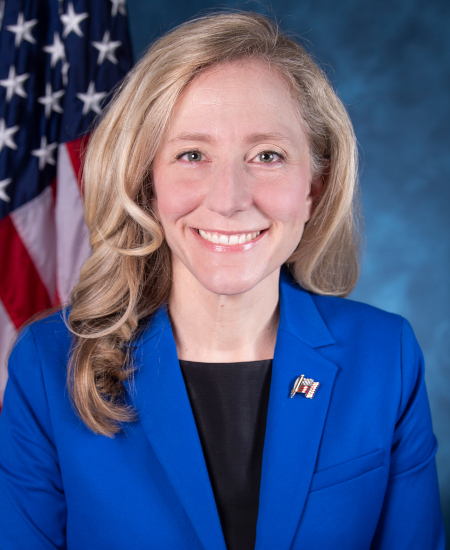
Rep. Abigail Davis Spanberger
Sponsored bills
Protecting Patient Access to Lifesaving COVID-19 Drugs Act of 2021 This bill requires health insurance plans to cover COVID-19 (i.e., coronavirus disease 2019) antibody treatment at no cost for individuals who have tested positive for the virus.
Mental Health Access Improvement Act of 2021 This bill provides for coverage of marriage and family therapist services and mental health counselor services under Medicare. It also excludes such services from the skilled nursing facility prospective payment system, and authorizes marriage and family therapists and mental health counselors to develop discharge plans for post-hospital services.
Improving Social Determinants of Health Act of 2021 This bill requires the Centers for Disease Control and Prevention (CDC) to establish a program to improve health outcomes and reduce health inequities by, for example, coordinating activities across the CDC. As part of the program, the CDC must award grants to eligible organizations to build capacity to address social determinants of health. The CDC shall provide for an independent evaluation of certain grants and report findings to Congress.
End Diaper Need Act of 2021 This bill establishes and expands programs to increase access to diapers and related supplies primarily for low-income families. The Department of Health and Human Services must award demonstration grants to entities with experience in community distribution of basic necessities or other community services to meet diapering needs of eligible families with infants and toddlers. Additionally, the bill permits states to use Medicaid funds to provide medically necessary diapers and supplies to certain low-income families. These families must have a child who is over age three and diagnosed with a serious condition such as bowel or bladder incontinence. It also allows individuals to buy medically necessary diapers and supplies with funds from health savings accounts and other tax-advantaged accounts for health care expenses.
This resolution mourns the death of U.S. Capitol Police Officer Brian D. Sicknick, and it honors his lifelong commitment to service and his selfless acts of heroism on January 6, 2021.
This resolution expresses the gratitude of the House of Representatives to the members of the National Guard and law enforcement agencies who were deployed to the District of Columbia to ensure a safe and secure environment for the 59th inauguration.
Safe from the Start Act of 2021 This bill directs the Department of State to direct U.S. foreign assistance to address humanitarian crises in a manner that aims to prevent and respond to gender-based violence at the onset of an emergency. The State Department shall focus on (1) preventing gender-based violence, (2) protecting survivors of humanitarian crises from the onset of the emergency, (3) promoting standards and activities to prevent and respond to gender-based violence, and (4) advancing and empowering survivors and at-risk individuals. Activities shall include improving access to post-sexual-assault medical and mental health services and ensuring such services are available to hard-to-reach populations. The State Department may provide support to local and international organizations to achieve its goals.
Strengthening Youth Apprenticeships Act of 2021 This bill requires (1) the Office of Apprenticeship within the Department of Labor to enter into an agreement with the Department of Education to promote the integration and alignment of apprenticeship programs with secondary, postsecondary, and adult education; and (2) Labor to award grants to eligible entities to create or expand youth apprenticeship programs.
Raise the Wage Act of 2021 This bill increases the federal minimum wage for regular employees over a 5-year period, for tipped employees, and for newly hired employees who are less than 20 years old. The bill sets forth a schedule of annual increases in the federal minimum wage for individuals with disabilities. The Department of Labor shall no longer issue special certificates for the payment of subminimum wages to such individuals after the final wage increase under this bill for such individuals takes effect. Labor shall provide, upon request, technical assistance and information to employers to (1) help them transition their practices to comply with wage increases and other requirements under this bill for individuals with disabilities, and (2) ensure continuing employment opportunities for such individuals. The bill eliminates the separate minimum wage requirements for tipped, newly hired, and disabled employees. After a specified period, these employees shall be paid the same minimum wage as regular employees. Labor must publish any increase in the minimum wage in the Federal Register and on its website 60 days before it takes effect.