

PPP Equity Act of 2021 This bill allows farmers, ranchers, and sole proprietors to retroactively recalculate their loans under the Paycheck Protection Program, established to support small businesses in response to COVID-19 (i.e., coronavirus disease 2019), based on gross income rather than net profits.
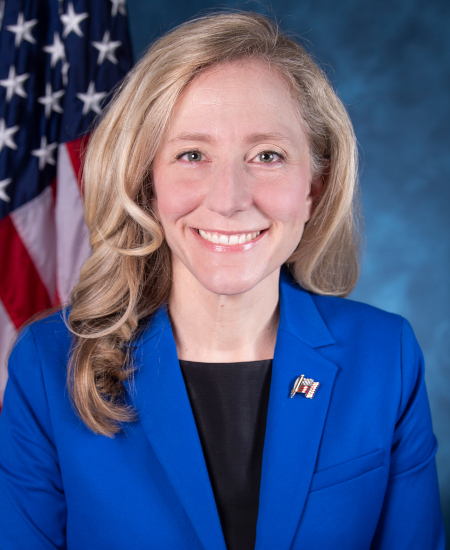
Rep. Abigail Davis Spanberger
Sponsored bills
Fire Fighters and EMS Employer-Employee Cooperation Act This bill requires the Federal Labor Relations Authority to determine whether a state substantially provides fire and emergency medical services (EMS) personnel the right to form and join a labor organization; recognition by fire and EMS employers of the employees' labor organization, agreement to bargain with the organization, and reduction of any agreements to writing in a contract or memorandum of understanding; the right to bargain over hours, wages, and terms and conditions of employment; and arbitration or other mechanisms to resolve an impasse in collective bargaining negotiations. The bill makes the authority responsible for (1) determining the appropriateness of units for labor representation; (2) supervising elections; (3) conducting hearings and resolving complaints of unfair labor practices; and (4) protecting the right of employees to form, join, or assist any labor organization, or to refrain from doing so. An employer, fire and EMS personnel, or labor organization may not engage in a lockout, sickout, work slowdown, strike, or any other organized job action that will measurably disrupt the delivery of emergency services and is designed to compel an employer, fire and EMS personnel, or labor organization to agree to the terms of a proposed contract.
Comprehensive Care for Alzheimer's Act This bill allows the Center for Medicare and Medicaid Innovation (CMMI) to test a Dementia Care Management Model that provides comprehensive care to Medicare beneficiaries with Alzheimer's disease or a related dementia. Under the model, participating health care providers receive payment under Medicare for comprehensive care management services that are provided to individuals with diagnosed dementia, excluding Medicare Advantage enrollees, hospice care recipients, and nursing home residents. Required services include medication management, care coordination, and health, financial, and environmental monitoring, as well as trainings and other support services for unpaid caregivers. Providers must furnish services through interdisciplinary teams and must ensure access to a team member or primary care provider 24-7. The CMMI must set payments and determine quality measures for the model in accordance with specified requirements. The bill also allows the CMMI to design a similar model under Medicaid.
Haulers of Agriculture and Livestock Safety Act of 2021 or the HAULS Act of 202 1 This bill modifies exemptions with respect to commercial motor vehicle safety regulations involving the transportation of agricultural commodities and farm supplies. The bill allows the federal hours-of-service rules exemption regarding maximum driving and on-duty time for drivers transporting agricultural commodities and farm supplies to apply year-round. Current law provides an exception from the federal hours-of-service rules for the transportation of agricultural commodities within a 150 air-mile radius of the normal work reporting location only during planting and harvest periods which are determined by each state. Additionally, the Department of Transportation must revise the definition of agricultural commodity to include specific commodities that are covered by the federal hours-of-service rules exception.
Resetting the Impact Act of 2021 or the TRIA Act of 2021 This bill requires certain data collection and recommendations relating to a Medicare post-acute care prospective payment system to incorporate the effects of COVID-19 on providers and patients. Current law requires the Centers for Medicare & Medicaid Services (CMS) and the Medicare Payment Advisory Commission to develop a prototype for a unified Medicare payment system for post-acute care that is based primarily on patient characteristics (e.g., cognitive ability, functional status, or impairments) rather than the provider setting (e.g., skilled nursing facility, home health agency, inpatient rehabilitation facility, or long-term care hospital). The bill requires the prototype to account for the role of post-acute care providers during public health emergencies, particularly in light of the COVID-19 emergency and the related effects on such providers and their patients. The bill also delays the development of the prototype until two years after the later of January 1, 2022, and the date by which the CMS has collected eight calendar quarters of data after the emergency ends and other changes have been implemented.
Taxpayer Research and Coronavirus Knowledge Act of 2021 This bill requires the Department of Health and Human Services (HHS) to coordinate with specified federal entities to compile a public database of federal contracts, tax benefits, and other support for COVID-19 (i.e., coronavirus disease 2019) biomedical research and development. HHS must develop the database within one month and update it every two weeks.
Advancing Uniform Transportation Opportunities for Veterans Act or the AUTO for Veterans Act This bill authorizes the Department of Veterans Affairs (VA) to provide (or assist in providing) an eligible veteran or service member with an additional automobile or other conveyance under the VA automobile allowance and adaptive equipment program. Currently, a veteran or service member with a specified service-connected disability or impairment may not receive more than one automobile or other conveyance under the program. The bill authorizes the additional benefit for such veterans and service members if 10 years have passed since the person last received such benefit.
Vietnam Veterans Liver Fluke Cancer Study Act This bill requires the Department of Veterans Affairs (VA) to conduct an epidemiological study and report on the prevalence of cholangiocarcinoma (bile duct cancer) in veterans who served in the Vietnam theater of operations during the Vietnam era. The study shall identify the rate of incidence of cholangiocarcinoma in such veterans and in U.S. residents. The bill also requires the VA to track and report on the prevalence of cholangiocarcinoma using the Veterans Affairs Central Cancer Registry.
Providing Responsible Emergency Plans for Animals at Risk of E merging Disasters Act or the PREPARED Act This bill establishes requirements governing the care of animals by entities, such as zoos, in emergencies or disasters. Specifically, the bill requires each research facility, dealer, exhibitor, intermediate handler, and carrier to develop and follow a contingency plan to provide for the humane handling, treatment, transportation, housing, and care of their animals in the event of an emergency or disaster.
Invasive Species Prevention and Forest Restoration Act This bill directs the Department of Agriculture (USDA) to award competitive grants to certain institutions for research to promote the restoration of tree species affected by non-native plant pests and noxious weeds. USDA may also award competitive grants to implement the research or other solutions to restore forest tree species native to the United States that have suffered severe levels of mortality caused by non-native plant pests and noxious weeds. The bill also expands the authority of USDA to transfer funds to respond to an emergency involving an outbreak of a plant pest or noxious weed. Further, USDA must enter into an agreement with the National Academy of Sciences or another nongovernmental entity to analyze available resources in federal agencies for research of, and solutions to, non-native forest pests and pathogens.