

Preventing Overdoses and Saving Lives Act of 2021 This bill establishes a grant program for states, Indian tribes, and territories to respond to the opioid crisis. In awarding the grants, the Department of Health and Human Services (HHS) must give priority to recipients with the highest opioid dispensing rates. Recipients must use at least 20% of grant funds to implement a program that requires a prescription for an opioid overdose reversal drug along with an opioid prescription if (1) a patient is prescribed benzodiazepines, medication-assisted treatment, or high-dose opioids; or (2) the prescriber has reason to know of the patient's history with substance use disorders. As part of this program, recipients must also require continuing education on opioid-prescribing practices for prescribers and on recognizing opioid overdose fatalities for coroners. Recipients must use the remaining funds to develop a strategic plan for the jurisdiction's response to the opioid crisis.
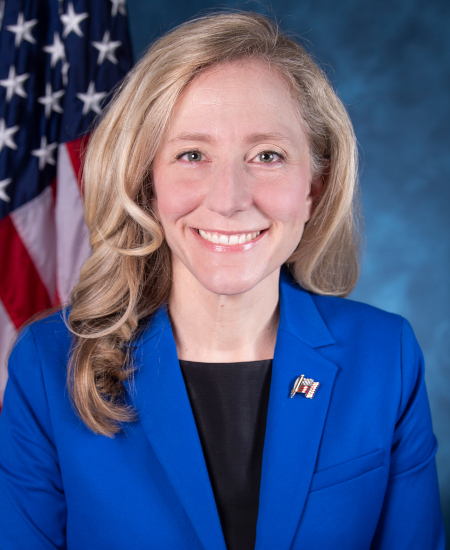
Rep. Abigail Davis Spanberger
Sponsored bills
This resolution calls on all Americans to observe the 20th anniversary of the September 11 attacks and honor those who lost their lives.
Linking Seniors to Needed Legal Services Act of 2021 This bill establishes a grant program within the Department of Health and Human Services for states to support linkages between health services, social services, and other supports for vulnerable older adults, including through senior legal hotlines and medical-legal partnerships. A medical-legal partnership means an arrangement in a health care or social services setting that integrates lawyers and social workers to address the needs of an individual patient related to social determinants of health (nonmedical factors such as income that influence health outcomes) and to help clinicians, case managers, and social workers address structural problems at the root of many health inequities.
Veterans' Culturally Competent Care Act This bill requires the Department of Veterans Affairs (VA) to establish standards and requirements for the provision of mental health care by non-VA providers in the Veterans Community Care Program (VCCP). The established standards must be the same as the standards applicable to VA employees who provide mental health care. The VA must require non-VA mental health care providers to complete training courses on military culture, core competencies for health care professionals, suicide evaluation and management, post-traumatic stress disorder, traumatic brain injury, and military sexual trauma after the provider becomes approved under the VCCP. The VA must also (1) identify additional training areas for which to develop courses, and (2) require the non-VA providers to complete such courses.
Supporting Expanded Review for Veterans In Combat Environments Act of 2021 or the SERVICE Act of 2021 This bill expands eligibility for Veterans Health Administration mammography screenings to veterans who served in certain locations during specified periods, including those who were exposed to toxic substances at such locations. The specified locations and corresponding time periods include Iraq between August 2, 1990, and February 28, 1991, and from March 19, 2003, until burn pits (areas used for burning solid waste in open air without equipment) are no longer used in Iraq; the Southwest Asia theater of operations, including Kuwait, Saudi Arabia, Oman, and Qatar, from August 2, 1990, until burn pits are no longer used in such locations; and Afghanistan, Djibouti, Syria, Jordan, Egypt, Lebanon, and Yemen from September 11, 2001, until burn pits are no longer used in such locations; and other locations and time periods as determined by the Airborne Hazards and Open Burn Pit Registry. The bill specifies that the listed locations do not include bodies of water around or airspace above such locations.
Supporting Disabled National Guardsmen Act This bill provides disability pay and medical care for members of the National Guard who were physically disabled as a result of state active duty. State active duty includes training or other duty in service to the governor of a state for which the member is not entitled to federal pay, but excludes required drills and field exercises. The bill expands eligibility for Department of Defense retired pay to such members who are physically disabled as a result of state active duty after September 23, 1996. Such pay must be reduced if it is determined to duplicate any other federal or state benefit to such members based on disability. The bill also makes such members eligible for hospital care and medical services from the Department of Veterans Affairs (VA) to treat the disability and any illness or condition arising from the disability. The VA may provide reimbursement for hospital care or medical services provided to such members only after a member or the provider of care has exhausted (without success) all claims and remedies reasonably available against a third party.
William Collins Jet Fuel Exposure Recognition Act This bill requires the Department of Veterans Affairs (VA), for purposes of wartime disability compensation and VA health care, to presume that covered veterans were exposed to toxic substances, chemicals, and airborne hazards during military service, unless there is affirmative evidence that the veterans were not exposed to such substances in connection with their service. Under the bill, covered veterans are those who worked for a cumulative period of at least two years in active service in a military occupational specialty that involved consistent exposure to jet fuel. In adjudicating claims for compensation for a service-connected disability related to jet fuel exposure with evidence of a disability and a presumption of toxic exposure during active service, the VA must (1) provide a medical examination and request a medical opinion for service-connection; and (2) direct the medical provider to consider the exposure of the veteran to toxic substances during all military deployments and the synergistic effect of all combined toxic substances through inhalation, dermal exposure, and ingestion. Every other year for a period of eight years, the VA must make publicly available a report related to the effect of jet fuel used by the Armed Forces on the health of individuals. In evaluating claims for compensation for service-connected disabilities, the VA must take into consideration the findings of such reports.
Prohibition of Medicaid Funding for Conversion Therapy Act This bill prohibits state Medicaid programs from covering conversion therapy. The bill defines conversion therapy as any practice or treatment that seeks to change a person's sexual orientation or gender identity in exchange for monetary compensation.
This resolution expresses support for the 2021 National Recovery Month theme (Recovery is for Everyone: Every Person, Every Family, Every Community). National Recovery Month is an annual observance held in September to support the community of individuals in recovery from substance use, promote treatments and practices, and recognize service providers.
Harlem Hellfighters Congressional Gold Medal Act This bill provides for the award of a Congressional Gold Medal to the 369th Infantry Regiment, commonly known as the Harlem Hellfighters, in recognition of their bravery and outstanding service during World War I.