

Securing Systemically Important Critical Infrastructure Act This bill sets out a process to designate elements of critical infrastructure as systemically important. Critical infrastructure refers to the machinery, facilities, and information that enable vital functions of governance, public health, and the economy. Specifically, the Cybersecurity and Infrastructure Security Agency (CISA) must establish a methodology based on objective criteria to designate critical infrastructure as systemically important. In developing the criteria, CISA must consider, among other factors, the scale of the potential effects of a disruption to the infrastructure on domestic security, the economy, health, or safety. Using the methodology, CISA must make a preliminary designation and then provide an opportunity for the infrastructure's owner or operator to share additional information. A preliminary designation becomes final after 30 days unless, on the basis of additional information, CISA determines the infrastructure does not meet required criteria. The bill also requires CISA to maintain a list of systemically important critical infrastructure, prioritize systemically important critical infrastructure in its programs and activities, report on various matters related to the designation process, and assess processes for and benefits of enhanced risk management coordination between the federal government and the owners and operators of systemically important critical infrastructure. Additionally, the Department of Homeland Security must prioritize the security clearance applications of owners and operators of systemically important critical infrastructure.
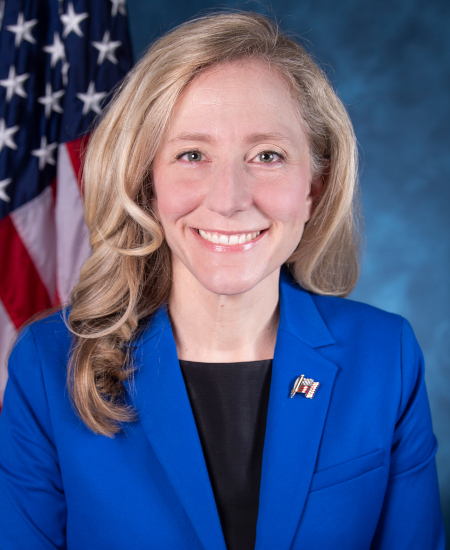
Rep. Abigail Davis Spanberger
Sponsored bills
Israel Relations Normalization Act of 2021 This bill requires the Department of State to take certain actions promoting the normalization of relations between Israel, Arab states, and other relevant countries and regions. Specifically, the State Department must develop a strategy on expanding and strengthening the Abraham Accords (the term used to refer collectively to agreements between Israel and the United Arab Emirates and between Israel and Bahrain marking the public normalization of relations between the two Arab countries and Israel). The strategy must include a description of how the U.S. government will encourage further normalization of relations with Israel. In addition, the State Department must report on options for U.S. international efforts to promote the strengthening of ties between Israel, Arab states, and other relevant countries and regions. The State Department must also report on the status of the normalization of relations with Israel, including information on (1) laws that punish individuals for people-to-people relations with Israelis (i.e., anti-normalization laws), and (2) evidence of steps taken by Arab governments toward permitting or encouraging normalized relations between their citizens or residents and Israeli citizens.
Cambodia Democracy Act of 2021 This bill directs the President to impose sanctions on individuals responsible for acts to undermine democracy in Cambodia, including acts that constituted serious human rights violations. The sanctions shall be directed at senior Cambodian government, military, or security forces officials responsible for such actions, as well as entities controlled or owned by such individuals. The sanctions shall include blocking assets and restricting the entry of sanctioned individuals into the United States, and shall not apply to the importation of goods. The President may waive the sanctions with respect to a person or entity if it is in the national interest of the United States. The President may suspend the sanctions if Cambodia makes meaningful progress toward ending government efforts to undermine democracy or committing human rights violations.
Libya Stabilization Act This bill provides for sanctions and aid related to the conflict in Libya. The bill provides statutory authority for an April 19, 2016, executive order imposing property- and visa-blocking sanctions on persons contributing to the violence in Libya. The President must impose property- and visa-blocking sanctions on any foreign person that (1) knowingly supports or engages in a significant transaction with a foreign person knowingly operating in Libya on behalf of Russia in a military capacity, (2) engages in significant actions threatening peace or stability in Libya, (3) misappropriates Libyan state assets or natural resources, or (4) is knowingly responsible for or complicit in serious human rights abuses in Libya. These sanctions shall expire on December 31, 2026. Further, the President is authorized to expand educational and cultural exchange programs with Libya. The bill urges the U.S. Agency for International Development to provide humanitarian assistance to individuals and communities in Libya, including health assistance, food, shelter, and support for an effective COVID-19 (i.e., coronavirus disease 2019) response. The Department of State must work to strengthen Libya's democratic governance, including by providing assistance to (1) unify Libya's financial and governing institutions, and (2) ensure free and credible future elections in Libya. The Department of the Treasury must vote and argue for international financial institutions to support an economic recovery in Libya that complements the establishment of democratic institutions and rule of law.
This resolution supports the designation of National Voter Registration Day.
Promoting Readiness and Ensuring Proper Active pharmaceutical ingredient Reserves of Essential medicines Act of 2021 or the PREPARE Act of 2021 This bill establishes the Strategic Active Pharmaceutical Ingredient Reserve. The Department of Health and Human Services (HHS) must annually publish a public list of essential generic medicines that are medically necessary to have available at all times. HHS must report and implement a plan to establish the reserve, which must be designed to minimize the impact of an interruption or reduction in imports of (1) key starting materials (including active pharmaceutical ingredients) for essential generic medicines, and (2) finished dosage forms of essential generic medicines for which key starting materials are not imported. The plan must also contain provisions to strengthen domestic capacity for active pharmaceutical ingredient production, storage, and conversion. Within one year of this bill's enactment, the plan must include at least 25 of the essential generic medicines on the required list. The plan must add at least 25 medicines each year until the full list is covered. HHS must prioritize domestically manufactured key starting materials for the reserve to the maximum extent possible. A manufacturer of an essential generic medicine that switches to an active pharmaceutical ingredient sourced through the reserve shall not have to update the approved application for that medicine. The Government Accountability Office must report to Congress on active pharmaceutical ingredient manufacturing, including the time and costs needed to develop domestic manufacturing capabilities.
This resolution supports the designation of National Clean Energy Week.
2020 WHIP+ Reauthorization Act This bill expands disaster indemnity programs through which the Department of Agriculture provides payments to agricultural producers for crop and milk losses resulting from hurricanes, wildfires, and other qualifying natural disasters. In particular, the bill extends the Wildfire and Hurricane Indemnity Program Plus (WHIP+), the On-Farm Storage Loss Program, and the Milk Loss Program to make losses that occurred in the 2021 and 2022 calendar years eligible for payments. Under current law, these programs provide disaster payments to agricultural producers with crop and milk losses resulting from qualifying natural disasters that occurred in the 2018 and 2019 calendar years.
Directed Energy Threat Emergency Response Act This bill requires actions to address anomalous health incidents. The President must designate an appropriate senior official as the Anomalous Health Incidents Interagency Coordinator. The interagency coordinator must (1) coordinate the U.S. government's response to anomalous health incidents, (2) ensure that affected personnel and dependents get access to care, and (3) ensure adequate training and education for relevant U.S. government personnel. The President must also appoint an appropriate senior official as the Deputy Anomalous Health Incidents Interagency Coordinator. The bill also requires certain agencies, including the Department of Defense and the Office of the Director of National Intelligence, to designate an appropriate senior official to serve as the Anomalous Health Incident Agency Coordination Lead. These officials must work with the interagency coordinator to (1) achieve objectives related to anomalous health incidents, and (2) jointly provide quarterly briefings to Congress on its activities. Such agencies must also develop updated workplace guidance to address anomalous health incidents. The bill authorizes the Department of State to take certain actions, such as increasing staffing for the Health Incident Response Task Force and collecting data related to anomalous health incidents.
John R. Lewis Voting Rights Advancement Act of 2021 This bill establishes new criteria for determining which states and political subdivisions must obtain preclearance before changes to voting practices may take effect. Preclearance is the process of receiving preapproval from the Department of Justice (DOJ) or the U.S. District Court for the District of Columbia before making legal changes that would affect voting rights. A state and all of its political subdivisions shall be subject to preclearance of voting practice changes for a 10-year period if 15 or more voting rights violations occurred in the state during the previous 25 years; 10 or more violations occurred during the previous 25 years, at least 1 of which was committed by the state itself; or 3 or more violations occurred during the previous 25 years and the state administers the elections. A political subdivision as a separate unit shall also be subject to preclearance for a 10-year period if three or more voting rights violations occurred there during the previous 25 years. States and political subdivisions that meet certain thresholds regarding minority groups must preclear covered practices before implementation, such as changes to methods of election and redistricting. Further, states and political subdivisions must notify the public of changes to voting practices. Next, the bill authorizes DOJ to require states or political subdivisions to provide certain documents or answers to questions for enforcing voting rights. The bill also outlines factors courts must consider when hearing challenges to voting practices, such as the extent of any history of official voting discrimination in the state or political subdivision.