

This resolution supports the designation of National FFA Week. It also (1) recognizes the important role of the National FFA Organization (Future Farmers of America) in developing the next generation of leaders who will change the world, and (2) celebrates the 90th anniversary of the iconic FFA jacket.
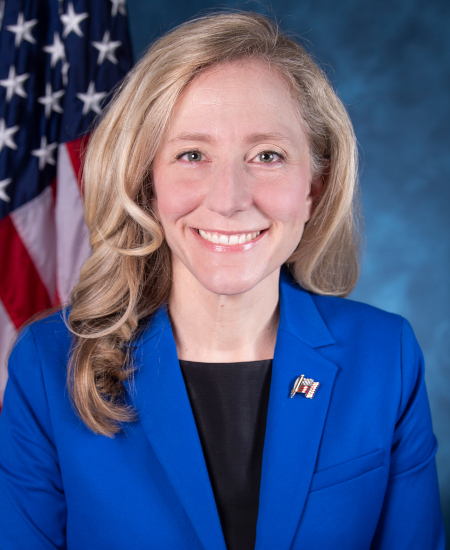
Rep. Abigail Davis Spanberger
Sponsored bills
Maddy summaryHR 1322 expands federal retirement benefits to include specific non-traditional law enforcement roles. It adds IRS employees focused on tax collection, U.S. Postal Inspection Service staff, Department of Veterans Affairs police officers, and U.S. Customs and Border Protection seized property specialists to the definition of "law enforcement officer" under federal retirement systems. Current employees in these newly covered positions must elect to pay deposits for past service to receive full retirement credit, while their agencies must contribute additional funds for that past service. The bill also temporarily prevents mandatory separation for current law enforcement officers for three years after enactment.
Maddy summaryThis bill establishes pay equity for federal firefighters by adjusting how their retirement benefits are calculated and setting a standard workweek. It requires retirement annuities to include overtime hours worked as part of a firefighter's regular schedule (e.g., overtime during standard shifts), rather than excluding them. The bill also mandates a maximum 60-hour regular workweek for federal firefighters, set by the Office of Personnel Management within one year of enactment. These changes directly affect federal firefighters, aiming to improve pay comparability with municipal firefighters and other federal employees while supporting recruitment and retention.
Maddy summaryHR 1247 would award a Congressional Gold Medal to the Freedom Riders collectively, honoring their pivotal role in challenging segregation in interstate travel during the Civil Rights movement. The medal, to be struck by the U.S. Mint and displayed at the Smithsonian Institution, recognizes their nonviolent protests that led to the 1961 federal ban on segregation in interstate public facilities. This is a symbolic tribute with no legal effect, as the bill does not create new policies or alter existing laws.
Maddy summaryThe Richard L. Trumka Protecting the Right to Organize Act of 2023 strengthens workers' rights to organize unions by making it harder for employers to interfere with organizing efforts. Key provisions include changing the definition of "employee" to make it more difficult to classify workers as independent contractors, prohibiting employers from threatening to permanently replace striking workers, and requiring employers to provide voter lists for union elections. The bill also creates a new electronic voting system for union elections, strengthens whistleblower protections for workers reporting labor violations, and increases penalties for unfair labor practices. These changes directly affect workers seeking to form unions, employers who may interfere with organizing, and labor organizations. The bill aims to make it easier for workers to exercise their right to collective bargaining under the National Labor Relations Act.
Maddy summaryHR 1198, the Understanding the True Cost of College Act of 2023, requires colleges and universities receiving federal financial aid to provide standardized financial aid offer forms to all students applying for aid. These forms must clearly break down total college costs (including tuition, housing, food, books, and transportation) and show the net price after subtracting non-repayable grants and scholarships. The bill mandates that loan information be clearly labeled as repayable, with details about interest rates, repayment options, and the distinction between subsidized and unsubsidized loans. This standardization aims to make financial aid offers more transparent and easier for students and families to understand when making college affordability decisions.
This resolution condemns Russia for committing acts of genocide against the Ukrainian people. It also calls on the United States, in cooperation with North Atlantic Treaty Organization and European Union allies, to undertake measures to support the Ukrainian government to prevent further acts of Russian genocide against the Ukrainian people.
Maddy summaryThe EQUAL Act (HR 1062) eliminates the unequal sentencing disparity between crack cocaine (cocaine base) and powder cocaine offenses under federal law. It repeals specific provisions in the Controlled Substances Act and Import/Export Act that previously imposed harsher penalties for cocaine base, directly affecting individuals convicted of federal cocaine offenses involving cocaine base. The bill applies to all future cases and allows courts to reduce sentences for people already convicted of such offenses before the law's enactment. This change removes a key legal distinction that historically led to significantly longer sentences for crack cocaine offenses compared to powder cocaine.
Maddy summaryHR 1008 adds harmful algal blooms to the list of qualifying events for federal disaster assistance under the Stafford Act, enabling affected communities to access emergency aid. It also requires the CDC to conduct a study on health effects from airborne toxins during blooms within one year of enactment, to be shared with relevant congressional committees. The bill establishes a framework for federal response but does not provide new funding or directly regulate pollution sources. It primarily affects coastal and lake communities where blooms threaten public health, tourism, and local economies through potential beach closures, fishing restrictions, and property value declines.
Maddy summaryHR 1012, the Cardiac Arrest Survival Act of 2023, creates a uniform federal liability shield for individuals and entities involved in using or managing automated external defibrillators (AEDs) during cardiac emergencies. It protects AED users (including non-professionals), property owners/managers where AEDs are located, and AED owners/acquirers from civil lawsuits - unless harm resulted from gross negligence, willful misconduct, or a licensed professional acting within their scope of practice. The law overrides inconsistent state "Good Samaritan" laws, ensuring consistent protection regardless of AED signage, registration, or user training. This aims to encourage wider AED deployment in public spaces by reducing liability concerns for businesses and property owners.