

Maddy summaryThe Neighborhood Homes Investment Act creates a new tax credit for developers who rehabilitate or build affordable homes in distressed communities. The credit is calculated based on the difference between rehabilitation costs and the sale price, with homes required to be sold at affordable prices to qualified homeowners with incomes up to 140% of the local median family income. The bill targets specific "qualified census tracts" defined by high poverty rates, low homeownership, and below-average home values. Developers must ensure homes are sold to qualified homeowners who use them as primary residences for at least five years, with additional safeguards to prevent program abuse and ensure fair housing practices.
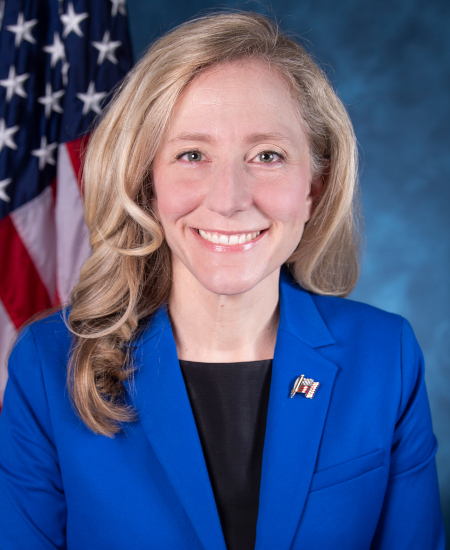
Rep. Abigail Davis Spanberger
Sponsored bills
Maddy summaryHR 3850, the Pride In Mental Health Act of 2023, establishes a federal grant program to improve mental health and substance abuse services for LGBTQ+ youth (including nonbinary, intersex, and Two Spirit individuals). The bill directs the Health and Human Services Secretary to fund eligible organizations to provide trauma-informed care, cultural competency training for caregivers, school bullying prevention guidelines, and family support resources. It explicitly prohibits grant funds from being used for conversion therapy or advertising related to such therapy. The bill also requires data collection on LGBTQ+ youth mental health and a federal survey to measure psychological distress.
Maddy summaryHR 3907 increases annual funding for U.S.-Israel development cooperation from $2 million to $4 million, extending support through 2026 instead of 2023. It requires USAID to report within 180 days on expanding projects to include multilateral partnerships with Arab countries, particularly in Africa, and assesses the need for additional resources. The bill directly affects USAID, Israel's MASHAV agency, and developing nations in Africa, Eastern Europe, and Latin America where joint projects focus on water, agriculture, education, and health. Key provisions adjust funding levels and mandate a formal review of expanding cooperative development efforts. The legislation aims to strengthen existing U.S.-Israel collaboration on global development initiatives.
Maddy summaryThe American Family Act establishes a monthly child tax credit of $250 per month for each child under age 6 and $300 per month for each child aged 6-18, with income limits of $150,000 for joint filers and $112,500 for other filers. The credit is refundable, meaning it can be paid even if the taxpayer owes no income tax, and will be adjusted annually for inflation. The bill includes detailed rules for determining eligibility, including requirements that the child resides with the taxpayer for more than half the month and provisions to prevent fraud through recapture of improperly received payments. The credit will be paid monthly in advance rather than as a single annual payment, with specific mechanisms for calculating and distributing the payments.
Maddy summaryHR 698, the Assault Weapons Ban of 2023, prohibits the sale, manufacture, transfer, and possession of specific firearms and ammunition devices commonly referred to as "assault weapons" and "large capacity magazines" in interstate commerce. The bill defines "semiautomatic assault weapons" to include rifles like AR-15s and AK-47s, as well as firearms with specific features such as folding stocks, pistol grips, threaded barrels, and detachable magazines holding more than 15 rounds. It exempts law enforcement, military, antique firearms, and weapons already lawfully owned before the law's enactment (known as "grandfathered" weapons). The bill also requires new identification markings on these weapons and large capacity magazines, and adds background check requirements for transfers of grandfathered weapons.
Maddy summaryHR 3768, the Midwives for MOMS Act of 2023, provides federal grants to support midwifery education and increase access to midwifery services. It allocates $15 million annually (2024-2028) for accredited midwifery schools to directly support students, expand programs, and train clinical instructors, with 50% of funds dedicated to student support. The bill also authorizes $20 million annually for nurse-midwifery programs in nursing schools, prioritizing students who will work in underserved health professional shortage areas and increasing racial/ethnic minority representation. These provisions directly affect midwifery students, educational institutions, and communities with limited access to maternity care, aiming to expand the midwifery workforce through targeted funding.
Maddy summaryThis House resolution symbolically recognizes May as Jewish American Heritage Month, celebrating Jewish Americans' historical contributions to U.S. society and culture. It references rising antisemitism in 2022 (including ADL data showing a 36% increase in incidents) and includes a non-binding call for leaders to combat antisemitism. As a purely symbolic resolution, it does not create new policies or legal requirements.
Maddy summaryHR 3036, the Increased TSP Access Act of 2023, amends conservation program rules to expand access to third-party providers (TSPs) who offer technical assistance to farmers on conservation practices. It creates new pathways for non-Federal entities like agricultural cooperatives or professional associations to certify TSPs, streamlines certification processes (requiring Secretary review within 10 business days), and sets payment rates for TSPs equivalent to government-provided technical assistance. The bill mandates public reporting on certification numbers, payment details, and a target utilization rate for TSPs to improve conservation program delivery. It directly affects farmers participating in USDA conservation programs by increasing options for technical support and requiring transparency in how TSPs are certified and compensated.
Maddy summaryThis bill requires the U.S. Treasury Department, with input from financial regulators and the State Department, to conduct a study and issue a report within one year of enactment. The report must assess how China's financial sector reforms impact U.S. and global financial stability, analyze related risks, and recommend actions to protect U.S. interests. It mandates the report be shared with relevant congressional committees, international financial bodies, and published online (excluding any classified parts). The bill directly affects federal agencies responsible for financial oversight but does not create new laws or spending. It is a procedural requirement focused on gathering information, not implementing policy changes.
Maddy summaryHRES 434 is a non-binding resolution declaring a mental health crisis among U.S. youth, citing statistics like 49.5% of adolescents experiencing mental health disorders and a 30% rise in emergency visits for youth during the pandemic. It urges states and schools to improve educator training, expand on-campus mental health resources, remove harmful practices (such as risk assessment teams disproportionately affecting students of color), and address barriers for undocumented and low-income students. The resolution also emphasizes combating stigma, integrating mental and physical health care, and reaching high-risk communities with better resources. As a declaration - not a law - it expresses congressional support for historic federal investments in youth mental health care but does not create new policy.