

Maddy summaryThe Safer Response Act of 2023 increases federal funding for first responder training. It amends the Public Health Service Act to raise annual funding from $36 million (fiscal years 2019-2023) to $56 million (fiscal years 2024-2028). This funding directly supports state and local first responder programs, including police, fire, and emergency medical services. The key mechanism is a specific, multi-year budget adjustment for training initiatives under the Public Health Service Act. The bill focuses solely on increasing financial resources for training, with no additional policy changes described.
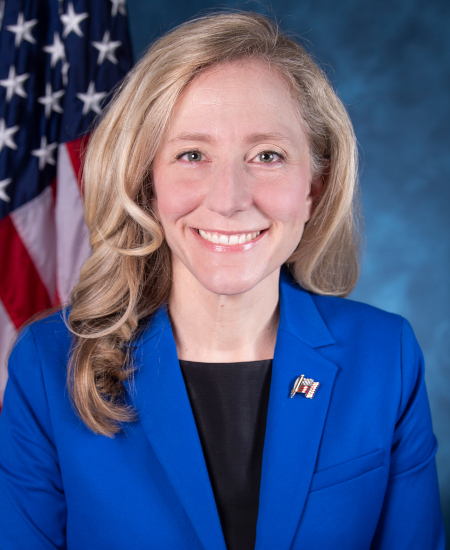
Rep. Abigail Davis Spanberger
Sponsored bills
Maddy summaryThis bill amends a federal grant program to fund addiction recovery and workforce initiatives, targeting states with high overdose deaths, unemployment, and low labor force participation compared to national averages. It establishes specific metrics - such as overdose death rates exceeding the national average, unemployment rates above the national average, and labor force participation below the national average - to determine grant funding levels. The bill also allows grant funds to cover transportation for individuals accessing job training, treatment, or recovery services. Annual funding increases from $5 million to $12 million per year for fiscal years 2024-2028.
Maddy summaryHR 4121, the Right to Contraception Act, establishes a federal statutory right for individuals to access contraceptives and contraception services without government restriction or coercion, directly affecting all people seeking reproductive care and health care providers. The bill prohibits state or federal laws that limit access to contraceptives (defined broadly to include devices, drugs, and fertility methods), prevent individuals from obtaining or using them, or allow providers to refuse services based on personal beliefs. It preempts conflicting state laws, requires any restrictions to be justified by "clear and convincing evidence" of advancing access with no less restrictive alternative, and allows private lawsuits to challenge violations. The Act applies nationwide to all health care providers and individuals, protecting access regardless of factors like race, income, or location.
Maddy summaryThis bill increases annual funding for the Substance Use Disorder Treatment Workforce Loan Repayment Program from $25 million to $40 million per year, covering fiscal years 2024 through 2028. It directly affects healthcare professionals working in substance use disorder treatment who have federal student loans, helping them repay those loans through federal reimbursement. The key provision is the funding increase, extending the program's support for this workforce without altering eligibility or new requirements. This change provides more consistent financial support for treatment providers, aiming to address staffing needs in a critical healthcare area.
Maddy summaryHR 3946, the FASD Respect Act, establishes a new federal program within the Department of Health and Human Services (HHS) to address fetal alcohol spectrum disorders (FASD). The bill creates FASD Centers for Excellence to build state, tribal, and national capacity for prevention, identification, and support services - directly affecting individuals with FASD, their families, and healthcare providers. Key provisions include developing standardized diagnostic guidelines, expanding screening and training for medical professionals, creating a national resource directory for FASD services, and promoting culturally informed interventions. The program requires HHS to report to Congress on progress within four years. This legislation restructures existing HHS authority to focus comprehensively on FASD across the lifespan, replacing older terminology with consistent "FASD" references.
Maddy summaryThe Fly Together Act requires airlines to seat children under 14 adjacent to an accompanying adult, if seats are available after ticket purchase but before boarding. It prohibits airlines from charging extra fees for this adjacent seating arrangement within the same class of service. The rule would take effect within 180 days of the bill’s enactment through a new Transportation Department policy. This directly affects families traveling with young children on commercial flights. The policy does not force airlines with existing flexible seating systems to change their current practices.
Maddy summaryThe American Dream and Promise Act of 2023 would create two pathways to permanent residency for certain immigrants. The "Dream Act" portion would provide conditional permanent resident status to individuals who entered the U.S. as children, have lived continuously in the U.S. since January 1, 2021, and meet educational requirements (such as completing high school, earning a degree, or enrolling in education programs). The "American Promise Act" portion would provide permanent residency to individuals eligible for Temporary Protected Status (TPS) or Deferred Enforced Departure (DED) as of specific dates (January 1, 2017, or January 20, 2021). The bill includes provisions for background checks, fee exemptions for low-income applicants, and processes for removing conditional status after meeting specific criteria like completing higher education or earning income.
Maddy summaryHJRES 72 proposes a constitutional amendment to remove the exception in the Thirteenth Amendment that allows slavery and involuntary servitude as punishment for a crime. If ratified, this amendment would ban the use of forced labor in prisons as a criminal penalty, directly affecting how the U.S. criminal justice system handles sentencing. The resolution clarifies it does not interfere with voluntary work programs in correctional facilities, existing employment protections for incarcerated people, or community service alternatives. This change aims to eliminate a historical loophole that has disproportionately impacted Black Americans since the 1860s.
Maddy summaryHRES 505 is a non-binding resolution recognizing June 19, 2023, as the annual observance of Juneteenth Independence Day. It acknowledges the historical significance of June 19, 1865, when Union troops announced the end of slavery in Texas, marking the first widespread celebration of freedom for formerly enslaved people in the U.S. The resolution encourages all Americans to observe the day through ceremonies and educational activities to honor this milestone in U.S. history. It does not create new policy or benefits but formally supports public recognition of Juneteenth as part of the nation's heritage.
This resolution expresses support for keeping AM radios in cars. (Several car manufacturers announced plans to remove AM radio options from some or all of their models.)