

Maddy summaryHRES 793 is a resolution passed by the U.S. House of Representatives calling on Hamas to immediately release all 199 hostages taken during Hamas' October 7, 2023 attack on Israel. The resolution condemns Hamas for the attack, the taking of hostages, and threats against hostages, while stating that holding hostages violates international humanitarian law under the Geneva Conventions. It demands the immediate release of all hostages and expresses sympathy for victims and their families. As a symbolic resolution, it does not create legal obligations but formally expresses the House's position.
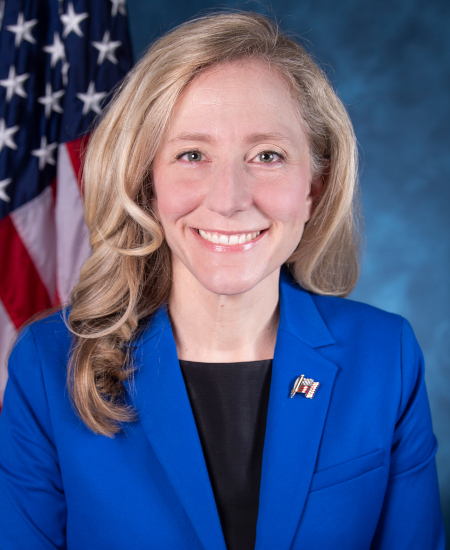
Rep. Abigail Davis Spanberger
Sponsored bills
Maddy summaryHR 6451, the Mental Health Justice Act of 2023, provides $250 million in federal grants to states, tribes, and localities to hire mental health professionals as first responders for specific emergencies. It directs these professionals to replace police in situations involving mental health crises, substance use, or intellectual/developmental disabilities - such as when a 911 caller describes a mental health emergency or a first responder identifies someone needing mental health support. The bill requires grantees to train responders in de-escalation techniques, link individuals to community-based services (not incarceration), and report on outcomes like reduced arrests or use of force. It also mandates data collection on demographics and prevents funneling people into institutional settings, with annual reports to Congress on program effectiveness.
Maddy summaryHR 6424, the SIGHT Act, establishes a new Chief Innovation Officer for Health within USAID's Global Health Bureau to coordinate and advance research and development of health technologies specifically designed for low-resource settings in low- and middle-income countries. It creates a Global Health Research and Development Advisory Council to advise USAID on priorities, requires a dedicated budget line for these activities (ensuring funding is "additional" and not replacing existing programs), and authorizes grants to support technology development, evaluation, and capacity-building in partner countries. The bill directly affects USAID's global health programming, partner nations, and health technology developers working on diseases like malaria, neglected tropical diseases, and pandemic preparedness. It aims to improve the effectiveness and sustainability of USAID's health programs by structuring innovation efforts around community and country needs in resource-limited contexts.
Maddy summaryThe Veteran Improvement Commercial Driver License Act of 2023 modifies rules for veterans' educational benefits to streamline approval of commercial driver education programs at branch locations. It allows a branch of an educational institution to be exempt from full approval requirements if it is appropriately licensed and uses the same curriculum as an approved main location. Schools must submit an annual report to the Department of Veterans Affairs verifying curriculum consistency, and the VA may withhold this exemption if needed. The changes will take effect 180 days after the VA establishes reporting rules, which must be finalized within 180 days of the bill's enactment.
Maddy summaryThis bill requires the Secretary of Homeland Security to create a comprehensive plan within 180 days for deploying emerging technologies like AI, radar, sensors, and automation to improve border security along the U.S. northern and southern borders. The plan must assess current technology use by U.S. Customs and Border Protection (CBP), address security gaps, estimate costs, and outline metrics for success. It specifically directs CBP to integrate these technologies into border operations while phasing out outdated systems and coordinating with the Department of Homeland Security’s Science and Technology Directorate. The bill directly affects CBP’s border security operations and does not authorize new spending or change existing laws.
Maddy summaryThe CLARITY Act of 2023 prohibits U.S. federal agencies from acquiring or contracting for equipment, systems, or services that use specific foreign adversarial blockchain networks (including China's Blockchain-based Services Network, Spartan Network, and others) as a substantial or essential component. It requires a two-year transition period for agencies to switch to alternative technologies, with limited waivers allowed only for compelling national security reasons and requiring detailed phase-out plans. The bill also mandates annual reports to Congress assessing risks to U.S. national security, economic interests, sanctions enforcement, and global financial systems from these technologies. This directly affects federal agencies and companies providing the banned blockchain services, focusing on mitigating threats from foreign adversaries' infrastructure.
Maddy summaryHR 6301, the Cancer Drug Parity Act of 2023, requires group health plans to ensure that out-of-pocket costs for oral anticancer drugs (taken by patients at home) are no higher than for intravenous or injected anticancer drugs. It applies to patients prescribed oral anticancer medications approved by the FDA and deemed medically necessary or clinically appropriate by their physician. The law prohibits insurers from increasing patient costs for oral drugs through benefit changes, such as higher copays or stricter coverage limits, and allows prior authorization for all chemotherapy. The law takes effect for 2024 plan years, and the GAO will study its impact on patient costs within two years.
Maddy summaryThe SHIP Act imposes sanctions on foreign entities that knowingly handle Iranian petroleum, targeting those involved in port operations, transportation, refining, or ship-to-ship transfers of Iranian oil. Starting 90 days after enactment, the President must block assets, deny visas, and impose penalties on individuals or companies engaging in these activities, including family members or owners of sanctioned entities. It requires annual reports tracking Iran's oil exports, revenues, and key players like shipping companies and ports. The sanctions terminate if the President certifies Iran has stopped supporting terrorism and dismantled weapons programs.
Maddy summaryHR 340, the "Hamas and Other Palestinian Terrorist Groups International Financing Prevention Act," imposes sanctions on foreign individuals, entities, and governments that provide significant financial, material, or transactional support to Hamas, the Palestinian Islamic Jihad, or their affiliates. The bill requires the President to identify those supporting these groups and mandates sanctions including restrictions on exports, defense sales, and financial transactions over $10 million, while exempting humanitarian assistance like medicine and food. It also requires regular reports on foreign countries that host or support these groups' financial networks and mandates actions to disrupt their fundraising and money laundering activities. The legislation terminates after 3 years or if Hamas and Palestinian Islamic Jihad are no longer designated as terrorist organizations under U.S. law.
Maddy summaryThe Train More Nurses Act (HR 6122) requires the Secretaries of Health and Human Services and Labor to jointly review all federal grant programs supporting the nursing workforce. Within one year of enactment, they must submit a report to Congress with recommendations to improve these programs. The report must specifically address three goals: increasing nurse faculty in underserved areas, creating pathways for experienced nurses (with 10+ years of clinical work) to become faculty, and expanding opportunities for licensed practical nurses to become registered nurses. This bill does not change existing programs but mandates a review and report to inform future policy decisions.