

Maddy summaryHR 1147, the Whole Milk for Healthy Kids Act of 2023, allows schools participating in the National School Lunch Program to offer whole milk as an option during lunch. It amends the school lunch law to explicitly permit schools to serve flavored and unflavored whole milk alongside reduced-fat, low-fat, and fat-free milk choices for students. The bill also requires the Secretary of Agriculture to adjust meal regulations to account for saturated fat from whole milk, ensuring it doesn't count against meal fat limits. This change directly affects participating schools and the students who receive school lunches, expanding their milk beverage options.
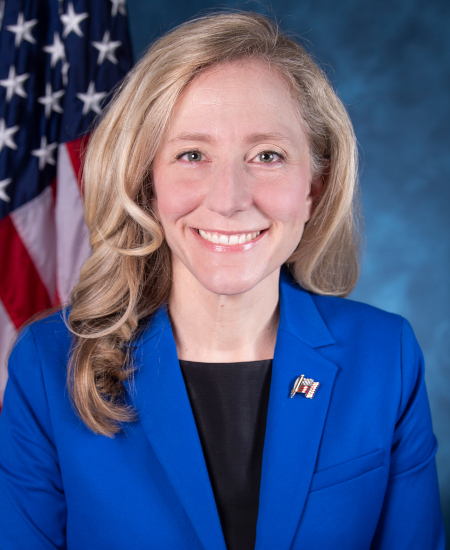
Rep. Abigail Davis Spanberger
Sponsored bills
Maddy summaryThis bill increases funding for cancer research by directing an additional 25% of the 2022 National Cancer Institute (NCI) budget annually through 2028. It also requires the Health and Human Services Secretary to study the causes of cancer drug shortages - including supply chain issues, FDA approval delays, and lack of generic drugs - and submit a report with solutions to Congress within one year. The key provisions directly affect NCI-funded research programs and aim to improve cancer drug availability for patients and healthcare providers. The bill focuses on concrete policy changes: boosting research funding and mandating a systematic review of drug shortages, without advocating for specific outcomes.
Maddy summaryHR 6802, the RAPID Reserve Act, requires the Secretary of Health and Human Services to establish a reserve of critical drugs and their key ingredients to prevent shortages. It directs the Secretary to award contracts to eligible manufacturers or distributors (with strong quality records and domestic/OECD manufacturing capacity) to maintain a 6-month reserve of both the finished drug and its active ingredient, regularly replenished with new supply. During public health emergencies or shortages, the Secretary can direct the transfer of reserves between manufacturers or allocate reserves to address critical needs. The program, funded with $500 million for fiscal year 2024, targets drugs with vulnerable supply chains - such as those with geographic manufacturing concentration or few producers - to strengthen domestic drug security.
Maddy summaryHR 6754, the School Violence Prevention Act, establishes a federal grant program to fund evidence-based violence prevention programs in schools located in communities with high rates of youth gun violence. The bill authorizes $25 million annually for 5-year grants to partnerships between state/local education agencies (meeting specific homicide or violent crime thresholds) and community nonprofits serving youth. Grantees must implement trauma-informed, culturally competent programs for K-12 students, focusing on skills like conflict resolution, mental health support, and community engagement, while collecting data on outcomes like graduation rates. The program requires annual reporting to the Secretary of Education and CDC, with evaluations to assess impacts on reducing youth violence risks.
Maddy summaryThis bill requires the Central Intelligence Agency (CIA) to produce a 90-day intelligence assessment on the Sinaloa and Jalisco cartels' fentanyl operations. The assessment must detail the cartels' structures, cross-border smuggling routes, chemical suppliers, how they tailor fentanyl to attract U.S. users (including unwitting consumers), and their revenue breakdown by drug type. It will be submitted to specific congressional committees focused on intelligence, foreign affairs, and homeland security. The bill aims to provide Congress with concrete data to inform U.S. counter-narcotics strategies against transnational fentanyl trafficking.
Maddy summaryThis bill provides back pay and benefits to senior military officers (O-7 rank or higher) whose promotions were delayed due to a Senate confirmation suspension starting in February 2023. It requires the Secretary of Defense to retroactively pay these officers from a specific date - determined as the later of 30 days after their nomination was placed on the Senate Executive Calendar or the date they would have been appointed without the delay - and to establish their seniority from that same date. The law directly affects officers confirmed between December 5-31, 2023, who were impacted by the confirmation pause. It does not change future confirmation procedures but corrects past financial and career consequences for affected service members.
Maddy summaryThe Relief for Survivors of Miners Act of 2023 helps survivors of miners who died from black lung disease (pneumoconiosis) qualify for benefits by creating rebuttable presumptions: if a miner worked at least 10 years in coal mining or was totally disabled by the disease at the time of death, the government must prove the death wasn’t caused by the disease. It restores older rules allowing survivors to claim benefits if the miner was disabled by black lung disease before death. The bill also establishes a program to cover up to $4,500 in attorneys’ fees and $3,000 in medical expenses for contested claims taking over a year to resolve, paid from the Black Lung Benefits fund and later reimbursed by the mining operator. These changes directly affect surviving family members of miners who died from black lung disease and simplify the process for securing benefits.
Maddy summaryThe Immigration Visa Efficiency and Security Act of 2023 caps family-based immigrant visas for any single country at 15% (2% for dependent areas) of total visas annually, addressing longstanding visa backlogs for certain nations. It establishes new requirements for H-1B employers, including posting job openings on a Department of Labor website, meeting specific wage requirements (minimum $90,000 or prevailing wage), and preventing discrimination against workers. The bill also creates enhanced procedures for investigating H-1B violations, increases penalties for noncompliance, prohibits certain visas for nationals of "foreign adversary countries," and establishes a new pathway for employment-based immigrants to adjust their status with specific job requirements during the process.
Maddy summaryHRES 870 is a symbolic House resolution supporting National Rural Health Day, observed annually on the third Thursday of November. It recognizes rural health care providers and the 60+ million people living in rural communities who face challenges like hospital closures, limited access to care, and health disparities. The resolution expresses commitment to improving rural health care accessibility and affordability but includes no new funding, programs, or policy changes - only a formal acknowledgment of existing efforts. It directly affects rural communities by honoring their health care contributions through a non-binding statement.
Maddy summaryThis bill creates a presumption that certain health conditions are linked to military firefighting service. It applies to veterans who served at least five years in a firefighting military role (e.g., fire suppression specialists) and develop specific illnesses within 15 years of leaving service. The covered conditions include heart disease, lung disease, and multiple cancers (like leukemia, lymphoma, and lung cancer), with the VA automatically presuming service connection for these if they meet the 10% disability threshold. This simplifies benefit claims by shifting the burden of proof to the VA, rather than requiring veterans to prove their illness was caused by service. The law affects military firefighters who served in designated fire-related roles and seek VA disability benefits for qualifying conditions.