

Maddy summary# Summary of Legislative Text This is a comprehensive legislative proposal focused on addressing substance use disorder through public health approaches, with significant funding and program requirements. Key elements include: 1. **Major Funding Programs:** - **Subtitle A (Local Grants):** $3.0 billion annually (2024-2033) for local entities to provide prevention, treatment, and recovery services - **Subtitle B (State/Regional Grants):** $4.6 billion annually (2024-2033) for state-level programs - **Subtitle C (Other Grants):** $1.0 billion annually (2024-2033) for specific entities and underserved populations - **Subtitle D (Innovation/Training):** $1.5 billion annually (2024-2033) for training, research, and capacity building 2. **Key Program Requirements:** - Mandates for evidence-based treatment services across multiple levels of care - Requirements for cultural competency, particularly for Native American communities - Specific focus on harm reduction, prevention, and recovery support - Provisions for naloxone distribution and overdose reversal programs 3. **Regulatory Changes:** - New certification requirements for covered manufacturers, distributors, and dispensers of Schedule II controlled substances - Penalties for failure to submit certifications or submitting false certifications - Creation of a "Comprehensive Addiction Resources Fund" for penalty revenues 4. **Focus Areas:** - Prevention services (including trauma-informed approaches) - Early intervention services - Recovery support services - Harm reduction programs - Workforce development for treatment providers - Special attention to underserved populations (rural communities, racial minorities, formerly incarcerated individuals) 5. **Funding Priorities:** - 10% of funds for Native American communities - Specific requirements for cultural competency and language access - Mandated data collection and reporting systems This legislation represents a significant shift toward public health approaches to substance use disorder, emphasizing prevention, treatment, and recovery support rather than punitive measures, with substantial funding commitments over a decade.
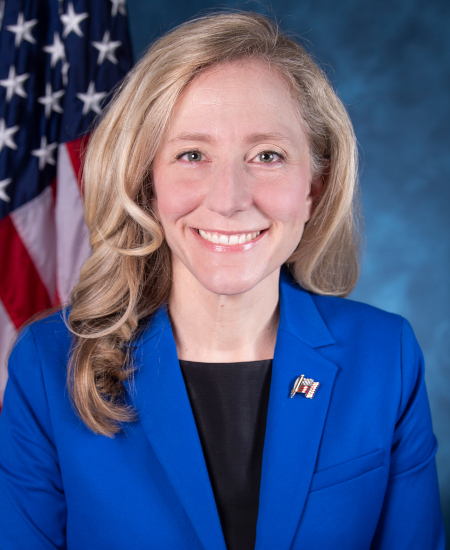
Rep. Abigail Davis Spanberger
Sponsored bills
Maddy summaryThis bill requires federal agencies to improve transparency around improper payments and fraud risks. It mandates that agencies report on programs failing to submit required improper payment reports, identify new programs (with over $100 million in first three years of operation) as susceptible to significant improper payments, and submit annual anti-fraud reports to Congress. These reports must detail fraud risk management structures, risk profiles, and anti-fraud strategies for all programs, including justifications for any gaps. The law directly affects all executive agencies managing federal programs and activities. It aims to strengthen accountability by making agencies document and address payment errors and fraud vulnerabilities.
Maddy summaryThe READ Act Reauthorization Act of 2023 extends the authorization period for the Reinforcing Education Accountability in Development Act (commonly known as the READ Act) from five to ten fiscal years. This change allows U.S. international education programs, administered by agencies like USAID, to operate without annual reauthorization for a longer period. The bill directly affects programs providing educational support in developing countries, such as teacher training and literacy initiatives. The key mechanism is amending Section 4(a) of the existing law to adjust the funding duration, ensuring continued program stability.
Maddy summaryHR 5390, the Critical Infrastructure Manufacturing Feasibility Act, directs the Secretary of Commerce to study U.S. manufacturing gaps in critical infrastructure sectors (like energy, water, and transportation). The study must identify imported products due to domestic supply chain constraints, analyze the job and cost impacts of manufacturing them domestically, and assess feasibility in rural areas or industrial parks. The Secretary must submit a public report with findings and recommendations to Congress within 18 months of the bill's enactment. This is a procedural study bill with no funding or mandates; it solely gathers data to inform future policy decisions.
Maddy summaryHRES 1226 is a non-binding resolution honoring 282 law enforcement officers killed in the line of duty during 2023, listed by name in the resolution. It formally acknowledges their sacrifice, expresses unwavering support for current officers, and recognizes the need for adequate resources to protect them. The resolution does not create new laws or policies but serves as a ceremonial tribute to memorialize fallen officers and support their families, aligning with existing National Police Week observances established since 1962.
Maddy summaryHR 8353, the Preparing Election Administrators for AI Act, requires the Election Assistance Commission (EAC) to create voluntary guidelines for state and local election offices within 60 days of the bill's enactment. These guidelines must address AI risks and benefits in election administration, cybersecurity threats from AI, how AI impacts election information accuracy, and strategies to combat AI-generated disinformation. The EAC will develop these guidelines in consultation with the National Institute of Standards and Technology (NIST). The bill directly affects election administrators by providing non-binding tools to manage AI technology use in elections.
Maddy summaryHR 8336 amends the Transition Assistance Program (TAP) to create a dedicated counseling pathway specifically for members of the reserve components of the Armed Forces. The bill adds language to Section 1142(c)(1) of Title 10, requiring military departments to include this reserve-focused pathway within TAP services. This change directly affects reserve service members transitioning from military to civilian life by providing tailored counseling resources. The bill modifies an existing program structure without creating new benefits or funding.
Maddy summaryHRES 1197 is a non-binding House resolution recognizing the contributions of elementary and secondary school teachers. It formally thanks teachers for their role in building civic, cultural, and economic well-being, aligning with National Teacher Appreciation Week (May 6-10, 2024). The resolution encourages students, parents, school leaders, and officials to acknowledge teachers during this week. It does not create new programs, allocate funding, or impose obligations on schools or educators. As a symbolic gesture, it directly addresses the teaching profession without altering any laws or policies.
Maddy summaryThe Child Rescue Act establishes a national working group to study how law enforcement can better identify and rescue children affected by child sexual abuse material (CSAM) and contact offenses. The Working Group will gather data from law enforcement agencies to estimate offender and victim numbers, identify resource needs, and develop victim-centric policing strategies. It will make recommendations to Congress on funding, investigative approaches, and resource allocation to help law enforcement better protect children. The Working Group must submit a report within 365 days of the bill's enactment, including findings and recommendations for legislation. This is a procedural bill focused on analysis and recommendations, not on changing existing laws or creating new enforcement powers.
Maddy summaryThe SERVICE Act of 2024 establishes a 5-year pilot program to create specialized veterans response teams within law enforcement agencies. These teams, funded through federal grants, directly assist veterans in crisis by connecting law enforcement with VA resources, providing mental health training for officers, and organizing 24/7 volunteer response teams. Key provisions include identifying veteran officers to wear service pins, coordinating with VA and community agencies, and developing crisis response plans. The program requires participating agencies to track outcomes and report grant data to Congress annually.