

Safeguards Ensuring Criminal and Unvetted Refugees don't Enter America Act or the SECURE America Act This bill imposes restrictions on the admission of aliens, including refugees, and addresses related issues. Specifically, no refugees may be admitted until Congress enacts a joint resolution setting the maximum number of refugees allowed to be admitted in a particular fiscal year. Currently, that number is set each fiscal year by the President. The Department of Homeland Security (DHS) must notify Congress at least 30 days before determining that an alien or class of aliens is eligible for refugee status. Congress may nullify the determination by enacting a joint resolution of disapproval. Further, an alien shall be inadmissible for holding certain beliefs, such as (1) believing that a system of religious law should be implemented in the United States, (2) believing that the alien does not need to learn English if the alien is not already fluent, or (3) any belief that the Department of State determines is incompatible with the principles of the United States. DHS may not parole into the United States an alien who does not have status under immigration law. Currently, DHS may provide parole in certain instances, including for urgent humanitarian reasons. Federal agencies must notify a state at least 30 days before resettling a refugee in that state. The refugee may not be resettled in that state if the state expresses disapproval. An alien who has committed a crime of violence (generally one involving the use or threat of physical violence against person or property) may not be eligible for refugee status and must be removed.
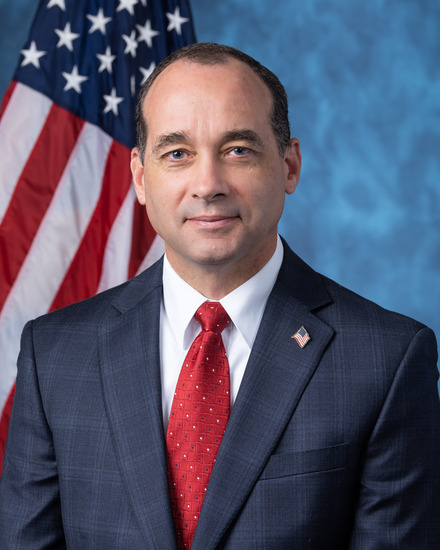
Rep. Bob Good
Sponsored bills
Designating the Chinese Communist Party as a Transnational Organized Crime Group Act This bill requires the Department of Justice (DOJ) to designate the Chinese Communist Party as a transnational organized crime group and a top international criminal organization. DOJ must also report on violations of federal racketeering laws committed or aided by the Chinese Communist Party.
Defending Students' Civil Rights Act of 2021 This bill prohibits the use of critical race theory or critical race pedagogy in any federally funded program or activity. Specifically, the bill includes the use of critical race theory or critical race pedagogy as a violation of Title VI of the Civil Rights Act of 1964, which prohibits discrimination based on race, color, or national origin in federally funded programs or activities. The bill defines critical race pedagogy as the separation of students or teachers, or the assignment of characteristics or assumptions, based on race, color, or national origin. The bill defines critical race theory as a curriculum that establishes specified principles relating to race or sex, including that (1) one race or sex is inherently superior to another, (2) the United States is fundamentally racist or sexist, and (3) an individual bears responsibility for the past actions of others of the same race or sex.
Freedom From Union Violence Act of 2021 This bill revises the federal criminal statute commonly known as the Hobbs Act, which prohibits the obstruction of interstate commerce by robbery or extortion (or by attempting or conspiring to commit robbery or extortion). Currently, an extortion offense includes obtaining property of another with consent through the wrongful use of force, violence, or fear. Typically, violations are investigated by the Federal Bureau of Investigation and prosecuted by the U.S. Attorney's Office. First, this bill broadens the scope of prohibited conduct by (1) eliminating the requirement that the means used to obtain property (i.e., the use of force, violence, or fear) must be wrongful, and (2) expanding extortion to include obtaining property of another by wrongful use of fear not involving force or violence. Second, the bill explicitly states that the maximum fine is $100,000. Third, the bill exempts from the federal prohibition conduct that (1) is incidental to peaceful picketing during a labor dispute, (2) consists solely of minor bodily injury or damage to property, and (3) is not part of a pattern of violent conduct or of a coordinated violent activity. A violation involving exempted conduct is subject to prosecution only by state and local authorities.
Teleabortion Prevention Act of 2021 This bill restricts the use of telehealth for chemical abortions (also known as medication abortions). Specifically, it requires a provider who dispenses or prescribes medication for a chemical abortion to physically examine the patient, be physically present at the location of the chemical abortion, and schedule a follow-up visit. The bill provides an exception for a chemical abortion that is necessary to save the life of a mother whose life is endangered by a physical disorder, illness, injury, or condition. The bill establishes criminal penalties—a fine, a prison term of up to two years, or both—for a provider who does not comply with the requirements. A patient who undergoes a chemical abortion may not be prosecuted.
Americans not Aliens Act This bill prohibits an alien who has been ordered removed from receiving employment authorization. Currently, an individual who has been ordered removed may receive employment authorization if the Department of Justice finds that the individual's removal is impracticable or contrary to the public interest.
Service Member SCOTUS Act of 2021 This bill authorizes the Supreme Court to review by writ of certiorari certain cases in which the Court of Appeals for the Armed Forces has denied a petition for review or relief.
Criminal Alien Removal Clarification Act of 2021 This bill subjects to deportation an alien who at any time after admission has been convicted of a felony or two misdemeanors under state or federal law. Currently, an alien is subject to deportation for a single conviction for certain felonies (such as an aggravated felony), two or more convictions for crimes involving moral turpitude, or being a drug addict.
No Frivolous Application for Short-Barreled Shotguns Act or the NFA SBS Act This bill removes certain short-barreled shotguns from the definition of firearms for purposes of the National Firearms Act. It also eliminates the prohibition on the sale or transportation of such shotguns in interstate commerce and treats persons who acquire or possess a short-barreled shotgun as meeting the registration or licensing requirements for such shotguns where such requirements are determined by reference to the National Firearms Act. The bill preempts state or local laws that impose a tax or recordkeeping requirements on short-barreled shotguns. The Department of Justice must destroy records relating to the registration of shotguns described by this bill within one year after the enactment of this bill.
No Taxpayer Funding for the Central American Minors Program Act This bill prohibits using federal funds to carry out the Central American Minors program, a Department of Homeland Security and Department of State program that reunites qualified children from El Salvador, Guatemala, and Honduras with their parent who is lawfully present in the United States.