No Publicity for Terrorists Act of 2022 This bill requires social media platforms to remove the accounts of certain users (individuals designated as terrorists) and establishes related penalties for failure to comply with this requirement.
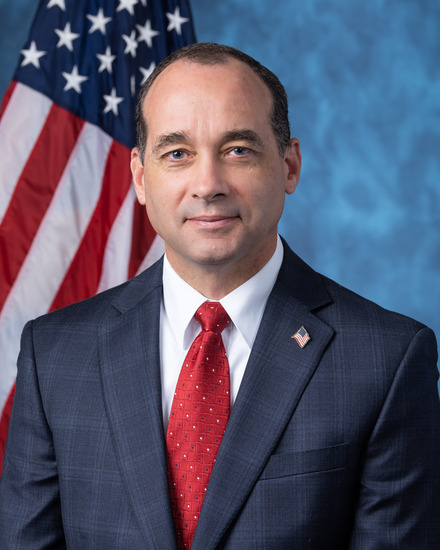
Rep. Bob Good
Sponsored bills
No Backdoor Gun Control Act of 2022 This bill removes the category of any other weapon from the definition of firearm under the National Firearms Act. The bill treats persons who acquire or possess any other weapon as meeting registration or licensing requirements under the National Firearms Act. The bill requires the Department of Justice to destroy any records relating to the registration of any other weapon not later than one year after the enactment of this bill.
Securing Enfranchisement and the Rights of Voters regardless of Inoculation Status Act or the SERVIS Act This bill prohibits requiring voters to present vaccine passports or other information regarding their COVID-19 vaccination status, and also restricts masking requirements, for voting in federal elections. Specifically, the bill makes it unlawful for any state or political subdivision to require a voter to present a vaccine passport or other information regarding the voter's COVID-19 vaccination status. Further, a state or political subdivision may require a voter to wear a mask in order to enter a polling location only under certain circumstances. In particular, the state or political subdivision must (1) make masks readily available and at no cost to the voter and to an individual who accompanies the voter, and (2) provide reasonable accommodation from such masking requirement to an individual with a disability.
American Tech Workforce Act of 2021 This bill eliminates the Optional Practical Training Program and modifies requirements for H-1B visas (nonimmigrant workers in specialty occupations and fashion models). (The Optional Practical Training Program provides an eligible F-1 student visa holder temporary employment authorization before or after completion of the student's studies, or both.) Under this bill, the employer must pay an H-1B visa holder the greater of (1) the annual wage paid to a U.S. worker who did identical or similar work in the two years before the employer's H-1B application; or (2) $110,000, with this amount to be adjusted annually for inflation. Currently, the H-1B visa holder must be paid the greater of (1) the employer's actual wage for similarly qualified U.S. workers in the specific position, or (2) the local prevailing wage for the occupational classification. The bill also removes a requirement for the employer to provide the visa holder with working conditions such that the working conditions of similarly employed workers will not be affected. The bill imposes limits on assigning H-1B visa holders to third-party work sites, such as limiting the visa validity period to one year if the visa holder performs any part of their assignment at a third-party work site. The bill requires the H-1B applications with the highest listed compensation to be granted before those with lower listed compensation.
Halt All Lethal Trafficking of Fentanyl Act or the HALT Fentanyl Act This bill places fentanyl-related substances as a class into schedule I of the Controlled Substances Act. A schedule I controlled substance is a drug, substance, or chemical that has a high potential for abuse; has no currently accepted medical value; and is subject to regulatory controls and administrative, civil, and criminal penalties under the Controlled Substances Act. Additionally, the bill establishes a new, alternative registration process for schedule I research that is funded by the Department of Health and Human Services or the Department of Veterans Affairs or that is conducted under an investigative new drug exemption from the Food and Drug Administration. The bill also makes several other changes to registration requirements for conducting research with controlled substances, including permitting a single registration for related research sites in certain circumstances, waiving the requirement for a new inspection in certain situations, and allowing a registered researcher to perform certain manufacturing activities with small quantities of a substance without obtaining a manufacturing registration.
Recognizing the Unborn Act of 2021 This bill replaces the term fetus with unborn child throughout federal law, including provisions relating to abortions and medical research. The bill also creates a default statutory definition for unborn child : a child in utero, or a member of the species Homo sapiens , at any stage of development, who is carried in the womb.
Restoring America's Leadership in Innovation Act of 2021 This bill revises several aspects of patent law. The bill changes the U.S. patent system back to a first-to-invent system, in which the first inventor to conceive of an invention is entitled to a patent. Currently, the first person to file an application that meets all the necessary requirements is entitled to the patent. Several types of administrative patent challenge proceedings are abolished, as well as the Patent and Trademark Office (PTO) body that decides those proceedings. The bill relaxes the standard for what constitutes patent-eligible subject matter. The only ineligible inventions shall be those that exist in nature independent or prior to human activity or that exist solely in the human mind. The bill also makes it easier for a patent owner that has won an infringement case in court to secure a permanent injunction against the infringing defendant. Specifically, there shall be a presumption that further infringement would cause irreparable harm to the prevailing patent owner, and the burden shall be on the infringer to prove otherwise. (Currently, a prevailing patent owner seeking a permanent injunction must prove, among other things, that further infringement would cause irreparable harm.) The bill limits what types of publications shall be treated as prior art that could be used to make an invention be considered to be anticipated or obvious (and therefore not patentable). The bill authorizes the PTO to keep and spend all the fees that it collects.

Illegal Immigrant Payoff Prohibition Act This bill prohibits the payment of a settlement to an alien for a civil action brought against the United States in connection with the alien's inadmissibility to, or unlawful presence in, the United States.
Mandating Responsibility Act This bill establishes a private cause of action for employees who are harmed by their employer's COVID-19 vaccine mandate. An employee may bring an action against the employer for wrongful termination or other adverse employment actions for violating the mandate. An employee may also bring an action against the employer for wrongful death or serious injury related to the COVID-19 vaccine administration, if the employee received the vaccine solely to comply with the employer's mandate. An employee may recover damages (actual, compensatory, and punitive), injunctive relief, attorney's fees and costs, and other appropriate relief.
Better Enforcement of Grievous Offenses by unNaturalized Emigrants Act or the BE GONE Act This bill expands, for immigration purposes, the definition of aggravated felony to include sexual abuse, sexual assault, and aggravated sexual violence. (Under current law, a conviction for an aggravated felony is grounds for deportation and may bar an individual from other immigration-related benefits.)