

Nuclear Family Priority Act This bill imposes limits on various types of family-sponsored immigration visas. The alien parents of U.S. citizens shall not qualify for visas for immediate relatives , which are not subject to any direct numerical limits. Currently, the spouses, unmarried children under 21, and parents of citizens are considered immediate relatives. The bill also creates a nonimmigrant visa for such parents of citizens. Such aliens shall not be eligible for employment or any public benefits. The bill also reduces the baseline annual cap for family-sponsored visas from 480,000 to 88,000, and revises the methods for calculating the cap. Currently, the 480,000 cap may be adjusted depending on various factors but shall not be less than 226,000. Preference allocations (visa categories subject to various annual caps) for various family-sponsored visas shall be eliminated, including those for the siblings and married children of citizens. The bill provides for a preference allocation for the unmarried children under 21 and spouses of permanent residents, subject to the 88,000 annual cap.
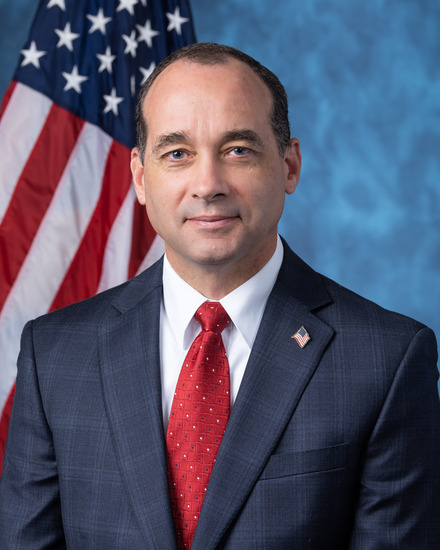
Rep. Bob Good
Sponsored bills
No Vaccine Passports for Americans Act This bill restricts collection and disclosure of an individual's vaccination status, including for COVID-19 vaccinations. It also makes it unlawful to discriminate based on COVID-19 vaccination status and to mandate vaccination in certain circumstances. Specifically, the bill prohibits the use of federal funds to establish or collaborate with federal, state, private, or international systems that track or monitor an individual's COVID-19 vaccination status. Additionally, federal agencies must destroy existing records that contain information about an individual's COVID-19 vaccination status within 30 days. Furthermore, agencies may not issue vaccine passports or similar standardized documentation of COVID-19 vaccination status. The bill also prohibits discrimination based on COVID-19 vaccination status or willingness to provide documentation of vaccination status in employment, public accommodations, and certain public programs and services. Remedies and enforcement mechanisms available under federal civil rights laws apply to violations under this bill. In addition, federal privacy standards for health information must prohibit the disclosure of non-anonymized information about the status of any vaccination without a patient's express consent. Moreover, the bill makes anyone who requests an individual's vaccination status subject to these standards. The bill temporarily bans (1) mandates for vaccines authorized for use under emergency procedures, and (2) administration of those vaccines to minors or individuals who lack capacity to consent to vaccinations without the consent of their parent or guardian. It also prohibits public disclosure of an individual's COVID-19 vaccination status without express, written consent. Violations of these prohibitions are subject to criminal and civil penalties.
Protecting Individual Sovereignty Through Our Laws Act or the PISTOL Act This bill modifies the definition of rifle for purposes of the National Firearms Act to exclude from such definition a pistol equipped with a rear brace or rear attachment designed to assist the shooter in controlling the pistol. The bill also directs the Department of Justice to amend applicable regulations governing pistols to provide that the presence or absence of rear mounted braces or attachments that can assist a user in controlling the pistol shall not cause a firearm to be considered a pistol.
Protect Americans from Foreign Criminals Act of 2021 This bill requires the Department of Homeland Security (DHS) to conduct background checks before releasing from custody an alien who is unlawfully present in the United States. Specifically, before releasing such an individual from detention while removal proceedings are pending, DHS must conduct a background check using criminal history databases covering the United States, the individual's country of origin, and any country that the individual transited through. DHS may not release the individual if the individual is (1) facing charges for (or convicted of) an aggravated felony, (2) a member of a criminal street gang, or (3) subject to mandatory detention on various crime- or security-related grounds. Furthermore, DHS must review and determine whether the criminal history databases of countries around the world meet standards for accessibility, accuracy, and other factors. DHS may not release a detained individual if a background check for that individual is required from a country with databases that fail to meet the relevant standards.
Human-Animal Chimera Prohibition Act of 2021 This bill establishes new federal crimes related to conduct involving certain types of human-animal chimeras. The term human-animal chimera means an organism that, from an early stage of development, contains human and nonhuman parts. This bill makes is unlawful to create or attempt to create a prohibited human-animal chimera, transfer or attempt to transfer a human embryo into a nonhuman womb, transfer or attempt to transfer a nonhuman embryo into a human womb, or transport or receive for any purpose a prohibited human-animal chimera. A violator is subject to civil and criminal penalties.
Separation of Powers Restoration Act of 202 1 This bill modifies the scope of judicial review of agency actions to authorize courts reviewing agency actions to decide de novo (i.e., without giving deference to the agency's interpretation) all relevant questions of law, including the interpretation of (1) constitutional and statutory provisions, and (2) rules made by agencies. No law may exempt a civil action from the standard of review required by this bill except by specific reference to such provision.
Protecting Access for Hunters and Anglers Act of 2022 This bill bars the Department of the Interior and the Department of Agriculture from prohibiting or regulating the use of lead ammunition or tackle on federal land or water that is under the jurisdiction of such departments and made available for hunting or fishing. The bill makes exceptions for specified existing regulations and where the applicable department determines that a decline in wildlife population at the specific unit of federal land or water is primarily caused by the use of lead in ammunition or tackle, based on the field data from such unit, and the state approves the regulations.
Major Richard Star Act This bill provides that combat-disabled uniformed services retirees with fewer than 20 years of creditable service may concurrently receive, without reduction, veterans' disability compensation and retired pay or combat-related special compensation.
Stop the Sexualization of Children Act This bill prohibits the presentation of sexually oriented materials to children under the age of 10. The bill defines sexually oriented material as any (1) depiction or description of sexual activity; (2) lewd or lascivious depiction or description of human genitals; or (3) topic involving gender identity, gender dysphoria, transgenderism, sexual orientation, or related subjects. Specifically, the bill prohibits (1) the use of federal funds to develop, implement, facilitate, or fund any sexually oriented program, event, or literature for children under the age of 10; and (2) the use of federal facilities or properties to host or promote such programs, events, or literature. The bill grants a parent or guardian a private right of action against a government official, government agency, or private entity that violates this bill. Additionally, the bill prohibits federal agencies from disbursing federal funds to a government agency or private entity for three fiscal years if the agency or entity has received two or more injunctions for violations of the bill in a five-year period.
Maddy summaryHRES 1433 is a non-binding resolution expressing the U.S. House of Representatives' support for designating October 12, 2022, as "National Loggers Day." It acknowledges the logging industry's economic contributions, role in forest management, and benefits like job creation, watershed protection, and wildfire prevention. The resolution encourages the President to officially recognize the day but does not create new laws or alter policies. It directly affects public acknowledgment of loggers' work, not any legal or financial obligations.