

Maddy summaryThe Kids Online Safety Act (HR 7891) would require major online platforms (with high revenue or user numbers) to implement safety features for children and teens, including default protective settings, parental controls, and age verification. It would mandate platforms to report annually on risks to minors and their safety measures, and prohibit advertising harmful products (like tobacco, alcohol, or gambling) to minors. The bill directly affects social media platforms, online video games, and video streaming services that are used by minors, with the goal of preventing mental health harms, compulsive usage, and cyberbullying.
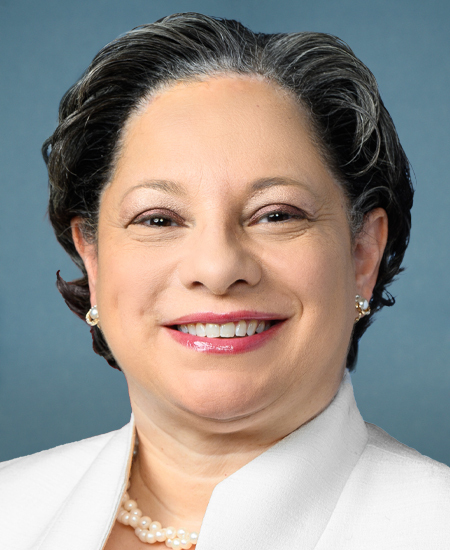
Rep. Jennifer L. McClellan
Sponsored bills
Maddy summaryHRES 1461 is a symbolic resolution designating September 2024 as "National Voting Rights Month" to raise awareness about voting access. It encourages all U.S. citizens to uphold voting rights, supports existing voting rights legislation like the Freedom to Vote Act, and recommends schools teach about voting history and current restrictions. The resolution specifically aims to highlight efforts to address historical and ongoing barriers affecting historically marginalized groups, including Black, Latino, and disabled voters. It does not create new laws but promotes educational initiatives and media campaigns about registration deadlines and election access.
Maddy summaryHRES 1448 is a non-binding House resolution stating that the House believes every person has the right to emergency health care, including abortion care, during medical emergencies. It specifically addresses concerns that abortion restrictions force medical providers to choose between treating patients in life-threatening situations or risking criminal charges. The resolution highlights that such restrictions disproportionately harm Black, Indigenous, people of color, immigrants, low-income individuals, and LGBTQI+ patients. It does not change existing laws but expresses congressional support for ensuring access to emergency care without legal barriers. The resolution was introduced by multiple House members and referred to the Energy and Commerce Committee.
Maddy summaryThe CCAMPIS Reauthorization Act (HR 9559) reauthorizes federal grants to colleges and universities to provide child care services for student parents. Eligible institutions - those with at least 150 students qualifying for Federal Pell Grants - can receive annual grants between $75,000 and $2 million to establish campus-based child care, offer subsidized care through sliding fee scales, or provide before/after school programs. The bill requires grantees to report annually on student parent demographics, program outcomes, and quality metrics, and authorizes $500 million per year for fiscal years 2025-2030. This directly supports low-income student parents pursuing postsecondary education by addressing a key barrier to their academic success.
Maddy summaryThis bill caps the interest rate at 6% on student loans that active-duty servicemembers (or their spouses jointly) consolidate or refinance *during* military service, but only if those loans were originally taken out *before* they joined the military. It directly affects servicemembers who use consolidation or refinancing to manage pre-service student debt while serving. The key provision limits interest rates on these specific consolidated/refinanced loans to 6% for the duration of military service, excluding other types of debt. The bill defines "student loan" to include both federal loans under the Higher Education Act and qualifying private loans.
Maddy summaryHRES 1432 designates September 10, 2024, as "National Firearm Suicide Prevention Day" to raise public awareness about firearm suicides and promote safe storage practices. The resolution encourages healthcare professionals to discuss safe firearm storage with patients and supports the day's goals of reducing firearm suicides through education. It directly affects the general public and healthcare providers by highlighting evidence that safe storage lowers suicide risk, referencing statistics like 54.6% of U.S. suicides in 2022 involving firearms. The bill is symbolic, with no new legal requirements, and aligns with existing awareness efforts like Firearm Suicide Prevention Day.
Maddy summaryThe Stand with Ukraine Act of 2024 establishes a framework for sustained U.S. security assistance to Ukraine in response to Russia's invasion. It endorses a 10-year bilateral security agreement and directs the U.S. government to provide military equipment, training, and security assistance to strengthen Ukraine's defense capabilities against Russian aggression. Key provisions include treating Ukraine as a major non-NATO ally for defense transfers, fast-tracking military sales through the Foreign Military Sales program, and creating mechanisms to prioritize defense article transfers. The bill also includes specific support for Ukraine's recovery, reconstruction, and demining efforts following the conflict. This legislation directly affects U.S. foreign policy implementation, military assistance programs, and Ukraine's ability to build a credible defense against Russian threats.
Maddy summaryHRES 1419 is a symbolic resolution recognizing Overdose Awareness Day and committing the House to strengthen efforts against the opioid crisis. It does not create new law but formally: (1) recognizes Overdose Awareness Day, (2) pledges to advance bipartisan policies reducing stigma around substance use disorders, and (3) commits to collaborating with states, communities, and organizations to support prevention, treatment, harm reduction, and recovery services. The resolution highlights the crisis' severity - including 932,000 overdose deaths since 1999 and a $1 trillion annual economic burden - but focuses on shared goals rather than specific policy changes. It directly affects congressional action and public messaging, not individual citizens or programs.
Maddy summaryHR 9425, the Tobacco User Fee Modernization Act of 2024, updates how tobacco product manufacturers and importers pay fees to fund FDA oversight. It increases the total annual fee to $826.2 million for 2025, then adjusts future fees annually based on inflation (Consumer Price Index). The bill expands fee collection to cover all tobacco products (not just specific classes) starting in 2028, requiring manufacturers to report quarterly sales data to calculate their share. Fees are allocated based on each company's share of total U.S. sales for their product categories, with reporting deadlines beginning in 2027.
Maddy summaryThe Healthy Food Access for All Americans Act creates a tax credit and grant program to improve access to healthy food in underserved communities. It provides a 15% tax credit for new grocery stores or 10% for renovations in food deserts (areas with limited access to affordable nutritious food), plus grants covering 15% of construction costs for permanent food banks or 10% of operational costs for temporary food access providers like mobile markets and farmers markets. To qualify, providers must be located in designated food deserts, meet specific requirements regarding food sales and location, and receive certification from the Treasury Department in coordination with the Agriculture Department. The program requires annual updates to the USDA's Food Access Research Atlas to track food retailers and ensure proper targeting of resources. This legislation directly affects grocery store operators, food banks, and mobile food vendors seeking to serve communities lacking adequate food access.