

Maddy summaryHR 7585, the Enhanced Cybersecurity for SNAP Act of 2024, requires states to transition all SNAP (food stamp) EBT cards to chip-enabled technology by 2029, phasing out magnetic stripes. It mandates states to provide mobile-friendly digital interfaces for managing EBT accounts, including real-time transaction alerts, fraud reporting tools, and virtual card numbers for online purchases. The bill prohibits states from using outdated password requirements inconsistent with federal cybersecurity standards and ensures no replacement fees for cards lost, stolen, or damaged due to fraud or expiration. States will receive reimbursement for costs related to upgrading cards and payment terminals, directly affecting 40 million SNAP recipients and state agencies managing the program.
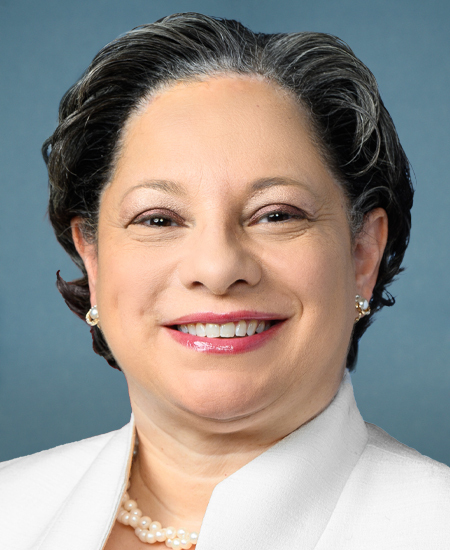
Rep. Jennifer L. McClellan
Sponsored bills
Maddy summaryHR 9363, the Empowering Women in Agriculture Act, requires U.S. Department of Agriculture programs to prioritize support for socially disadvantaged women farmers and ranchers. The bill amends existing law to explicitly include gender prejudice in anti-discrimination definitions and defines "women’s nonprofit organization" for the first time. Key provisions mandate that at least 10% of funds under the Beginning Farmer and Rancher Development Grant Program must serve socially disadvantaged women farmers, and extend program funding periods through 2029. This directly affects women farmers facing systemic barriers and the nonprofit organizations serving them, with concrete policy changes focused on equitable resource allocation.
Maddy summaryHR 9274, the SHAWL Act, establishes two new Smithsonian museums: the National Museum of the American Latino and the American Women’s History Museum. It authorizes both museums to be located within the National Mall’s "Reserve" area, overriding prior restrictions, and requires federal agencies managing potential sites to transfer jurisdiction to the Smithsonian after notifying congressional committees. The bill mandates that both museums accurately represent diverse cultures, histories, and viewpoints within Latino and women’s communities through exhibits and programs, requiring input from a broad range of community experts. It also requires the Smithsonian to submit biennial reports to Congress detailing compliance with these representation requirements.
Maddy summaryThis resolution designates the week of August 26-30, 2024, as "National Community Health Worker Awareness Week" to honor community health workers (CHWs). CHWs are frontline public health workers who connect underserved communities to health and social services through culturally competent outreach, education, and advocacy. The resolution symbolically supports CHWs’ work by raising awareness of their role in reducing health disparities, without creating new laws or funding. It directly affects CHWs and the communities they serve by highlighting their contributions to health equity. The House encourages collaboration at all levels to recognize CHWs’ efforts, but the resolution has no binding policy impact.
Maddy summaryThe Improving Mentorship in STEM Higher Education Act creates a National Science Foundation program to fund projects enhancing mentorship for STEM faculty, graduate students, and postdoctoral researchers at colleges and universities. Eligible entities - including minority-serving institutions, historically Black colleges, Tribal Colleges, rural-serving universities, and emerging research institutions - can apply for competitive grants to develop mentoring skills, promote evidence-based practices, and provide cultural competency training. The program is funded with $5 million annually (2025-2029) and requires a five-year report assessing effectiveness and proposing permanent implementation if successful.
Maddy summaryThe Federal Prison Oversight Act establishes a new inspections regime for federal prisons, requiring the Justice Department's Inspector General to conduct regular assessments of Bureau of Prisons facilities. These inspections will evaluate conditions of confinement, medical care, staffing levels, safety protocols, and policies related to visitation and programming. The bill also creates a new Ombudsman position within the Department of Justice to receive and address complaints from incarcerated people, their families, and staff about health, safety, and rights concerns. The Inspector General must submit public reports with recommendations, and the Bureau must respond with corrective action plans within 60 days. The law includes protections against retaliation for those filing complaints and requires the Bureau to provide multiple confidential channels for submitting complaints.
Maddy summaryH.J. Res. 193 proposes a constitutional amendment to eliminate legal immunity for federal officials, including the President, from criminal prosecution for actions taken while performing official duties. It also prohibits the President from granting a pardon to themselves. The amendment would apply to all federal officers (such as the President, Vice President, and members of Congress) except for Congress members acting in their legislative role as defined in the Constitution. If ratified by 38 states, this change would become part of the U.S. Constitution, requiring no further congressional action.
Maddy summaryHRES 1375 is a non-binding resolution recognizing extreme weather as a critical threat to children's health and well-being, emphasizing that children face unique vulnerabilities due to their developing bodies, higher exposure to pollutants, and heightened risks during events like heatwaves, wildfires, and poor air quality. It expresses Congress's view that solutions must be developed and deployed rapidly and equitably, with specific attention to children's physical and mental health needs. The resolution suggests concrete measures such as improved air filtration in schools, accessible public alerts for extreme heat, expanded cooling centers, and better infrastructure for child-friendly emergency spaces, though it does not create new laws or mandates.
Maddy summaryHR 9104, the Access to Birth Control Act, requires pharmacies that normally stock contraception to provide birth control or related medications without delay if in stock, or immediately offer alternatives like referrals to other pharmacies or expedited orders if unavailable. It prohibits pharmacists from intimidating customers, misrepresenting availability, breaching confidentiality, or refusing to fill valid prescriptions for birth control. Pharmacies violating these rules face civil penalties up to $1,000 per day or private lawsuits. The law specifically applies to pharmacies that routinely carry contraception and excludes cases where a valid prescription is missing or payment cannot be made. It aims to address documented refusals to dispense birth control, particularly following the Dobbs decision.
Maddy summaryThis bill amends a section of law governing Department of Veterans Affairs (VA) employee compensation to clarify that disputes over whether an employee received the correct pay amount under existing rules are not considered "adjustment of compensation" under the statute. It specifically excludes grievances challenging pay accuracy from the definition of "establishment, determination, or adjustment of employee compensation." The change directly affects VA employees covered under Section 7421(b) who might file such pay-related grievances. The bill makes a technical clarification to streamline how these disputes are categorized within VA's compensation process.