

Maddy summaryHRES 1489 is a symbolic House resolution designating the week of September 23-27, 2024, as "National Clean Energy Week." It expresses congressional support for recognizing clean energy's role in economic growth (citing 8.35 million jobs in the sector) and encourages voluntary actions like public awareness, investment in clean energy technologies, and supporting local clean energy jobs. The resolution does not create new laws, funding, or obligations - it only formally endorses the week-long observance to highlight clean energy’s economic and environmental benefits. It directly affects no specific group but aims to raise national awareness of the clean energy sector.
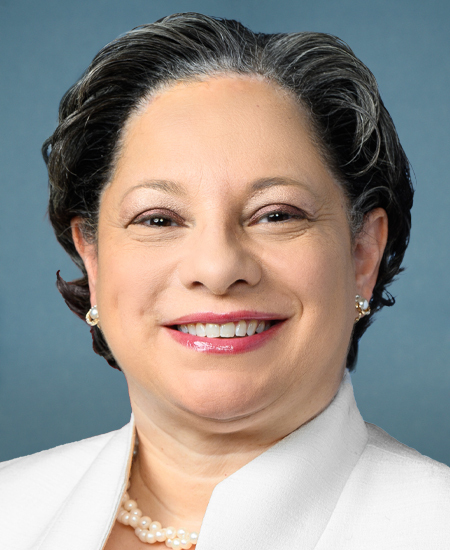
Rep. Jennifer L. McClellan
Sponsored bills
Maddy summaryHR 9765, the Improving Retirement Security for Family Caregivers Act of 2024, allows certain unpaid family caregivers to contribute to Roth IRAs at the standard annual limit. It directly affects unpaid caregivers who provided at least 500 hours of in-home care (e.g., bathing, meal prep, medication management) for a child or an adult with special needs (including elderly adults with age-related conditions) while working fewer than 500 hours paid during the year. The bill amends tax rules to treat these caregivers as if they meet the standard Roth IRA contribution income limits, enabling them to build retirement savings without being disqualified due to low paid employment. This change applies to taxable years beginning after December 31, 2024.
Maddy summary# Summary of Voter Empowerment Act Legislation This comprehensive legislation, titled the "Voter Empowerment Act," aims to significantly reform election administration across the United States to increase voter access, improve election security, and ensure equitable treatment of all voters. Key provisions include: 1. **Voter Access Enhancements**: - Requires states to provide voter-verified paper ballots for all voters - Mandates secure drop boxes for absentee ballots with specific accessibility requirements - Prohibits restrictions on curbside voting - Requires states to notify voters of polling place changes at least 7 days before elections - Allows use of sworn written statements or student ID cards to meet voter ID requirements 2. **Special Populations Accommodations**: - Requires accommodations for voters residing on Indian lands, including designated ballot pickup locations - Mandates bilingual voting materials for covered jurisdictions - Provides special provisions for military and overseas voters - Requires institutions of higher education to serve as voter registration agencies 3. **Election Administration Improvements**: - Requires states to establish contingency plans for natural disasters and public health emergencies - Establishes minimum standards for polling place operations to prevent unreasonable waiting times - Mandates states to provide sufficient poll workers and voting systems - Requires states to participate in post-election surveys 4. **Enforcement Mechanisms**: - Creates private rights of action for individuals to challenge violations - Authorizes the Attorney General to bring civil actions for enforcement - Establishes clear timelines for addressing violations - Prohibits campaign activities by chief state election officials 5. **Implementation Timeline**: - Most provisions apply to the 2026 election cycle or later - Some provisions apply immediately upon enactment The legislation is designed to modernize election administration while ensuring accessibility and security, with specific provisions addressing the needs of historically marginalized voting populations and creating new enforcement mechanisms to hold states accountable for compliance.
Maddy summaryThis bill requires the Department of Defense to provide clear, annual information to TRICARE beneficiaries (military members, families, and retirees) about reproductive healthcare access under the military health system. It mandates details on covered care (including abortion), when care is available at military facilities, how to request leave/travel for out-of-state care, and how to find non-DoD providers. Military healthcare providers must also receive annual training on their obligation to offer covered reproductive care (abortion, contraception, fertility) regardless of state laws, and their legal protections. The information must be shared in person, in writing (including electronically), and posted in accessible areas at military medical facilities. This focuses on improving transparency and provider knowledge, not expanding coverage.
Maddy summaryThis bill removes a barrier for parents who borrowed Federal Direct PLUS loans to pay for their dependent children's education. It amends the Higher Education Act to make these PLUS loans eligible for income-contingent repayment (ICR) and income-based repayment (IBR) plans - previously excluded from both. As a result, affected parents can now use income-driven repayment options that adjust payments based on their earnings, rather than being limited to standard repayment. The change applies to existing PLUS loans for dependent students and related consolidation loans, effective upon the bill's enactment.
Maddy summaryThis bill expands TRICARE coverage to allow military service members and their dependents to obtain up to a full year's supply of contraception in a single fill (365 days) at military pharmacies, retail pharmacies, or through TRICARE's mail-order program. It requires TRICARE to implement this coverage within 180 days of enactment and mandates outreach to inform beneficiaries and providers within 90 days of implementation. The policy directly affects active-duty military members and their eligible dependents enrolled in TRICARE, removing prior restrictions on supply limits for contraceptive prescriptions. This change simplifies access by eliminating the need for frequent refills while maintaining existing coverage requirements under TRICARE.
Maddy summaryHRES 1473 is a non-binding resolution passed by the U.S. House of Representatives that condemns racism, bigotry, and misinformation targeting Haitian people and their descendants. It celebrates the historical contributions of Haitian Americans to U.S. society, including founding cities (like Chicago via Jean Baptiste Point du Sable), advancing civil rights (W.E.B. Du Bois), and enriching healthcare, education, and culture. The resolution specifically calls on all Americans to reject racist tropes and misinformation, and urges elected officials to promote inclusivity and responsible communication. It was introduced in response to recent false claims that fueled threats against Haitian communities, such as the bomb threats in Springfield, Ohio.
Maddy summaryHR 6319 (the 911 SAVES Act of 2023) requires the Office of Management and Budget to reclassify public safety telecommunicators as "Protective Service Occupations" within 30 days of enactment. This change corrects their current misclassification in the federal Standard Occupational Classification (SOC) system, which is used for statistical data on jobs. The bill directly affects how these professionals - critical in emergency calls involving missing children, active threats, and officer safety - are officially categorized in government workforce data. It does not create new benefits or funding but aims to better recognize their lifesaving role through accurate federal job classification.
Maddy summaryHRES 1468 is a non-binding resolution recognizing the significant pay disparity faced by disabled women in the U.S. workforce. It cites data showing disabled women earn, on average, 50 cents for every dollar earned by nondisabled men, with even starker gaps for disabled women of color (e.g., 44 cents for disabled Latinas). The resolution highlights systemic barriers like occupational segregation, the subminimum wage, and lack of support services contributing to these inequities. It does not create new laws or affect any group directly, but formally acknowledges these disparities and reaffirms the House’s commitment to addressing wage gaps. This is a symbolic recognition, not a policy change.
Maddy summaryThis bill expands online privacy protections under the Children's Online Privacy Protection Act to cover teens aged 12-17, in addition to children under 13. It requires website and app operators to obtain verifiable consent from parents for children and from teens themselves before collecting personal information. The bill restricts operators from using collected data for individual-specific advertising to children or teens and mandates clear notices about data practices. Operators must provide users with the right to access, delete, and correct personal information they've collected. These requirements apply to websites, online services, and mobile applications that collect information from children or teens or have actual knowledge a user is a child or teen.