

Maddy summaryThe Pink Tax Repeal Act prohibits businesses from charging different prices for substantially similar consumer products or services based on the gender of the intended users. It defines "substantially similar" as having no meaningful differences in materials, use, or design - meaning color alone (e.g., pink vs. blue packaging) cannot justify price differences. The Federal Trade Commission would enforce this under existing laws, and state attorneys general could also sue companies for violations on behalf of residents. This directly affects consumers who pay higher prices for identical or nearly identical items marketed to a specific gender, such as women’s razors or clothing.
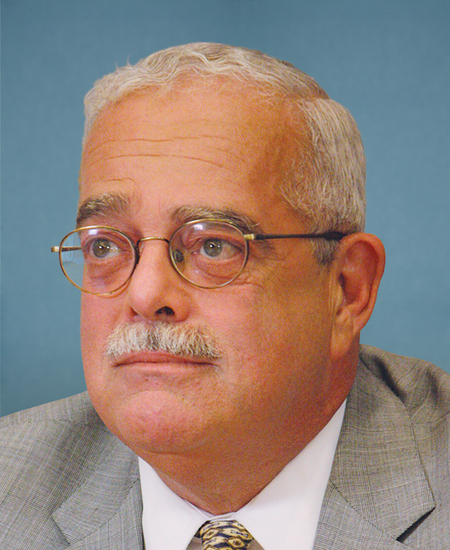
Rep. Gerald E. Connolly
Sponsored bills
Maddy summaryHRES 1109 is a symbolic resolution commemorating the 1913 Woman Suffrage Procession in Washington, DC, where suffragists led by Alice Paul and Inez Milholland marched to demand voting rights for women. It honors the participants' courage during a protest that drew 500,000 spectators despite violent opposition, highlighting how this event advanced the national push for the 19th Amendment. The resolution does not create new laws but reaffirms support for voting rights equality, connecting the 1913 march to ongoing efforts to protect democratic access. It specifically acknowledges the intersectional struggles of women of color in the suffrage movement. As a commemorative resolution, it has no binding policy effect.
Maddy summaryHR 7801, the Sultana Steamboat Disaster Commemorative Coin Act of 2024, authorizes the U.S. Mint to produce commemorative coins honoring the 1865 Sultana steamboat disaster - the worst maritime disaster in U.S. history, which killed nearly 1,200 people. The bill specifies three coin types ($5 gold, $1 silver, and half-dollar clad) to be minted between January 1, 2027, and December 31, 2027, with surcharges from sales directed to the Sultana Historical Preservation Society for museum development and artifact preservation. The coins will be sold at face value plus surcharges ($5-$35 per coin), and the funds must support constructing a museum, exhibits, and preserving disaster-related history. This bill does not create new laws but enables commemorative coin sales to fund a specific historical preservation effort.
Maddy summaryThe AADAPT Act reauthorizes and expands the Project ECHO grant program to specifically address Alzheimer's disease and dementia care. It provides $1 million annually (2026-2031) for grants to eligible health care entities - such as rural clinics, tribal organizations, or community health centers - to develop online training programs for primary care providers working in underserved areas (including rural, frontier, or medically underserved communities). These programs aim to improve provider retention, increase early diagnosis of dementia, and enhance quality care. The bill requires grantees to report on outcomes and ensures funding supplements, rather than replaces, existing resources.
Maddy summaryHR 7770, the Rosie the Riveter Commemorative Coin Act, authorizes the U.S. Mint to produce and sell three commemorative coins honoring women who worked on the U.S. home front during World War II. It specifies $5 gold coins (max 50,000), $1 silver coins (max 400,000), and half-dollar coins (max 750,000), all to be issued between January 1, 2025, and December 31, 2025. Each coin sale includes a surcharge ($35 for gold, $10 for silver, $5 for half-dollar), with all surcharge funds directed to the Rosie the Riveter Trust for maintaining the Rosie the Riveter WWII Home Front National Historical Park and educational programs. The coins will feature designs reflecting the legacy of diverse women workers and must meet specific weight, diameter, and composition standards.
Maddy summaryHR 7787, the Federal Labor-Management Partnership Act of 2024, establishes a Federal Labor-Management Partnership Council to improve collaboration between federal agencies and employee representatives. The Council, composed of agency leaders, labor union representatives, and federal management officials, advises the President and supports local labor-management committees across executive branch agencies. The bill requires agencies to create these committees, provide training in dispute resolution techniques, and allow employee representatives pre-decisional input on workplace matters - without requiring bargaining over non-negotiable issues. This applies to all executive branch agencies and covered legislative branch entities like the Capitol Police and GAO, focusing on concrete procedural changes to enhance workplace partnerships.
Maddy summaryHR 6727 establishes the United States Foundation for International Conservation, a nonprofit organization that will provide grants to support long-term management of protected and conserved areas in eligible countries. The Foundation requires a 2:1 cost match from other sources, demands host country and community consent through binding agreements, and prioritizes areas with high biodiversity or species of significant importance. It will be governed by a Board of Directors including government officials and private sector experts, operate for 10 years with $1 million authorized for 2024 and $100 million annually from 2025-2035, and must follow international conservation standards while prohibiting funding for countries supporting terrorism or violating human rights.
Maddy summaryHR 5247, the Expedited Hiring for VA Trained Psychiatrists Act of 2023, allows the Veterans Health Administration (VA) to hire psychiatrists who complete VA-residency programs without following standard civil service hiring rules. The bill permits immediate appointment after residency completion (or before, if the process begins early) for positions that have remained unfilled for at least 35 days. This directly affects VA psychiatrists completing specific residency programs and streamlines their hiring into VA clinical roles.
Maddy summaryThe Stateless Protection Act of 2024 would create "stateless protected status" for noncitizens in the United States who are stateless (not recognized as citizens by any country). The bill would allow these individuals to apply for protection from deportation, employment authorization, travel documents, and adjustment to lawful permanent resident status (a green card). It establishes a process for determining statelessness, requiring the Department of Homeland Security to consider evidence from various sources including international organizations and foreign governments. The legislation directly affects approximately 218,000 stateless people living in the U.S., who currently face barriers to work, education, healthcare, and travel due to their legal status. The bill also includes provisions for preventing statelessness internationally and updating U.S. laws to prevent future cases of statelessness.
Maddy summaryHR 7634, the Plastic Pellet Free Waters Act, prohibits plastic pellets and pre-production plastic materials from being discharged into water through wastewater, spills, or runoff from specific facilities. It directly affects plastic polymer production facilities, plastic molding and forming facilities, and any point source (like packaging or transport operations) handling plastic pellets. The bill requires the EPA to issue a final rule within 60 days of enactment banning these discharges and updating all relevant wastewater, stormwater, and performance standards in permits and regulations. This creates a legal requirement for facilities to prevent plastic pellet pollution in waterways, targeting a major source of ocean plastic pollution.