

Maddy summaryThe Captive Primate Safety Act prohibits the import, export, sale, transport, breeding, or possession of certain nonhuman primates - including chimpanzees, gorillas, monkeys, and their hybrids - in interstate or foreign commerce. It directly affects private owners, breeders, and commercial traders of these animals, with limited exceptions for pre-enactment animals (requiring registration with the U.S. Fish and Wildlife Service and restrictions on breeding/sale) and registered research facilities. The law amends the Lacey Act to add these primates to prohibited species lists, effective upon enactment, with regulations to be issued within 180 days. Enforcement remains active even if regulations are delayed, ensuring immediate prohibitions on commercial trade and possession.
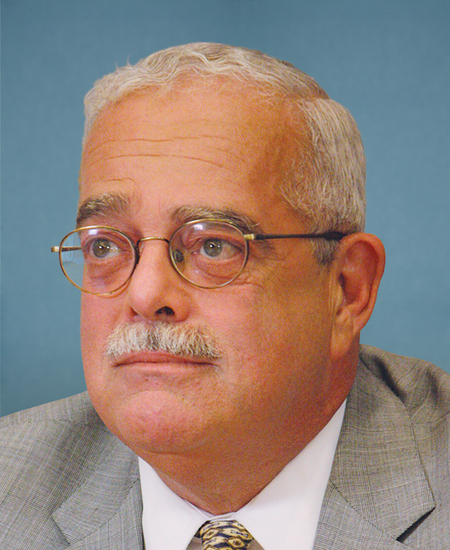
Rep. Gerald E. Connolly
Sponsored bills
Maddy summaryHRES 1166 is a symbolic resolution expressing congressional support for Earth Day. It urges the President to issue an Earth Day proclamation, encourages Americans to take specific environmental actions (like addressing pollution and supporting indigenous stewardship), and calls for global efforts to advance climate goals. The resolution does not create new laws or directly affect any groups - it serves as a non-binding statement of support for environmental action. It references historical environmental milestones but focuses on reaffirming the need for year-round climate and environmental protection efforts.
Maddy summaryThis bill amends U.S. Code to lower the minimum student enrollment required for high schools to establish or maintain a Junior Reserve Officers' Training Corps (JROTC) program, reducing the threshold from 100 to 50 students. It directly affects high schools seeking to start or sustain JROTC units, particularly those with smaller student populations. The key provision changes the existing requirement under Title 10, U.S. Code, making it easier for schools to qualify for JROTC participation. This is a straightforward policy adjustment to existing law, with no additional funding or program changes specified.
Baltimore Bridge Response Invests and Delivers Global Economic Relief Act or the Baltimore BRIDGE Relief Act This bill allows for full federal funding (i.e., 100% federal cost-share) for emergency relief funds to respond to damage caused by the cargo ship Dali to the Francis Scott Key Bridge, including reconstruction of that bridge and its approaches. The Francis Scott Key Bridge is located in Baltimore City, Baltimore County, and Anne Arundel County, Maryland. This bill takes effect as if enacted on March 26, 2024.
Maddy summaryHRES 1127 is a symbolic House resolution commemorating the 45th anniversary of the Taiwan Relations Act (TRA) and reaffirming U.S. policy toward Taiwan. It does not create new law but formally reiterates the U.S. commitment to Taiwan under the TRA framework, including regular defense transfers to support Taiwan's self-defense and advocacy for Taiwan's meaningful participation in international organizations. The resolution highlights longstanding U.S.-Taiwan cooperation on trade, security, education, and global challenges like public health and cybersecurity. It specifically calls on the Secretary of State to advance Taiwan's international engagement and supports existing programs like the Taiwan Fellowship Program and the American Institute in Taiwan. As a procedural resolution, it expresses congressional support for current policy without altering legal obligations.
Maddy summaryThe Cultural Resource Challenge Act of 2024 requires the National Park Service (NPS) to strengthen the management and preservation of cultural resources within national parks and historic sites. It creates a grant program to fund projects enhancing cultural resource resilience (e.g., climate adaptation, digital documentation), prioritizing work that supports Native American, minority, and underrepresented communities, and includes a $20 million Career Academy for NPS staff training on climate impacts, cultural competency, and community engagement. Eligible recipients include tribal governments, states, nonprofits, and educational institutions, with grants covering up to 80% of project costs (waivable for tribal projects under $10,000). The bill mandates annual progress reports to Congress and a comprehensive "State of our Cultural Resources" report within four years, authorizing $250 million over six years (2025-2030) for implementation.
Maddy summaryThe STAMP Act of 2024 bans state and local governments from taxing menstrual products. It prohibits taxes on items like pads, tampons, menstrual cups, discs, and period underwear that meet industry standards. The law directly affects consumers purchasing these products and state/local governments that previously imposed such taxes. It takes effect 120 days after enactment, removing tax burdens on menstrual products nationwide.
Maddy summaryThis bill (HR 7871) would rename the Miami Federal Correctional Institution in Florida to the "Donald J. Trump Federal Correctional Institution" upon enactment. It directly affects only this specific federal prison facility and requires all federal documents, maps, and references to update to the new name. The bill makes no substantive policy changes - it solely alters the facility's official designation.
Maddy summaryThis bill reauthorizes and enhances NOAA's Chesapeake Bay Office to strengthen science-based management of the Bay ecosystem. It establishes new programs for integrated coastal monitoring (collecting data on water quality and habitats), expands school-based education initiatives for students and teachers, and funds habitat restoration projects targeting species like oysters, blue crabs, and submerged vegetation. The bill authorizes $17 million in fiscal year 2024, increasing to $22.6 million by 2027, and requires biennial reports to Congress on progress. These provisions directly support NOAA's work with the Chesapeake Executive Council, state agencies, and educational institutions to advance the Chesapeake Bay Program's goals.
Maddy summaryHCONRES 102 is a non-binding symbolic resolution supporting International Transgender Day of Visibility, introduced by multiple House members. It formally encourages the U.S. to observe the day with ceremonies and programs, celebrates transgender community achievements, and recognizes their ongoing fight for equality amid documented discrimination in employment, healthcare, housing, and public spaces. The resolution highlights transgender representation in politics (including 21 state legislators) and historical context, while acknowledging rising anti-transgender legislation. It directly affirms the transgender community's visibility and rights without creating new policies or funding.