

Audit the Pentagon Act of 2021 This bill requires defense spending reductions during any fiscal year after FY2022 where the Comptroller of the Department of Defense (DOD) fails to certify that a department, agency, or other element of DOD has achieved an unqualified opinion on its full financial statements. The amount of any reductions must be deposited in the General Fund of the Department of the Treasury and must be available for deficit reduction. The bill excludes from any reductions accounts related to military personnel, reserve personnel, National Guard personnel, and the Defense Health Program. The President may waive a reduction if the President certifies that a reduction would negatively affect (1) national security or members of the Armed Forces who are deployed in combat zones, or (2) the Defense Health Program account.
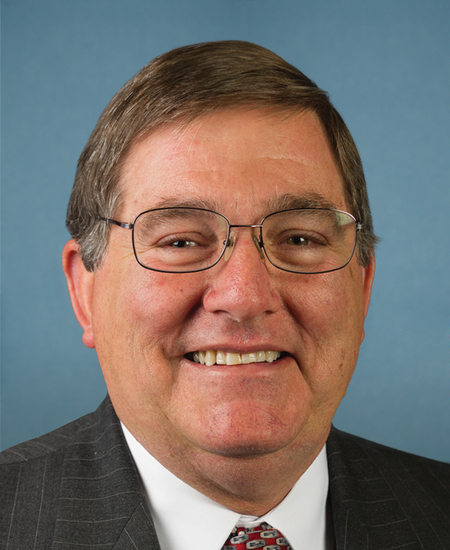
Rep. Michael C. Burgess
Sponsored bills
This resolution calls on the Russian government to immediately release Trevor Reed, a U.S. citizen, and all other political prisoners. It also condemns the Russian government's use of politically motivated imprisonment.
This resolution recognizes the challenges posed by sickle cell trait and sickle cell disease and encourages relevant screening, research, and surveillance. Sickle cell disease is a group of inherited disorders that cause abnormally shaped red blood cells.
This resolution expresses support for the goals and ideals of Sickle Cell Disease Awareness Month. Sickle cell disease is an inherited blood disorder than can lead to pain, anemia, infections, and stroke.
Consumer Safety Technology Act This bill requires various agencies to explore the use of emerging technologies in the context of consumer products and safety. First, the Consumer Product Safety Commission must consult with relevant stakeholders, such as data scientists and product manufacturers, and use artificial intelligence in a pilot program for a least one of the following processes: (1) tracking trends in injuries involving consumer products, (2) identifying consumer product hazards, (3) monitoring the sale of recalled consumer products, or (4) identifying consumer products that do not meet specified importation requirements related to product safety. Additionally, the Department of Commerce must consult with the Federal Trade Commission (FTC) and other relevant agencies to study potential applications of blockchain technology (i.e., the technology that supports digital currencies such as Bitcoin), including the use of such technology to address fraud and other unfair or deceptive practices. Finally, the FTC must report on its efforts to address unfair or deceptive trade practices related to digital tokens (i.e., transferable units of a digital currency).
Foreign Gain-of-Function Research Prevention Act of 2021 This bill prohibits the use of federal funds to conduct or support gain-of-function research involving potential pandemic pathogens by China, Russia, Iran, North Korea, or other foreign adversaries. Gain-of-function research is any research that is anticipated to confer an attribute on a pathogen to enhance its pathogenicity or transmissibility in mammals. If the Department of State finds that an entity has used funds for prohibited research, the entity may not receive any federal funding for a period of five years.
Vaccine Targeting Rogue and Opaque Letters Act of 2021 or the Vaccine TROL Act of 2021 This bill prohibits sending bad faith patent demand letters concerning a product relating to COVID-19 during the declared public health emergency. A patent demand letter is a written communication claiming that the recipient may be liable for patent infringement. Bad faith means making knowingly false or misleading statements, making claims with reckless indifference for the truth, or omitting information with the intent to deceive. Bad faith representations shall include false or misleading claims about the sender's right to assert a patent and whether lawsuits have been filed. They also include making written demands for compensation for invalid patents or to demand compensation without identifying the ultimate parent entity of the letter sender. Under this bill, a patent demand letter related to COVID-19 is presumed to have been sent in bad faith if the sender fails to respond within 10 business days of receiving a request by the letter recipient for (1) certain information required by this bill, or (2) the patent claim that the sender reasonably believes is being infringed. The sender shall have an affirmative defense that it acted in good faith by proving that its misstatements or omissions were unintentional and that it made an error in spite of procedures to avoid such errors. The Federal Trade Commission and state attorneys general may bring actions to enforce these provisions.
Physician Shortage GME Cap Flex Act of 2021 This bill excludes certain hospitals that establish shortage specialty programs from the cap on full-time equivalent residents that is otherwise applicable, and provides for a new building period, for purposes of graduate medical education payments under Medicare.
Work Without Worry Act This bill modifies eligibility for Social Security Disability Insurance (SSDI) benefits for individuals who have a disability that began before age 22. Under current law, these individuals may obtain SSDI benefits based on the work record of a retired, disabled, or deceased parent. However, an individual with earnings after age 22 that exceed a specified monetary limit (i.e., constitute substantial gainful activity) permanently loses eligibility for such benefits. This bill allows individuals to retain eligibility for such benefits regardless of the amount of earnings after age 22. Additionally, individuals who apply for SSDI benefits on a parent's record and also independently qualify for Social Security benefits on their own record will receive the larger of the two benefit amounts.
Reopening to address Every COmplete Record request for Devoted Servicemembers Act of 2021 or the RECORDS Act of 2021 This bill directs the Office of the Archivist of the United States to take specified steps to address record request backlogs. Specifically, the office must take actions to ensure that (1) the number of individuals employed by the National Personnel Records Center is equal to or exceeds the number of such individuals employed on March 2, 2020, and (2) the percentage of such individuals regularly reporting to work in person is equal to or exceeds the percentage of such individuals regularly reporting to work in person on that date. The office shall submit to specified congressional committees a report that provides a comprehensive plan to address the record request backlog of the National Personnel Records Center and improve the efficiency and responsiveness of operations at the center, identifies measurable goals with respect to the comprehensive plan and metrics for tracking progress toward such goals, and describes strategies to prevent future record request backlogs.