

Flexible Financing for Rural America Act This bill allows rural utility service providers to submit to the Department of Agriculture (USDA) a request to adjust the interest rate or modify the terms of certain loans. The request shall include a report summarizing how the adjustment or modification will assist the borrower in providing critical utility services to a rural community. Specifically, on receipt of a request, USDA or the Department of the Treasury (in the case of a loan owned by the Federal Financing Bank) must adjust the interest rate on the loan to match certain interest rates for obligations of comparable maturity to the term remaining on the loan (or a higher rate requested by the borrower), and make modifications to the loan terms as necessary to address changes in the financial position of the borrower due to the COVID-19 public health emergency and to promote the financial sustainability of the borrower. In carrying out the adjustments or modifications, USDA or Treasury shall not impose or collect any fee from, or impose any penalty on, a borrower. The bill also provides funding to implement the adjustments and modifications and for the liquidation of residual intragovernmental amounts owed by the Federal Financing Bank in connection with certain loans.
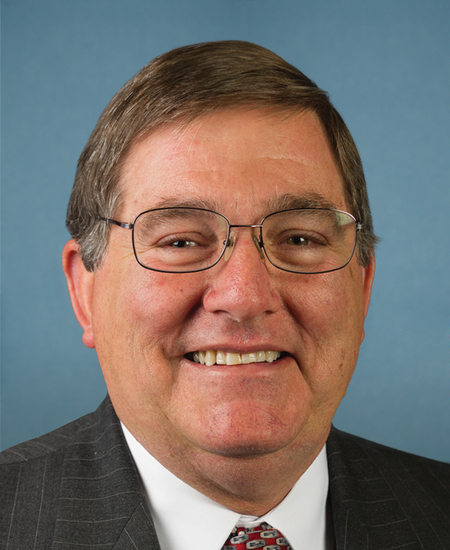
Rep. Michael C. Burgess
Sponsored bills
Pipeline and LNG Facility Cybersecurity Preparedness Act This bill requires the Department of Energy to implement a program to ensure the security, resiliency, and survivability of natural gas pipelines, hazardous liquid pipelines, and liquefied natural gas facilities.
This joint resolution recognizes and affirms the sovereign and unilateral authority of states to defend themselves against invasion.
Eliminate Lavish Incentives To Electric Vehicles Act or the ELITE Vehicles Act This bill terminates the tax credit for new qualified plug-in electric drive motor vehicles 30 days after this bill's enactment date. The credit is permanently repealed for taxable years beginning 1 year and 30 days after enactment.
Safely Ensuring Lives Future Deployment and Research In Vehicle Evolution Act or the SELF DRIVE Act This bill establishes the federal role in ensuring the safety of highly automated vehicles by encouraging the testing and deployment of such vehicles. A highly automated vehicle is a motor vehicle, other than a commercial motor vehicle, that is equipped with an automated driving system capable of performing the entire dynamic driving task on a sustained basis. The bill preempts states from enacting laws regarding the design, construction, or performance of highly automated vehicles or automated driving systems unless such laws enact standards identical to federal standards. The Department of Transportation (DOT) must require safety assessment certifications for the development of a highly automated vehicle or an automated driving system. Manufacturers of highly automated vehicles must develop written cybersecurity and privacy plans for such vehicles prior to offering them for sale. The bill applies certain safety exemptions and testing standards to highly automated vehicles. DOT must (1) inform prospective buyers of highly automated vehicles of the capabilities and limitations of such vehicles; (2) establish the Highly Automated Vehicle Advisory Council to, among other things, develop guidance regarding mobility access for the disabled, elderly, and underserved populations; (3) require all new passenger motor vehicles less than 10,000 pounds to be equipped with a rear seat occupant alert system; and (4) research updated safety standards for motor vehicle headlamps.
Children Have Opportunities in Classrooms Everywhere Act This bill allows tax-exempt distributions from qualified tuition programs (known as 529 plans) to be used for additional educational expenses in connection with elementary or secondary school. The bill also allows certain federal funds for elementary and secondary education to follow a student from a low-income household to the public school that the student attends or for tax-exempt educational expenses. Under current law, tax-exempt distributions in connection with elementary or secondary school are limited to tuition for a public, private, or religious school. The bill allows these distributions to be used additionally for curriculum and curricular materials, books or other instructional materials, online educational materials, tutoring or educational classes outside the home, testing fees, fees for dual enrollment in an institution of higher education, and educational therapies for students with disabilities. Distributions may also be used for tuition and the purposes above in connection with a home school (whether treated as a home school or a private school under state law). In addition, the bill directs state educational agencies to allocate grant funds to ensure the funding follows students to their public school or for other tax-exempt educational expenses outlined by the bill. Each state that carries out these allocations must establish a plan that allows the parent or guardian of an eligible child to apply for grant funds.
United States Army Rangers Veterans of World War II Congressional Gold Medal Act This bill provides for the award of a single Congressional Gold Medal to the U.S. Army Rangers Veterans of World War II in recognition of their dedicated service during World War II.
Increasing Access to Osteoporosis Testing for Medicare Beneficiaries Act of 2021 This bill specifies that certain Medicare payment rules applicable to imaging services shall apply to dual-energy x-ray absorptiometry services used in bone mass scans beginning in 2022. The Centers for Medicare & Medicaid Services must establish national minimum payment amounts for such services.
Rehabilitating Economic Success Through Overcoming Rural Emergencies Act or the RESTORE Act This bill expands the Department of Agriculture's Wildfire and Hurricane Indemnity Program Plus (WHIP+) to include coverage for losses of crops due to high winds or derechos, polar vortexes (including losses to dairy cooperatives due to power outages or curtailments), hailstorms, freeze, and droughts occurring in the 2020 and 2021 calendar years, with specified limitations. Under current law, the program provides disaster payments to agricultural producers who suffered crop, tree, bush, and vine losses resulting from hurricanes, wildfires, and other qualifying natural disasters that occurred in the 2018 and 2019 calendar years.
Contact Lens Prescription Verification Modernization Act This bill revises the requirements for the verification of prescriptions related to the purchase of contact lenses. Specifically, online sellers of prescription contact lenses must provide consumers with a method to transmit a digital copy of their prescriptions to such sellers. Online sellers also must encrypt protected health information they send by email. Additionally, the bill prohibits any seller of prescription contact lenses from using telephone calls with an artificial or prerecorded voice (i.e., robocalls) to verify a consumer's prescription.