

Association Health Plans Act of 2021 This bill provides statutory authority for certain short-term, limited-duration health insurance plans and association health plans. The bill permits short-term, limited-duration plans to provide coverage for a period of less than 12 months, not including extensions. Under current law, such plans are exempt from certain market requirements of the Patient Protection and Affordable Care Act, such as coverage of individuals with preexisting conditions. The bill further permits groups or associations of employers to sponsor fully insured group health plans as if they were employers. Such plans may not discriminate based on the health factors of any prospective plan participant for the purpose of granting an employer's membership in the association or determining a participant's eligibility for benefits or premium amounts.
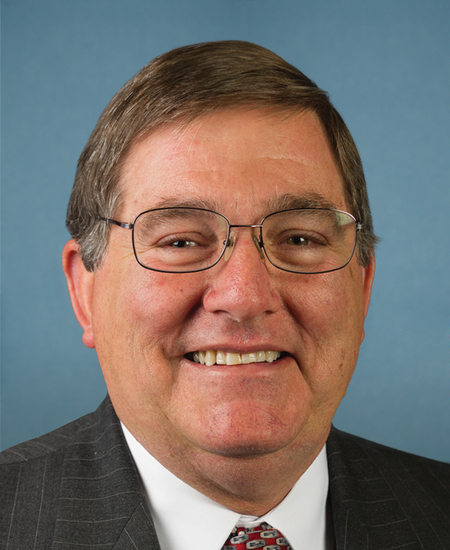
Rep. Michael C. Burgess
Sponsored bills
FDA Advancing Collection of Transformative Science Act or the FACTS Act This bill establishes that certain data and determinations from a request for emergency use authorization for a drug, biological product, or medical device may apply to later regulatory procedures for that product. Specifically, data generated to support a request for emergency use authorization may constitute valid scientific evidence to be considered for various later submissions to the Food and Drug Administration (FDA), including a request for market approval. Also, when granting emergency use authorization for a medical device, if the FDA determines that the device performs certain simple low-risk examinations or procedures, that determination shall apply to certain other regulatory submissions unless additional information contradicts that determination.
Enhancing Grid Security through Public-Private Partnerships Act This bill directs the Department of Energy (DOE) to implement a program to facilitate and encourage public-private partnerships in order to address and mitigate the physical security and cybersecurity risks of electric utilities. In carrying out the program, DOE must take into consideration different sizes of electric utilities and the regions that such utilities serve, prioritize electric utilities with fewer available resources due to size or region, and utilize and leverage existing DOE programs.
Semipostal Stamp Clarification Act of 2021 This bill removes the authority of the U.S. Postal Service (USPS) to issue semipostal stamps (stamps sold at a premium to raise funds for causes of national public interest) except as provided by an act of Congress. (Currently, the USPS issues semipostals using its own discretion to determine the causes it considers to be in the national public interest.) The bill also makes entities (currently, only agencies) eligible to receive amounts that become available from the sale of semipostals. Congress must determine the appropriate agencies or entities that receive such amounts. The USPS must issue regulations addressing how administrative costs incurred relating to semipostals shall be computed, recovered, and kept to a minimum.
Veterans Burn Pits Exposure Recognition Act of 2021 This bill requires the Department of Veterans Affairs (VA) to concede, for the purposes of health care benefits and wartime disability compensation, that a veteran was exposed to certain toxic substances, chemicals, and hazards from burn pits if such veteran served on active duty in a covered location during a specified time frame (unless there is affirmative evidence to establish that the veteran was not exposed during such service). A burn pit is an area used for burning solid waste in open air without equipment. Specifically, the bill covers the following locations and corresponding time periods: Iraq between August 2, 1990, and February 28, 1991, as well as from March 19, 2003, until burn pits are no longer used in this location; Somalia and Southwest Asia (including Kuwait, Saudi Arabia, Oman, and Qatar) from August 2, 1990, until burn pits are no longer used in these locations; and Afghanistan, Syria, Jordan, Egypt, Lebanon, Yemen, Uzbekistan, the Philippines, and Djibouti from September 11, 2001, until burn pits are no longer used in these locations. Under the bill, if an exposed veteran submits insufficient evidence to establish a service-connection for purposes of disability compensation, the VA shall provide a medical examination and request a medical opinion regarding a causal link between the disability and a toxin, chemical, or hazard.
This resolution expresses the sense of the House of Representatives that the Department of Homeland Security (DHS) provides essential protection for our country from foreign and domestic threats and that defunding DHS would be detrimental to our national security.
Cancer Drug Parity Act of 20 21 This bill requires group health plans that cover anticancer medications administered by a health care provider to provide no less favorable cost sharing for patient-administered anticancer medications. This requirement applies to medications that are (1) approved by the Food and Drug Administration; (2) medically necessary for the cancer treatment; and (3) clinically appropriate in terms of type, frequency, extent site, and duration. To comply with this requirement, plans may not, with respect to anticancer medications (1) change or replace benefits to increase out-of-pocket costs, (2) reclassify benefits to increase costs, or (3) apply more restrictive limitations to orally administered medications than to intravenously administered or injected medications.
American Broadband Act This bill addresses broadband and other communications services. The bill limits applicable state and local regulatory authority. Limitations include setting (and providing statutory authority for) deadlines for reviews and decisions related to personal wireless and other telecommunication service facilities, as well as cable franchises and services. Further, a state or locality may not provide broadband services in areas with more than one other commercial provider. The bill exempts certain telecommunications infrastructure projects from environmental and historic preservation reviews, including projects carried out after a declared disaster or emergency (e.g., a wildfire). The bill also establishes a rebuttable presumption that a request for a review of the effects of deploying wireless service on historically, culturally, or religiously significant tribal or Native Hawaiian land is complete if the tribe or Native Hawaiian organization receives certain forms. The bill enhances criminal penalties for willful or malicious destruction of a communication facility. Furthermore, the General Services Administration must establish a common fee schedule for deploying wireless facilities that affect federal property. Additionally, the National Telecommunications and Information Administration must award grants for expanding high-speed broadband access, facilitate through an interagency strike force timely reviews of telecommunications-related requests that affect federal property (e.g., a request for an easement or right-of-way), and report on certain requests concerning communications facilities on federal real property. The bill also requires collaboration among federal agencies that support broadband deployment.
Electric Vehicle Mobility Area Planning Act or the EV MAP Act This bill requires the Department of Energy to establish a grant program to assist electric utilities and other eligible entities in identifying locations for electric vehicle charging stations to meet the needs of electric vehicle drivers.
This resolution honors the suppliers of the National Aeronautics and Space Administration (NASA) for the work they are doing on the Artemis missions.