This resolution condemns the President's failure to heed military and intelligence advisors about the speed and nature of the Taliban offense in Afghanistan and urges the President to commit to maintaining the evacuation operation as long as necessary to evacuate any U.S. citizen, lawful permanent resident, or Afghan partner who requests evacuation assistance .
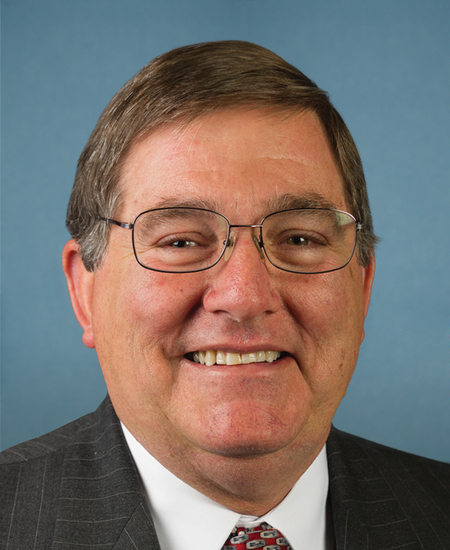
Rep. Michael C. Burgess
Sponsored bills
This resolution commends Steve Verett for his lifelong dedication and service to the cotton industry and to Plains Cotton Growers, Inc. It also congratulates Mr. Verett on his retirement and extends him best wishes in all his future endeavors.
The Pioneering Antimicrobial Subscriptions To End Up surging Resistance Act of 2021 or the PASTEUR Act of 2021 This bill authorizes the Department of Health and Human Services (HHS) to enter into subscription contracts for critical-need antimicrobial drugs, provides $11 billion in appropriations for activities under the bill, and contains other related provisions. A manufacturer of a Food and Drug Administration-approved antimicrobial drug may apply to HHS to have the drug designated as a critical-need antimicrobial, and HHS may enter into a subscription contract for such a critical-need antimicrobial. The bill imposes certain requirements related to such contracts, including a mechanism to lower payments under the contract in certain instances to limit the manufacturer's revenue from the drug. Furthermore, HHS and the Centers for Disease Control and Prevention (CDC) shall award grants to support efforts to encourage the appropriate use of antimicrobial drugs and efforts to combat antimicrobial resistance. The CDC shall also track and assess data relating to antibacterial resistance and human antibiotic use and make such data publicly available. HHS shall also establish a Committee on Critical Need Antimicrobials. The committee shall develop a list of prioritized infections for which new antimicrobial drug development is needed, among other duties. Within six years of the bill's enactment, the Government Accountability Office shall report to Congress a study on the bill's effectiveness in developing priority antimicrobial drugs.
VA Emergency Transportation Act This bill requires the Department of Veterans Affairs (VA) to reimburse a veteran for the reasonable value of emergency transportation by a non-VA provider (1) to a facility for emergency treatment, or (2) from a non-VA facility where the veteran was treated to a VA or other federal facility for additional care.
Listing Reform Act This bill modifies requirements concerning the review of petitions to add a species to the list of endangered or threatened species or to remove a species from the list. Specifically, the bill allows the Department of the Interior and the Department of Commerce to prioritize the consideration of petitions to list a species as endangered or threatened other than in the order in which the petitions are received. The appropriate department may not give general priority to petitions to add species to the list of endangered or threatened species over petitions to remove a species from the list. The deadline for the appropriate department to decide on whether or not a petition to list or remove a species should be granted is changed from within 12 months to as expeditiously as possible. The appropriate department is given the authority to preclude the listing of a species as threatened due to the likelihood of significant, cumulative economic effects that would result from such listing or from the likely resulting designation of critical habitat of the species. Once a petition is precluded due to those economic effects, the appropriate department may not reconsider that finding unless the department (1) determines there is endangerment of extinction of the species; or (2) receives a new petition to add the species to the list that includes an analyses concluding that alternative actions are possible other than those resulting in significant, cumulative economic effects.
Veterans Health Care Stamp Act This bill requires the U.S. Postal Service to issue and sell a Veterans Health Care Stamp to help fund the medical care and treatment of veterans.
This resolution denounces socialism and opposes the implementation of socialist policies in the United States.
Maternal Health Quality Improvement Act of 2021 This bill requires the Department of Health and Human Services (HHS) to undertake activities to improve maternal health, including in rural areas. Specifically, HHS must award grants for (1) developing best practices to reduce preventable maternal mortality, and (2) training health care professionals to reduce and prevent discrimination when providing maternal health services. Additionally, HHS may award grants for integrated maternal and infant health care services. The bill also provides statutory authority for grants that support perinatal quality collaboratives, which are networks of health care and public health professionals who work to improve pregnancy outcomes. Furthermore, the bill requires a study on efforts in health professional schools and training programs to reduce and prevent discrimination in the provision of maternal health services. To address care in rural areas, the bill (1) provides statutory authority for grants that support networks of rural providers to improve and coordinate maternal care, (2) makes maternal care providers eligible for certain telehealth grants, and (3) establishes a demonstration project to improve training on maternal care in rural areas through health professional schools and training programs. The bill also expands the maternal care responsibilities of specified HHS offices and programs.

Cyber Sense Act of 2021 This bill requires the Department of Energy to establish a voluntary Cyber Sense program to test the cybersecurity of products and technologies intended for use in the bulk-power system. The bulk-power system includes facilities and control systems necessary for operating an interconnected electric energy transmission network.
Entrepreneurs Need Timely Replenishment (for) Eating Establishments Act or the ENTRÉE Act This bill provides FY2021 supplemental appropriations for the Restaurant Revitalization Fund and modifies requirements related to administration of the fund. The fund was established in response to COVID-19 to make grants to eligible food and beverage purveyors for covering specified costs such as payroll, operational expenses, and paid sick leave. The bill correspondingly rescinds unobligated amounts previously made available for the Economic Injury Disaster Loan Program and coronavirus state and local fiscal recovery funds. Further, the bill requires the Small Business Administration (SBA) to (1) review and process grant applications in the order in which they are received; (2) impose requirements on applicants that reduce waste, fraud, and abuse; and (3) submit and report monthly on an oversight and audit plan outlining the SBA's policies, procedures, and activities with respect to these grants.