

Maddy summaryThe EHR Program RESET Act of 2023 establishes a new program to modernize the Department of Veterans Affairs' electronic health record system, creating a dedicated program office within the Veterans Health Administration. The bill sets specific performance metrics that facilities must meet before continuing EHR deployment, requires termination of the current Oracle-Cerner contract for training and change management, and mandates new reporting requirements on system stability, staff satisfaction, and interoperability. It also creates an advisory subcommittee of health care experts to provide guidance on the EHR modernization strategy and requires detailed reports on contract savings, system performance, and alternatives to the current EHR technology. The legislation aims to improve veteran care quality, provider satisfaction, and system security while reducing costs and preventing vendor lock-in.
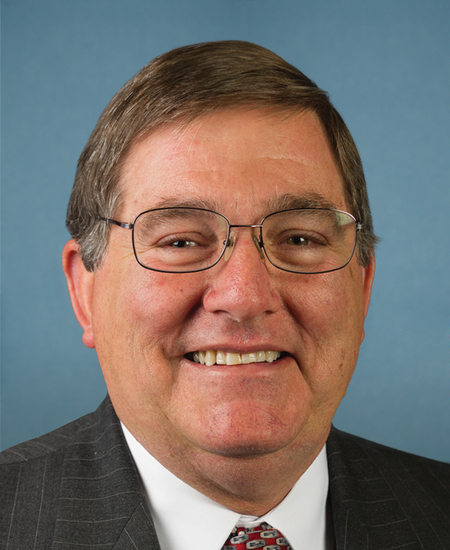
Rep. Michael C. Burgess
Sponsored bills
Maddy summaryHJRES 44 is a congressional resolution seeking to block a 2021 rule by the Bureau of Alcohol, Tobacco, Firearms, and Explosives (ATF). The rule classified firearms with stabilizing braces as "short-barreled rifles," which would have required additional licensing and regulation. This resolution uses a specific legal process (under Title 5, U.S. Code) to formally disapprove the ATF rule, meaning the rule would no longer be in effect. It directly affects firearm owners, manufacturers, and dealers who would have been subject to the rule’s requirements.
Maddy summaryThis resolution (HRES 524) is procedural - it sets rules for debating three separate measures but does not change policy itself. It authorizes the House to consider: (1) H.R. 3564 (which would reverse FHA pricing adjustments for Fannie Mae/Freddie Mac mortgages), (2) H.R. 3799 (which would expand health reimbursement arrangements with insurance), and (3) H. Res. 461 (which condemns using schools to house non-admitted aliens). The resolution streamlines debate time, waives objections, and specifies amendment procedures for each bill. It directly affects how the House schedules and debates these three proposals.
Maddy summaryHR 277 would require Congress to approve major federal regulations before they take effect. Major rules are defined as those with significant economic impact ($100 million+ annually), major cost increases for consumers or industries, or significant adverse effects on competition, employment, or innovation. Agencies must submit detailed information about these rules to Congress, including cost-benefit analyses, before they can take effect. Congress would have 70 session days to approve the rule with a joint resolution; if they don't act within that timeframe, the rule would not take effect. This would increase congressional oversight of federal regulations and require more detailed information about proposed rules before they become law.
Maddy summaryHR 288, the Separation of Powers Restoration Act of 2023, amends federal law to change how courts review agency actions. It requires federal courts to decide de novo (anew) all legal questions - including interpretations of laws and the Constitution - when reviewing agency decisions, rather than deferring to agency interpretations. This applies to all judicial reviews of agency actions under existing law, unless a specific law explicitly exempts such cases. The bill directly affects federal courts, agencies, and parties involved in litigation over agency rules or enforcement. It aims to shift interpretive authority from agencies to courts in administrative law cases.
Maddy summaryHJRES 69 is a resolution seeking to disapprove an Environmental Protection Agency (EPA) rule published on June 5, 2023, which established a "Federal Good Neighbor Plan" for the 2015 ozone air quality standards. The rule aimed to address ozone pollution crossing state lines, particularly affecting southeastern states and industries subject to the 2015 ozone standards. This resolution would block the rule from taking effect by invoking the Congressional Review Act, preventing it from being enforced. If enacted, it would directly stop the EPA from implementing this specific plan, impacting states and businesses that would have had to comply with the rule.
Maddy summaryHRES 514 is a non-binding House resolution designating June 19, 2023, as "World Sickle Cell Awareness Day" to raise public awareness about sickle cell disease (SCD). It directly affects individuals living with SCD, their families, and global health systems by urging increased focus on research, early screening for sickle cell trait, and equitable access to treatments. The resolution includes six key recommendations: supporting newborn screening, eliminating barriers to innovative therapies in Medicare/Medicaid, encouraging public events, and calling for a White House-led interagency cabinet to address SCD care gaps. It does not create new laws or allocate funds but aims to mobilize existing efforts and highlight SCD as a global health priority.
Maddy summaryThe FAIR Act (HR 4144) establishes a new income-driven repayment assistance plan that would limit borrowers' monthly payments to 10% of their adjusted gross income, with full loan forgiveness after 20 years of payments. It requires the Department of Education to provide borrowers with multiple notifications about repayment options, including the new income-driven plan, and creates new deferment options for borrowers facing economic hardship, medical issues, or military service. The bill modifies loan rehabilitation processes to allow borrowers to rehabilitate loans two times instead of one time and limits the Secretary's authority to issue regulations that could increase subsidy costs. This legislation directly affects borrowers of federal student loans made under Title IV of the Higher Education Act of 1965.
Maddy summaryHR 1640, the Save Our Gas Stoves Act, prevents the Department of Energy from implementing energy efficiency standards for gas stoves that would make them unavailable in the U.S. market. It amends federal law to require that any new standard for gas stoves must not result in the unavailability of gas stove types, directly affecting gas stove manufacturers and consumers who rely on these appliances. The bill specifically blocks the implementation of the 2023 proposed rule (Energy Conservation Program: Energy Conservation Standards for Consumer Conventional Cooking Products) and any similar rule. This is a policy change focused on maintaining the availability of gas stoves by altering the criteria for energy standard approval.
Maddy summaryThis bill allows small businesses and self-employed individuals to form shared health insurance plans across different industries, rather than being limited to their own industry. To qualify, the group must exist for at least two years, not discriminate based on health status, and have a governing board with 75% employer representation. These plans must offer equal coverage regardless of health conditions and can adjust premiums based on employer risk pools, while still prohibiting pre-existing condition exclusions. It directly affects small business owners and self-employed people seeking affordable group health options outside traditional industry boundaries.