

Maddy summaryHR 4021, the Fair and Open Skies Act, amends U.S. aviation law to require that the Department of Transportation consider labor standards when reviewing international air transport agreements. Specifically, it adds "preventing the undermining of labor standards" as a mandatory factor in the public interest test for approving such agreements under 49 U.S.C. § 40101. This change directly affects international airlines seeking to operate flights to or from the U.S. and the DOT, which must now evaluate whether proposed agreements could weaken U.S. labor protections. The bill updates existing provisions by replacing outdated language about "agreements with the United States Government" and explicitly including labor standards in the evaluation criteria.
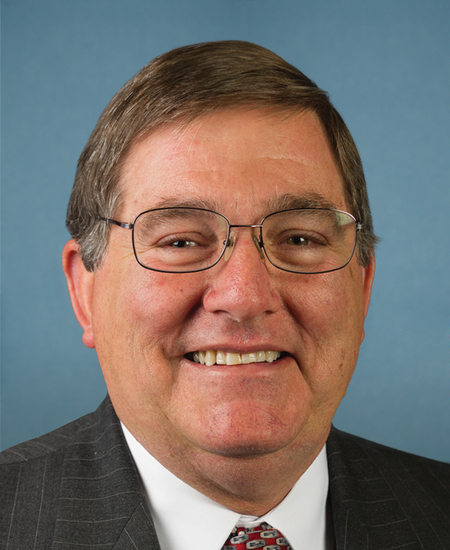
Rep. Michael C. Burgess
Sponsored bills
Maddy summaryHR 3892, the Improving Mental Health and Drug Treatment Act of 2023, permanently allows Medicaid coverage for individuals with serious mental illness or substance use disorders in certain residential facilities (previously limited to a temporary 2019-2023 period). It extends the maximum stay in these facilities from 30 to 45 days and requires states to establish standards for appropriate care placement and a review process for facility compliance. States must also conduct a one-time assessment within 12 months of approval to evaluate treatment availability across care levels and medication-assisted treatment services. This bill directly affects Medicaid programs, states administering them, and individuals receiving care in qualifying residential facilities for mental health and substance use disorders.
Maddy summaryThis bill amends the Public Health Service Act to expand federal efforts in preparing for pandemic threats. It specifically requires agencies like the CDC and NIH to prioritize research into flexible medical countermeasures (including vaccines and treatments) for respiratory viruses with pandemic potential, and to develop platform manufacturing technologies for faster production. The key change directs funding and focus toward "pathogen-agnostic" approaches that work against multiple virus families, rather than targeting single viruses. This primarily affects federal public health agencies and their research programs, aiming to improve readiness for future outbreaks.
Maddy summaryHR 3805, the KIDS Health Act of 2023, establishes a federal demonstration project to test integrated "whole child health" models in up to 15 states. It authorizes $125 million to fund states in designing and implementing community-based programs that address children’s physical, mental, emotional, developmental, and social health needs - specifically for Medicaid-eligible children under 21. Key provisions require states to conduct comprehensive needs assessments, coordinate services across Medicaid, schools, and community partners, adopt value-based payment systems, and integrate primary care with mental health and substance use services. The 48-72 month demonstration will mandate regular reporting on outcomes, health disparities, and best practices, with final evaluation reports to Congress.
Maddy summaryThe HALT Fentanyl Act expands the definition of fentanyl-related substances in the Controlled Substances Act to include many structurally similar compounds, making it easier to regulate new fentanyl analogs without individual listing. It defines these substances based on specific chemical modifications to fentanyl, with limited exceptions for substances already controlled or listed elsewhere. The bill also streamlines research procedures for schedule I substances by creating expedited registration processes and allowing multiple studies under one registration, while requiring the Attorney General to publish a list of substances meeting the new definition.
Maddy summaryHRES 429 is a procedural resolution that sets rules for the House of Representatives to debate and vote on three specific measures. It enables consideration of H.R. 467 (which would amend drug scheduling for fentanyl-related substances), S.J. Res. 11 (to block an EPA air pollution rule for vehicles), and H.J. Res. 45 (to block a Department of Education rule on student loan waivers). The resolution establishes time limits, debate rules, and amendment procedures for each measure. It does not change policy itself but streamlines the legislative process for these three items.
Consumer Access to Broadband for Local Economies and Competition Act or the CABLE Competition Act This bill limits the authority of state and local entities that regulate certain aspects of cable operators (franchising authorities) over the sale or transfer of franchises for cable systems. Under current law, cable operators must typically obtain franchises authorizing them to provide services in a given area, and franchising authorities may place conditions on sales or transfers of franchises for cable systems. Under the bill, franchising authorities may neither (1) prohibit a cable operator from transferring its franchise to another operator, nor (2) require an operator to obtain approval when transferring its franchise to another operator that accepts all of the franchise terms. However, a franchising authority may require a cable operator to notify it of a transfer.
Maddy summaryHR 3497, the Uranium Miners and Workers Act of 2023, expands eligibility for compensation under the Radiation Exposure Compensation Act (RECA) to include uranium miners, millers, ore transporters, and core drillers who worked in specified states between 1942 and 1978 and later developed certain cancers or kidney diseases. The bill redirects $475 million from unobligated coronavirus relief funds (from acts like the CARES Act and American Rescue Plan) to the RECA trust fund to pay claims. It also extends the RECA program's funding period by 4 years and adjusts the deadline for submitting claims to 4 years after the bill's enactment. This law directly affects former uranium industry workers who developed radiation-related illnesses.
National Law Enforcement Officers Remembrance, Support and Community Outreach Act This bill directs the Department of Justice (DOJ) to establish a National Law Enforcement Officers Remembrance, Support, and Community Outreach Program. The bill further directs DOJ to award a grant under the program to the National Law Enforcement Officers Memorial Fund for the expenses associated with community outreach, public education, and officer safety and wellness programs operated by the of the National Law Enforcement Officers Memorial Fund and National Law Enforcement Museum.
Maddy summaryHRES 384 is a non-binding congressional resolution expressing support for designating May 2023 as Motorcycle Safety Awareness Month. It highlights that motorcycles are used by approximately 30 million Americans annually and emphasizes the importance of rider safety education, proper licensing, protective gear, and mutual awareness between motorcyclists and other road users. The resolution encourages all road users to share the road safely and recognizes motorcyclists' right to participate in transportation. It does not create new laws or regulations but aims to promote existing safety practices through public awareness. The resolution directly affects motorcyclists, drivers, and the broader public by encouraging safer road behavior during May 2023.