

This resolution honors and recognizes the patriotism and contributions made by generations of veterans service organizations, veteran advocacy groups, and volunteers and commends the members of such organizations for their dedicated service to members of the Armed Forces, veterans, their families, and their communities. The resolution also encourages the people of the United States to promote awareness of the contributions and dedication of members of veterans service, organizations, veteran advocacy groups, and volunteers to members of the Armed Forces, veterans, and their families. Additionally, the resolution calls on citizens to follow the example of such groups and volunteer support and services to those who have served the country.
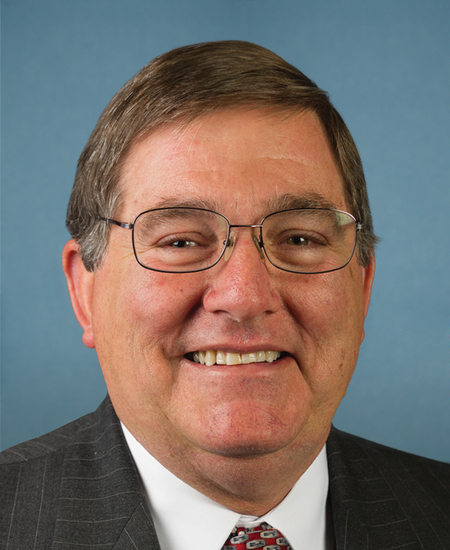
Rep. Michael C. Burgess
Sponsored bills
Maddy summaryHR 5084 designates the U.S. Postal Service facility at 1106 Main Street in Bastrop, Texas, as the "Sergeant Major Billy D. Waugh Post Office." This bill updates all official federal references - including laws, maps, and documents - to use the new name for the location. It directly affects the Bastrop post office and federal records referencing it, without altering postal services or policies. The change is purely ceremonial and procedural, honoring Sergeant Major Billy D. Waugh through the facility's name.
Maddy summaryHR 5073, titled the "Promoting Domestic Energy Production Act," is a tax code amendment affecting oil and gas companies. It changes how businesses calculate adjusted financial statement income by removing specific deductions related to intangible drilling and development costs from their financial reports. The bill requires companies to disregard depreciation and depletion expenses taken into account on their financial statements for these costs when computing taxable income. This applies to tax years beginning after December 31, 2022, directly impacting oil and gas producers who use these accounting methods. The bill does not create new energy policies but alters tax accounting rules for the industry.
Maddy summaryHCONRES 57 is a non-binding concurrent resolution expressing Congress's support for Israel. It states three key points: (1) that Israel is not a racist or apartheid state, (2) that Congress rejects antisemitism and xenophobia, and (3) that the U.S. will remain a steadfast supporter of Israel. This resolution does not create new laws or alter policies - it simply records the expressed sentiment of Congress. It directly affects the U.S. government's public stance on Israel, with no legal effect on citizens or other entities.
This resolution condemns Iran for the 1988 massacre of political prisoners. It also urges the Biden Administration and U.S. allies to publicly condemn the massacre and to pressure Iran to provide information to the families of the victims.
Maddy summaryThis bill directs the U.S. Treasury to mint commemorative coins marking the Marine Corps' 250th anniversary in 2025. It authorizes three coin types: $5 gold coins (max 50,000), $1 silver coins (max 400,000), and half-dollar coins (max 750,000), with surcharges of $35, $10, and $5 respectively. The surcharge proceeds will fund the Marine Corps Heritage Center's educational programs, with no net cost to taxpayers as the Treasury must recover all minting costs through the surcharges. The coins can only be issued during 2025, and the Treasury must ensure all costs are covered before distributing funds to the Heritage Foundation.
Maddy summaryHR 592 requires the Department of Veterans Affairs (VA) to obtain specific certifications before expanding or continuing its electronic health record system at VA facilities. For existing facilities, the VA must certify the system achieves 99.9% monthly uptime for four consecutive months and completes all pre-enactment system improvements. For new facility implementations, the VA must certify the system build is accurate, staff/infrastructure are ready, and implementation won’t harm patient safety, wait times, or care quality. This bill directly affects VA hospitals and the Veterans Health Administration by setting concrete technical and operational requirements before system changes can proceed.
Maddy summaryThis bill, the Veteran Care Improvement Act of 2023, establishes new standards for when veterans can receive care from private providers instead of the Department of Veterans Affairs (VA). It requires the VA to allow veterans to seek community care if they cannot get an in-person appointment within 30 days for primary care or 60 days for specialty care at a VA facility within a 30 or 60-minute drive, respectively. The legislation also mandates that the VA notify veterans of their eligibility for community care within two business days, provide information about telehealth options, and explain reasons for denied care requests along with appeal instructions. Additional provisions include requiring the VA to conduct outreach to inform veterans about community care options, mandate the use of value-based reimbursement models for community care, and establish a pilot program to improve care administration through scheduling improvements and provider incentives. The bill also extends the deadline for health care entities to submit claims under the prompt payment standard from 180 days to one year, and requires the VA Inspector General to assess VA medical center performance in implementing community care programs within three years of enactment.
Maddy summaryThis bill, HR 1282 (Major Richard Star Act), expands benefits for certain military retirees by allowing them to receive both veterans' disability compensation and military retirement pay simultaneously. It specifically affects combat-related disabled retirees under Chapter 61 of the military retirement system who have fewer than 20 years of service. The key change removes the automatic reduction of military retirement pay when these retirees also receive disability compensation, as amended in Section 1413a(b)(3) of Title 10. Technical updates to the law’s structure and effective date (starting after enactment) complete the provisions.
Veterans Mental and Behavioral Health Quality of Care Act This bill requires the Department of Veterans Affairs (VA) to use an independent and objective outside organization to study the difference in the quality of care between behavioral and mental health care provided by VA providers and care provided by non-VA providers.