

Maddy summaryHR 917, the "Protecting Military Installations from Foreign Espionage Act," requires the Committee on Foreign Investment in the United States (CFIUS) to review certain foreign-owned real estate transactions near military sites. It specifically mandates CFIUS to review any purchase or lease of property within 100 miles of a military installation or 50 miles of designated military airspace, training routes, or firing areas - *if* the foreign buyer is linked to Russia, China, Iran, or North Korea. The bill eliminates CFIUS’s discretion for these transactions, forcing automatic review. It also ties approval of energy projects near such sites to CFIUS’s conclusion on these real estate deals, requiring the Defense Secretary to delay or block projects if national security risks are identified. This directly affects foreign entities from targeted nations and streamlines security reviews for military-adjacent properties.
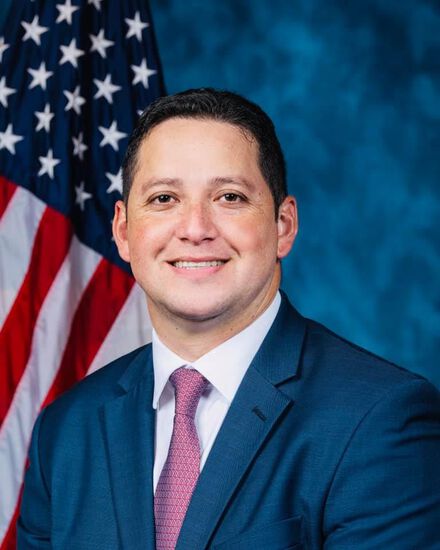
Rep. Tony Gonzales
Sponsored bills
Maddy summaryThis bill authorizes a single Congressional Gold Medal to honor all U.S. Army Dustoff crews who served during the Vietnam War (1962-1973). It recognizes their critical role in evacuating nearly 900,000 wounded personnel, including U.S., South Vietnamese, and allied forces, under extreme combat conditions. The medal, designed with input from the Secretary of Defense, will be presented to the U.S. Army Medical Department Museum for permanent display. Duplicate bronze medals may be sold to cover costs, but the primary action is the commemorative recognition of these crews' service.
Maddy summaryThe EAGLES Act of 2023 reauthorizes and expands the U.S. Secret Service’s National Threat Assessment Center (NTAC) to prevent targeted violence, particularly in schools. It directs the NTAC to provide training, research, and consultation on threat assessment to schools, law enforcement, and mental health professionals, with a focus on early intervention for concerning behaviors. The bill allocates $10 million annually (2024-2028) for these efforts, requiring the Center to develop state-specific training plans and report on outcomes like the number of schools trained. It directly affects school districts, educators, and community safety agencies by standardizing evidence-based prevention programs, avoiding criminal justice involvement for at-risk youth.
Maddy summaryHR 987 authorizes the U.S. Mint to produce commemorative coins honoring Golda Meir, Israel's first female Prime Minister, and the 75th anniversary of U.S.-Israel relations. It specifies three coin types: $5 gold coins (max 50,000), $1 silver coins (max 400,000), and half-dollar clad coins (max 750,000), with detailed weight and composition requirements. All coins will include Golda Meir's image, her name, and commemorative inscriptions, and will be sold during 2026. A surcharge ($35 for $5 coins, $10 for $1 coins, $5 for half-dollars) will be paid to the American Friends of Kiryat Sanz Laniado Hospital Inc. to support its hospital operations.
Maddy summaryHR 621, the PART Act, requires catalytic converters on vehicles to be stamped with a visible vehicle identification number (VIN) using special high-visibility paint to deter theft. It creates a federal grant program to help auto dealers, repair shops, and law enforcement implement this stamping at no cost to vehicle owners. The bill also mandates that sellers of catalytic converters retain buyer identification and vehicle details for two years, and adds new federal criminal penalties for stealing or trafficking in catalytic converters.
Recruit and Retain Act of 2023 This bill allows funds under the Community Oriented Policing Services grant program to be used to recruit and retain law enforcement officers for community-oriented policing.
Maddy summaryThis bill mandates the federal government to develop a comprehensive strategy specifically targeting drug trafficking routes through the Caribbean into the United States, including ports of entry, maritime corridors, and air routes. The strategy must define agency roles, detail required resources, and ensure legitimate trade and travel are not hindered. It specifically requires plans to reduce drug-related violent crime in Puerto Rico and the U.S. Virgin Islands, along with recommendations for additional federal assistance or authorities needed by local law enforcement. The bill creates a procedural requirement for this planning document but does not allocate new funding or change existing laws.
Felony Murder for Deadly Fentanyl Distribution Act of 2023 This bill makes the distribution of fentanyl resulting in death a first degree murder. An individual who is guilty of first degree murder by distributing fentanyl is subject to death or life in prison.
Securing American Families from Exploitation at the Border Act or the SAFE Border Act This bill directs the Federal Emergency Management Agency (FEMA) to establish a temporary grant program to reimburse landowners for loss or damage to property caused by an individual illegally crossing the southern border or to improve the security of such property. Specifically, FEMA may provide grants to landowners who have experienced (or are at risk of experiencing) property theft or damage in areas within 10 miles of the U.S.-Mexico border.
Security First Act This bill reauthorizes the Operation Stonegarden program from FY2024 through FY2027 and addresses other border security issues. (Operation Stonegarden provides grants to enhance the border security capabilities of state, local, and tribal governments.) From FY2024 through FY2027, the money from unreported monetary instruments seized from individuals crossing the U.S.-Mexico border and transferred into the Department of the Treasury general fund shall be made available without further appropriation to the Department of Homeland Security (DHS) to fund Operation Stonegarden. DHS must report to Congress on (1) DHS hiring practices from 2018 to 2021, and (2) whether certain Mexican drug cartels meet the criteria to be designated as foreign terrorist organizations. DHS must also periodically report to Congress about the technology needed to secure the U.S.-Mexico land border.