

Maddy summaryThis bill requires the U.S. Department of Defense and State Department to immediately deliver all previously approved military equipment and services to Israel within 15 days, reversing any pauses on arms transfers. It prohibits using federal funds to withhold, halt, or cancel defense article deliveries to Israel and mandates that unobligated security assistance funds for Israel must be spent by the end of 30 days. The bill also requires monthly reports to Congress detailing all security assistance provided to Israel since October 7, 2023, including specific items delivered and funding sources. The law directly affects U.S. agencies responsible for military aid and Israel as the recipient of the security assistance.
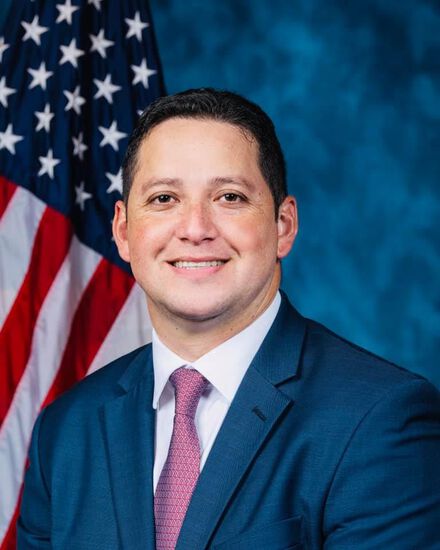
Rep. Tony Gonzales
Sponsored bills
Maddy summaryThis bill amends the Law Enforcement Officers Safety Act (LEOSA) to expand where current and retired law enforcement officers can carry concealed firearms. It specifically allows qualified officers to carry in Federal facilities like post offices and courthouses (previously restricted), clarifies they may carry on public property and transportation, and updates firearms training requirements to accept certification from any state-certified instructor. The key change requires officers to meet recent firearms training standards (using flexible state-based criteria), rather than relying solely on their former agency's standards. This directly affects retired officers seeking to carry in more public spaces and federal buildings without needing prior agency certification.
Maddy summaryThe READ Act Reauthorization Act of 2023 extends the authorization period for the Reinforcing Education Accountability in Development Act (commonly known as the READ Act) from five to ten fiscal years. This change allows U.S. international education programs, administered by agencies like USAID, to operate without annual reauthorization for a longer period. The bill directly affects programs providing educational support in developing countries, such as teacher training and literacy initiatives. The key mechanism is amending Section 4(a) of the existing law to adjust the funding duration, ensuring continued program stability.
Maddy summaryThis bill amends a 2021 law to specify the location for the National Medal of Honor Monument on federal land in Washington, D.C. It requires the monument to be placed within the National Mall's "Reserve" area and attached to, or no more than 1,000 feet from, the Lincoln Memorial. The change directly affects the National Medal of Honor Museum Foundation, which is authorized to build the monument under existing law. This policy adjustment finalizes the physical placement of the monument to honor Medal of Honor recipients, aligning it with the Lincoln Memorial's historical significance.
Maddy summaryHRES 1226 is a non-binding resolution honoring 282 law enforcement officers killed in the line of duty during 2023, listed by name in the resolution. It formally acknowledges their sacrifice, expresses unwavering support for current officers, and recognizes the need for adequate resources to protect them. The resolution does not create new laws or policies but serves as a ceremonial tribute to memorialize fallen officers and support their families, aligning with existing National Police Week observances established since 1962.
Maddy summaryThis bill prohibits distributing AI-generated audio or video that misrepresents a federal election candidate's speech or appearance in a way a reasonable person would believe was authentic, during election campaigns. It specifically bans such content when distributed with intent to influence votes or raise funds, affecting candidates, political committees, and entities involved in federal elections. Exceptions apply for news organizations (with clear authenticity disclaimers) and satirical content. Candidates can sue violators for damages or seek court orders to stop distribution, with the burden of proof on the plaintiff.
Maddy summaryHR 7109, the Equal Representation Act, requires the U.S. Census Bureau to add a citizenship status checkbox to the 2030 and future decennial censuses, asking respondents to identify if they are U.S. citizens, U.S. nationals, lawful residents, or unlawful residents. It then mandates excluding noncitizens (both lawful and unlawful residents) from the population count used to determine each state's number of congressional seats and electoral votes starting with the 2030 census. This bill directly affects how states are apportioned representation in Congress and presidential electoral votes, based solely on the citizen population. The key change is shifting the apportionment base from total population to citizen population alone, using the new census data.
Maddy summaryThis bill amends federal law to simplify interstate firearm transfers. It replaces "rifle or shotgun" with "firearm" in transfer rules, allowing all firearms to be treated uniformly. The key change permits licensed dealers to sell firearms to other licensed dealers anywhere in the U.S., and lets licensed sellers transfer firearms to unlicensed buyers at temporary locations (like gun shows) in any state. It also updates residency definitions for military members and federal employees stationed across state lines, clarifying which state they're considered residents of for firearm purposes. The bill directly affects licensed firearm dealers, military personnel, and federal employees who travel between states.
Maddy summaryThis bill designates the U.S. Postal Service facility at 2395 East Del Mar Boulevard in Laredo, Texas, as the "Lance Corporal David Lee Espinoza, Lance Corporal Juan Rodrigo Rodriguez & Sergeant Roberto Arizola Jr. Post Office Building" to honor these three military service members. It changes the official name of the building for all government references, maps, and records, but does not alter postal services or create new policy. The bill was enacted on May 7, 2024, following passage by both the House and Senate.
Maddy summaryHR 8231, the James Earl Jones Congressional Gold Medal Act, authorizes a Congressional Gold Medal to be awarded to actor James Earl Jones in recognition of his distinguished career in theater and film, and his role in advancing inclusion and equal opportunities for people of all backgrounds in the entertainment industry. The Treasury will strike the medal with an image and inscription of Jones, and may produce and sell bronze duplicates to cover costs, with proceeds deposited into the U.S. Mint's public enterprise fund. This bill serves as a ceremonial honor with no new legal requirements or policy changes.