

Maddy summaryHR 537 authorizes a Congressional Gold Medal to honor 60 diplomats who saved Jewish lives during the Holocaust by issuing visas and passports against their governments' orders, risking expulsion and personal danger. The medal will be presented to the next of kin of these diplomats, alongside representatives from their home countries, and permanently displayed at the United States Holocaust Memorial Museum. The bill also permits the sale of bronze duplicates to cover production costs, with proceeds going to the U.S. Mint. This legislation recognizes the diplomats' humanitarian actions without creating new government programs or altering existing laws.
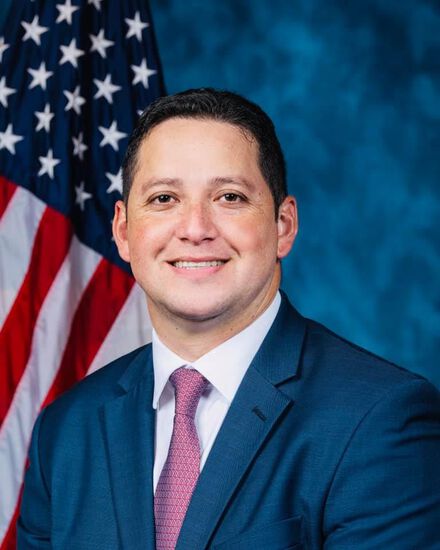
Rep. Tony Gonzales
Sponsored bills
Maddy summaryHRES 965 is a non-binding resolution calling for the immediate release of Ryan Corbett, a U.S. citizen wrongfully detained by the Taliban in Afghanistan since August 2022. It directly affects Corbett (held in poor conditions without charges) and other Americans detained by the Taliban. The resolution demands the Taliban release Corbett unconditionally, urges respect for his human rights, commends Qatar’s role as U.S. protecting power, and condemns the Taliban’s practice of detaining U.S. citizens. It does not create new law but formally expresses congressional support for Corbett and other wrongfully detained Americans.
Maddy summaryHR 5403, the CBDC Anti-Surveillance State Act, prohibits the Federal Reserve from issuing or facilitating central bank digital currency (CBDC) directly or indirectly to individuals through financial institutions. It specifically bans Federal Reserve banks from offering digital products to individuals, maintaining individual accounts, or using CBDC for monetary policy implementation. The bill also clarifies that its restrictions do not apply to existing physical cash or private, permissionless digital payment systems. This bill directly affects the Federal Reserve's ability to develop or deploy a government-run digital dollar. The law aims to prevent the Federal Reserve from creating a digital currency that could enable transaction tracking or government oversight of personal financial activity.
Maddy summaryThis resolution condemns the 1994 bombing of Argentina’s AMIA Jewish Community Center in Buenos Aires, which killed 85 people and injured 300, and calls for accountability for the attack. It urges international cooperation to hold Iranian officials and Hezbollah operatives responsible, referencing Argentina’s recent court ruling that identified Iran as responsible for the bombing. The resolution supports efforts to pursue justice through INTERPOL and stands in solidarity with Argentina’s Jewish community - the largest in Latin America - honoring victims and their families who have waited 30 years for accountability. As a symbolic gesture, it does not create new laws but emphasizes U.S. support for Argentina’s legal process.
Maddy summaryHRES 1262 is a ceremonial resolution commemorating the 100th anniversary of the U.S. Border Patrol's establishment on May 28, 1924. It honors the agency's history, service, and sacrifices - including over 57 million apprehensions and 155 agents who died in the line of duty - without creating new laws or affecting any policies. The resolution symbolically recognizes the Border Patrol's role in border security and recommends designating a National U.S. Border Patrol Day. As a purely commemorative measure, it has no direct impact on legislation, funding, or individuals.
Maddy summaryHR 8466 extends the Affordable Connectivity Program (ACP) through 2024 with $6 billion in funding, directly affecting low-income households receiving subsidized broadband internet. It strengthens eligibility verification by requiring use of the National Verifier, limiting eligibility to households with school meal program participation (not just provider programs), and mandating collection of partial Social Security numbers for verification. The bill adds new antifraud controls and performance measures for the FCC, requiring a report on program effectiveness within a year. It also allows households switching providers to maintain benefits only if they've used the current service for at least 180 days.
Maddy summaryHRES 1255 is a non-binding House resolution introduced on May 23, 2024, that calls on all Americans to observe Memorial Day 2024 as a day of remembrance for military personnel who died in service. The resolution specifically honors "the men and women of the Armed Forces who have died in the pursuit of freedom and peace" and urges the public to demonstrate appreciation for their sacrifices. It does not create new laws or policies but serves as a symbolic expression of national gratitude, emphasizing respect for those who died while defending democratic values. The resolution was co-sponsored by multiple House members and aligns with the traditional observance of Memorial Day.
Maddy summaryHR 895, the Combating Organized Retail Crime Act of 2023, expands federal law to better prosecute organized retail theft by amending sections 2314 and 2315 of Title 18. It clarifies that crimes involving stolen goods valued at $5,000 or more over 12 months - including retail theft - can be prosecuted under existing federal statutes, and broadens definitions to include goods taken via "any facility of interstate or foreign commerce." The bill also creates a new Organized Retail Crime Coordination Center within Homeland Security, requiring it to coordinate federal, state, and local law enforcement efforts, share threat information with retailers, and produce annual public reports on trends. This directly affects law enforcement agencies, retailers, and criminal justice systems by standardizing prosecution thresholds and enhancing interagency collaboration.
Maddy summaryThis resolution (HRES 616) condemns the Taliban's ongoing human rights abuses in Afghanistan, specifically targeting women, girls, religious minorities (including Hazaras and Sikhs), and ethnic groups. It expresses support for Afghans who assisted U.S. missions and calls for the U.S. government to halt Taliban violence and address systemic repression. Key mechanisms include urging the State Department to assess potential crimes against humanity, developing strategies to support human rights defenders, and expediting refugee processing for Afghans with Special Immigrant Visas. The resolution does not impose new legal requirements but formalizes congressional stance and policy guidance. It directly affects U.S. foreign policy implementation toward Afghanistan.
Maddy summaryThis bill requires the President to provide Congress with a 15-day written notice before pausing, delaying, or suspending U.S. arms shipments to Israel, including detailed justification and impact analysis. It establishes strict congressional review periods: 15 days for initial review, plus additional 10-12 day windows if Congress introduces a disapproval resolution, effectively giving lawmakers significant power to block such pauses. The bill directly affects the President and the White House by restricting unilateral decisions on military aid to Israel, specifically targeting delays like the May 2024 pause on bomb shipments. Key provisions define "covered defense articles" as weapons under existing export laws and mandate transparency about funding, end users, and potential impacts on Israel’s military edge.