

Rural Uplift and Revitalization Assistance Act This bill requires the Department of Agriculture (USDA) to provide technical assistance in geographically underserved and distressed areas for USDA rural development programs. Specifically, USDA must provide (directly or through cooperative agreements) technical assistance and strengthen local capacity to improve USDA rural development program access for local partners (e.g., local governments, businesses, and nonprofit organizations) in geographically underserved and distressed areas. Under the bill, a geographically underserved and distressed area means a rural area (1) in a socially vulnerable community; (2) in a persistent poverty county; (3) in an economically distressed area; or (4) that lacks adequate water services, sewer services, or decent housing in any region near the border between the United States and Mexico. On an annual basis, USDA must submit to Congress (and make publicly available) a report on how the provision of technical assistance under this bill has affected geographically underserved and distressed areas.
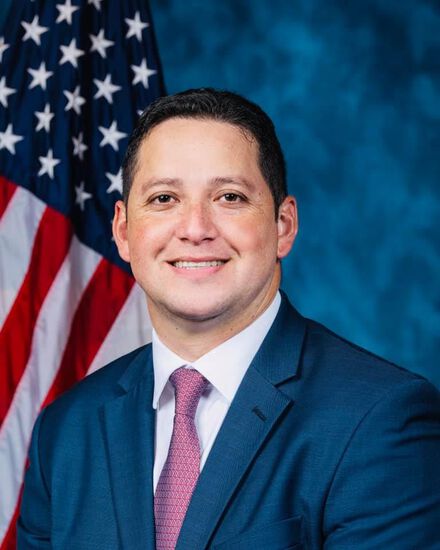
Rep. Tony Gonzales
Sponsored bills
Maddy summaryHR 9374, the Stand with Israel Act, prohibits U.S. federal funds from being used to support the United Nations or its entities if they restrict Israel's full participation as a member state. The bill specifically blocks funding for any UN body that expels, downgrades, or suspends Israel's membership or limits its ability to participate equally with other nations. This affects U.S. government contributions to the UN, requiring the Department of State and other agencies to halt funding for such UN actions. The key mechanism is a new provision in the UN Participation Act that mandates this funding restriction whenever Israel's UN participation is impaired.
Maddy summaryHR 9368, the Border Weather Resiliency Act of 2024, requires U.S. Customs and Border Protection (CBP) to assess how hazardous weather events (like storms, floods, extreme heat, or wildfires) impacted its operations, personnel safety, and border infrastructure over the past five years. It mandates CBP to submit a report on these impacts to Congress within 180 days, followed by a strategy within one year to improve weather preparedness for CBP's duties, personnel, and technology. The strategy must include a cost-benefit analysis and involve consultation with agencies like NOAA and border state governors, but it cannot conflict with immigration law. The bill does not authorize new funding and focuses solely on assessment and planning, not changing border policy.
Maddy summaryHR 9274, the SHAWL Act, establishes two new Smithsonian museums: the National Museum of the American Latino and the American Women’s History Museum. It authorizes both museums to be located within the National Mall’s "Reserve" area, overriding prior restrictions, and requires federal agencies managing potential sites to transfer jurisdiction to the Smithsonian after notifying congressional committees. The bill mandates that both museums accurately represent diverse cultures, histories, and viewpoints within Latino and women’s communities through exhibits and programs, requiring input from a broad range of community experts. It also requires the Smithsonian to submit biennial reports to Congress detailing compliance with these representation requirements.
Freedom from Unfair Gun Taxes Act of 2024 This bill prohibits states or localities from imposing a levy or collecting an excise tax on the sale of a firearm, ammunition, or any part or component thereof, by a manufacture or retailer.
Maddy summaryThis resolution establishes a House task force to investigate the July 13, 2024, attempted assassination of Donald J. Trump in Butler, Pennsylvania. The task force, composed of up to 11 members appointed by the Speaker (with minority leader input), will examine actions by federal, state, local, and private entities related to the incident and must issue a final report with recommendations by December 13, 2024. It has standing committee authority to hold hearings, issue subpoenas, and access relevant records, and will terminate 10 days after submitting its report. The task force directly affects the House of Representatives and the entities under investigation.
Maddy summaryThis bill designates the U.S. Postal Service facility at 4650 East Rosedale Street in Fort Worth, Texas, as the "Dionne Phillips Bagsby Post Office Building." It updates all official references (in laws, maps, documents, etc.) to this specific location to reflect the new name. The bill has no policy provisions or direct impact on constituents beyond renaming the post office facility.
Maddy summaryHJRES 164 is a congressional resolution seeking to block a rule issued by the Department of Commerce regarding firearms license requirements. It directly targets the rule published in the Federal Register (89 Fed. Reg. 34680), which would have revised licensing procedures for firearms dealers. If passed, the resolution would prevent this rule from taking effect by invoking the congressional disapproval process under federal law. The bill does not create new regulations but aims to halt an existing rule affecting gun license applicants and dealers.
Maddy summaryHR 7914, the Accountability for Terrorist Perpetrators of October 7th Act, imposes U.S. sanctions on the Popular Resistance Committees (PRC) and associated individuals or groups, including blocking property transactions and denying visas to members. The bill requires the President to enforce these sanctions 90 days after enactment, with exceptions for United Nations operations and national security activities, and allows temporary 180-day waivers for national security reasons. It also mandates a 90-day report to Congress on whether the PRC and the group "Lion's Den" meet criteria for designation as terrorist organizations under existing laws. Ongoing reports every two years will track new entities linked to the PRC.
Maddy summaryThis bill rescinds unspent funds from specific federal programs. It targets leftover money from pandemic relief (like the CARES Act and American Rescue Plan) and certain infrastructure initiatives (including education stabilization funds and transportation programs like the Congestion Mitigation Program). The rescission is limited to amounts already allocated for Israel, Ukraine, and Indo-Pacific security supplements under recent appropriations. Unspent funds must be returned to the Treasury, with no new spending created.