

Maddy summaryThis bill directs the Department of Education to use the International Holocaust Remembrance Alliance (IHRA) definition of antisemitism when enforcing Title VI of the Civil Rights Act in federal education programs. It clarifies that discrimination against Jewish individuals based on actual or perceived shared ancestry or ethnic characteristics may violate Title VI protections, requiring agencies to consider antisemitism intent during investigations. The law affects schools and universities receiving federal funds by guiding how they handle discrimination complaints related to antisemitism. It does not create new legal standards or expand the Department of Education's authority, as explicitly stated in the bill.
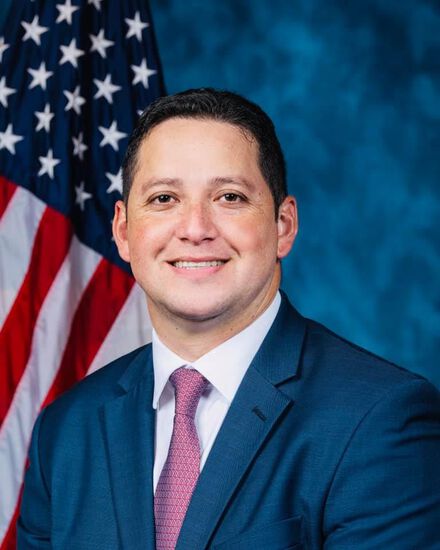
Rep. Tony Gonzales
Sponsored bills
Maddy summaryHRES 1112 is a symbolic House resolution introduced by Rep. Tony Gonzales on April 5, 2024, that formally denounces the Biden administration's immigration policies. It expresses disapproval of specific actions the resolution claims created a border crisis, including ending the Migrant Protection Protocols, terminating asylum agreements with Central American countries, stopping border wall construction, and allegedly violating mandatory detention requirements. The resolution urges the administration to rescind these policies and implement measures to address border security. As a non-binding resolution, it does not change laws or directly affect anyone but serves as a formal statement of congressional disapproval.
Maddy summaryHR 615, the Protecting Access for Hunters and Anglers Act of 2023, prevents federal agencies from banning lead ammunition or tackle on public lands and waters managed for hunting or fishing, except in specific cases. The bill allows exceptions only if a state wildlife department confirms lead use is harming local wildlife, and the federal action aligns with state law or state agency approval. It directly affects hunters and anglers using federal lands and waters, ensuring they can continue using lead products unless a state verifies a local wildlife issue requiring a ban. The law requires federal agencies to justify any exception with state data and policy compliance in official notices.
Maddy summaryThis bill creates new federal criminal penalties for actions that hinder border enforcement. It prohibits sharing locations or movements of border law enforcement (called "illicit spotting") to aid immigration-related crimes, and bans damaging or circumventing border infrastructure like fences or sensors. Violations carry up to 10 years in prison, increasing to 20 years if a firearm is involved. The bill also clarifies that alien smuggling crimes trigger enhanced penalties under existing firearm laws, defining key terms like "alien smuggling crime" and "brandish" for enforcement.
Maddy summaryThis House resolution condemns Iran's April 13, 2024 attack on Israel, which involved over 350 drones and missiles launched directly from Iran. It affirms support for Israel's right to self-defense, commends international efforts (including U.S., U.K., French, and Jordanian intercepts) that minimized damage, and calls for enforcing U.S. sanctions against Iran to disrupt its missile programs and support for proxies like Hamas and Hezbollah. As a non-binding resolution, it expresses congressional support without creating new laws or funding.
Maddy summaryHR 8066, the Ammunition Supply Chain Act, requires the Secretary of the Army to submit a report to Congress within 180 days of enactment. The report must assess the U.S. supply chain for ammunition components like nitrocellulose and smokeless gunpowder, focusing on improving sourcing, avoiding single points of failure, managing global demand risks, and leveraging private sector capacity. This bill directly affects the Department of Defense and ammunition manufacturers by mandating a review of supply chain vulnerabilities. It is procedural in nature, establishing a reporting requirement without creating new regulations or funding.
Maddy summaryHR 8041, the Driving Forward Act, extends a temporary exemption from pre-trip safety checks for school bus drivers operating within states until November 2027. This directly affects school bus drivers and state transportation agencies responsible for implementing the exemption. The bill requires the Transportation Secretary to seek public input on making the exemption permanent after 120 days and allows states to use existing highway funds to cover associated costs. It makes no changes to driver qualification standards but delays a requirement that would have otherwise taken effect.
Maddy summaryHR 6046, the Standing Against Houthi Aggression Act, requires the Secretary of State to designate Ansarallah (the Houthis) as a Foreign Terrorist Organization within 90 days of enactment and mandates the President to impose sanctions under existing authorities (Executive Orders 13224 and 13780) against Ansarallah and its members, agents, or affiliates. The bill directly affects Ansarallah and any foreign entities linked to it by triggering U.S. sanctions. Key provisions set strict 90-day deadlines for both the designation and sanctions implementation. The law focuses on reversing a prior designation revocation and enforcing existing legal mechanisms against the group.
Maddy summaryHR 5947 terminates specific U.S. waivers and licenses related to Iran, ending a 2023 waiver that allowed funds transfer from South Korea to Qatar. It prohibits the Treasury Department from reissuing similar waivers or licenses for the same purpose and blocks the President from granting Iran access to certain designated financial accounts established under prior laws. The bill directly affects U.S. foreign policy implementation by restricting how Treasury handles Iran-related financial transactions. It enacts concrete policy changes by ending existing authorizations and preventing future approvals for Iran to access specific accounts.
Maddy summaryHR 8025, the Blast Overpressure Safety Act, requires the Department of Defense to implement new protocols for monitoring and addressing blast-related brain injuries among military personnel. The bill mandates baseline and annual neurocognitive assessments for all service members, establishes detailed blast exposure logs tracking each member's cumulative exposure to weapons firing and training, and sets safety thresholds for blast overpressure exposure. It also creates a Warfighter Brain Health Initiative requiring evidence-based prevention strategies, specialized treatment programs for high-risk personnel, and regular reporting on brain injury incidents to Congress. The legislation requires the Department to document all blast exposures, track treatment outcomes, and publish annual reports on the effectiveness of these safety measures.