

Maddy summaryThis bill restricts warrantless surveillance of U.S. persons by amending the Foreign Intelligence Surveillance Act. It limits who can conduct queries of U.S. person data (capping at five personnel per FBI field office), prohibits using such queries for law enforcement without proper authorization, and requires documentation of all queries. The bill creates exceptions for emergencies, consent, and cybersecurity, but prohibits using metadata results to access protected communications. It also limits how information acquired under Section 702 can be used in criminal proceedings, requiring specific approvals for such use.
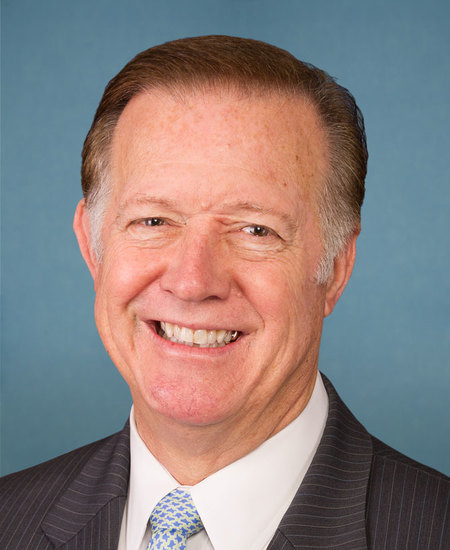
Rep. Randy K. Weber, Sr.
Sponsored bills
Maddy summaryHR 6600, "Tyler’s Law," requires the Secretary of Health and Human Services to study how often hospital emergency departments test for fentanyl during overdose cases, along with the costs, benefits, risks, and patient privacy impacts. The study must be completed within one year of the bill’s enactment, followed by guidance issued within six months on whether fentanyl testing should become routine. This guidance will address how hospitals can inform clinicians about testing protocols and how fentanyl testing might affect future overdose risks and patient health outcomes. The bill directly affects hospitals and emergency departments treating overdose patients, focusing on improving data-driven practices for fentanyl detection.
No Regulation Through Litigation Act of 202 3 This bill specifies that a federal agency may not enter into a consent decree that exceeds the authority of the court that enters the order related to the decree. It also limits the inclusion of attorney fees or litigation costs in consent decrees or settlement agreements that result in a regulation or guidance document.
Maddy summaryHR 6477 amends immigration law to tighten border inspection procedures and reform parole eligibility. It restricts parole for applicants deemed inadmissible under specific sections, mandates return to contiguous countries (like Mexico) for certain land-border arrivals pending processing, and limits parole to narrowly defined urgent humanitarian cases (e.g., critical medical needs, funerals) or significant public benefits (e.g., law enforcement cooperation). The bill also requires states to sue the federal government if detention/return rules are violated and mandates annual reporting on parole use. These changes directly affect applicants arriving at land borders, particularly those seeking parole for medical, family, or law enforcement reasons.
Maddy summaryThe DETERRENT Act requires institutions of higher education to disclose foreign gifts and contracts meeting specific value thresholds ($50,000 or more) to the Department of Education, with special rules for contracts involving "foreign countries of concern" or "foreign entities of concern." It creates a public database of these disclosures, mandates faculty and staff to report foreign gifts related to research, and establishes a waiver process for institutions seeking to contract with prohibited foreign entities. Institutions that fail to comply face fines ranging from 1% to 100% of their federal funding, depending on the violation and whether it's a first or repeat offense. The bill applies primarily to institutions receiving significant federal funding, particularly those with substantial research programs. It aims to increase transparency around foreign influence in higher education while maintaining academic freedom.
Maddy summaryHR 4468, the Choice in Automobile Retail Sales Act of 2023, blocks the Environmental Protection Agency (EPA) from finalizing or enforcing a specific proposed rule setting emissions standards for 2027+ light-duty vehicles. It amends the Clean Air Act to prevent future EPA regulations from mandating specific vehicle technologies or limiting the availability of new vehicles based on engine type (e.g., gasoline vs. electric). The bill directly affects EPA rulemaking authority and automakers' compliance with emissions standards, ensuring new vehicle options remain diverse without technology mandates. This is a procedural change to federal emissions regulations, not a direct consumer or industry mandate.
Maddy summaryThe BOP Direct-Hire Authority Act (HR 6628) allows the Bureau of Prisons to hire qualified candidates for positions that would normally require competitive hiring without following standard federal hiring procedures, such as public announcements or competitive exams. This directly affects the Bureau of Prisons' ability to fill vacancies at its facilities more quickly. The authority expires once 96% of competitive service positions across all Bureau of Prisons facilities are filled. The bill changes the hiring process for existing positions but does not alter the total number of positions available.
Maddy summaryHR 6625, the Chinese Spy Balloon Assessment Act, requires the Secretary of Defense to submit a report to Congress within 90 days of the bill's enactment. The report must detail the national security effects of surveillance conducted by China via a high-altitude balloon shot down in U.S. airspace in February 2023, including impacts on military installations and an analysis of recovered technology's country of origin. This bill directly affects the Department of Defense and Congress by mandating a specific, time-bound assessment of a single incident. It does not create new policies or funding but establishes a procedural requirement for transparency about the 2023 balloon event. The report must be unclassified, though it may include a classified annex.
Maddy summaryHR 6612, the Birthright Citizenship Act of 2023, clarifies who qualifies for U.S. citizenship at birth under the 14th Amendment. It amends immigration law to define that a child born in the U.S. is "subject to the jurisdiction" for citizenship if one parent is a U.S. citizen, a lawful permanent resident living in the U.S., or an active-duty military member. The bill directly affects children born in the U.S. to parents in these specific categories, ensuring they meet the citizenship definition without altering the constitutional right itself. It explicitly states this definition applies only to births occurring after the law's enactment, leaving existing citizenship status unaffected for those born before. The bill aims to codify existing constitutional principles through specific, narrow criteria for parental status.
Wings for Veterans Act This bill directs the Department of Transportation (DOT) to establish a pilot program to award grants to up to 10 flight schools to provide flight training for eligible veterans. Under the bill, an eligible veteran includes an individual who served in the active military, naval, air, or space service and who was honorably discharged, meets the requirements to obtain at least a second class medical certificate, and certifies an intent to pursue a career as a commercial pilot. Flight schools may use grants for (1) the provision of guidance and pilot training services (including tuition and flight training fees); (2) the provision of related books, training materials, and equipment; and (3) program administrative costs. DOT must submit a report to Congress on the program and related issues.