

Maddy summaryHR 7044, the "Woman’s Right To Know Act," requires abortion providers to give patients a specific 24-hour in-person informed consent form before performing an abortion. The form must detail the unborn child’s gestational age, medical risks of the procedure, and developmental milestones (like heartbeat presence), and must be signed by the patient, provider, and a witness. Providers who fail to comply face civil penalties of $100,000-$250,000 per violation or lawsuits from patients seeking damages, including triple the abortion cost. Exceptions apply if compliance poses immediate life-threatening risks to the patient. The bill directly affects abortion providers and patients seeking abortion services, mandating specific disclosure requirements and enforcement mechanisms.
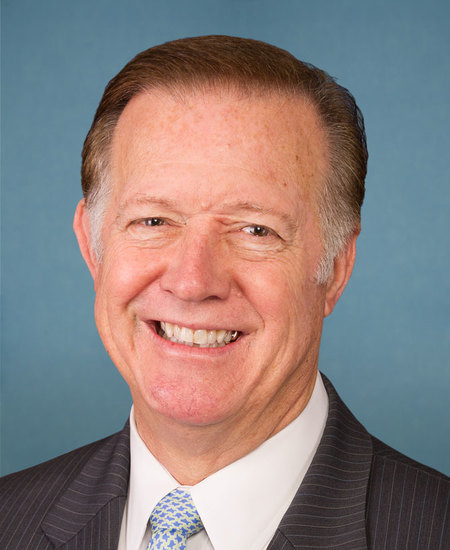
Rep. Randy K. Weber, Sr.
Sponsored bills
Maddy summaryHRES 974 is a non-binding House resolution supporting the designation of January 21-27, 2024, as "National School Choice Week." It encourages parents to learn about K-12 education options - including public schools, charter schools, private schools, and homeschooling - and promotes public awareness of educational choice. The resolution does not create new laws or policies but formally expresses the House's backing for this annual observance. It directly affects parents and students by highlighting available education pathways and urging communities to host events celebrating school choice. The resolution was introduced by multiple House members and referred to the Education Committee.
Maddy summaryThe Death Tax Repeal Act would eliminate the federal estate tax and generation-skipping transfer tax for estates of people who die on or after the bill's enactment date, and for generation-skipping transfers made after that date. It would also establish a new $10 million lifetime gift tax exemption (adjusted annually for inflation) and replace the existing gift tax rate schedule with a revised structure. These changes would primarily affect high-net-worth individuals and their heirs, as the estate tax and gift tax typically apply to large estates or gifts exceeding the new exemption threshold. The bill's provisions would take effect on the date of enactment, with transitional rules for the year the bill is signed into law.
Maddy summaryHR 3925 establishes a federal grant program to fund youth fishing projects in coastal and Great Lakes areas. The bill authorizes $2 million annually (2024-2028) for grants to eligible entities like nonprofits, schools, state/local governments, or Tribal organizations to cover equipment, transportation, licenses, and educational components for youth. Priority is given to projects serving underserved communities, defined as groups facing systemic barriers due to race, disability, poverty, or inequality. Recipients must report annually on grant usage and participant numbers to Congress.
Maddy summaryThis bill clarifies that tax-exempt status for charities (under IRS Section 501(c)(3)) does not count as "federal financial assistance" for other federal programs. It directly affects tax-exempt organizations, such as charities and religious groups, by preventing their tax exemption from automatically qualifying them for other federal benefits or programs. The key provision amends the U.S. Code to define "federal financial assistance" as excluding tax exemptions, ensuring these organizations aren't mistakenly included in programs meant for recipients of direct federal funds. This change applies prospectively and does not alter how tax exemptions were treated before the bill's enactment.
Maddy summaryHR 788, the Stop Settlement Slush Funds Act of 2023, prohibits federal agencies from entering settlement agreements that direct payments to third parties (other than the U.S. government) unless the payment directly reimburses actual harm caused by the defendant or covers services related to the case. It requires agencies to report annually on such settlements to Congress and mandates annual audits by agency Inspectors General to ensure compliance. The law applies to all federal agencies entering settlements after its enactment and includes a 7-year sunset provision. This directly affects how federal agencies handle settlements in civil cases, limiting their ability to divert settlement funds to external entities without clear, direct justification.
This resolution expresses the sense of the House of Representatives that the House should not adjourn until all of the annual appropriations bills for the current fiscal year have been enacted.
Maddy summaryH.J.Res. 92 seeks congressional disapproval of a 2022 rule from the Food and Nutrition Service (FNS) that updated how discrimination complaints are processed in federal nutrition programs (like SNAP) following the *Bostock v. Clayton County* Supreme Court decision. The bill aims to block the rule’s implementation, which would have required agencies to handle discrimination complaints under the expanded protections established by *Bostock* (covering LGBTQ+ individuals). If passed, the resolution would make the FNS policy update ineffective, maintaining the previous complaint processing approach. This affects how federal nutrition programs address discrimination claims but does not change the underlying anti-discrimination law.
Maddy summaryThis bill raises the dollar threshold that determines when the National Labor Relations Board (NLRB) can handle labor disputes involving small businesses. It increases the threshold for 2023 to ten times the previous year’s amount and sets up an automatic annual adjustment using the Personal Consumption Expenditure Per Capita Index (starting in 2024) to keep pace with inflation. Small businesses with payroll below this higher threshold will no longer fall under the NLRB’s jurisdiction for labor disputes. The change directly affects small businesses and the NLRB’s ability to assert jurisdiction over their labor issues, shifting oversight away from the agency for smaller employers. The amendment applies to all NLRB decisions made after the bill’s enactment date.
Maddy summaryHR 6940, the Mass Immigration Reduction Act of 2024, establishes a 5-year moratorium on most immigration by setting strict annual limits. It directly affects immigrants seeking family reunification (capping family-sponsored visas at zero), employment-based visas (capping at 5,000 annually), and refugees (limiting admissions to 25,000 per year). Key provisions include banning diversity visas, requiring citizenship renunciation for naturalization, and restricting birthright citizenship to children of U.S. citizens or lawful permanent residents. The bill requires the President to submit a report to Congress after 5 years confirming reduced illegal immigration and no negative impacts on wages or public services before ending the moratorium.