

Maddy summaryHR 7759, the PRC Military and Human Rights Capital Markets Sanctions Act of 2024, prohibits U.S. persons from purchasing, selling, or holding securities of specific Chinese entities linked to military activities, human rights abuses, or forced labor. The bill requires the President to compile and publicly list these "covered entities" within 90 days, including entities on Treasury’s Specially Designated Nationals list, the Non-SDN CMIC List, or Department of Defense military lists. U.S. persons must divest existing holdings of these securities within 180 days of the list’s publication. Violations face civil penalties up to $250,000 per transaction or criminal fines up to $1 million for willful breaches. The law directly affects U.S. investors, financial institutions, and companies holding securities in designated Chinese entities.
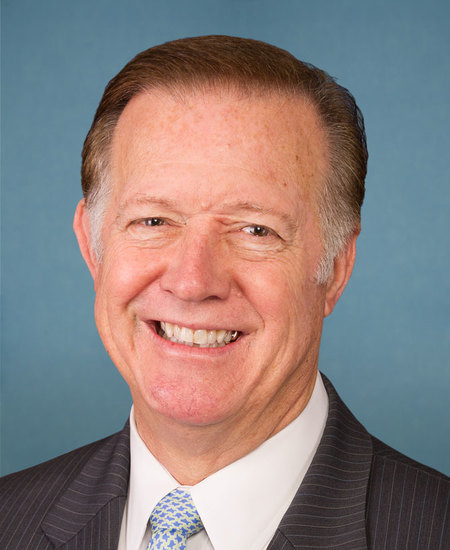
Rep. Randy K. Weber, Sr.
Sponsored bills
Maddy summaryThis bill amends the Clean Air Act to change how national air quality standards are implemented and reviewed. It extends the timeline for reviewing air quality standards from 5 to 10 years, requires consideration of economic impacts and feasibility when setting standards, and mandates that the EPA issue implementing regulations and guidance at the same time as new standards. It also gives states more time (up to 3 years) to correct deficiencies before federal plans are imposed, and adds wildfire mitigation measures as factors that can be considered in air quality designations. The bill directly affects states, local governments, and businesses that must comply with air quality regulations, particularly those in ozone and particulate matter nonattainment areas. These changes aim to create a more balanced implementation process that considers both environmental protection and practical economic considerations.
Maddy summaryHR 7660, the Backcountry Aviation Protection Act, permits pilots to conduct specific low-altitude maneuvers - like go-arounds, inspection passes (evaluating landing sites), practice approaches, and qualified instrument approaches - without violating existing FAA altitude rules. It requires the FAA to revise regulations within 180 days to formally allow these maneuvers below standard minimum altitudes, while allowing aircraft to be in landing configuration during some maneuvers. The bill also prohibits FAA enforcement actions against these maneuvers for one year after enactment and clarifies that the FAA must prove violations in court, not the pilot. This directly affects pilots operating in remote backcountry areas who need to assess landing sites or practice procedures safely.
Maddy summaryThis bill amends U.S. immigration law to automatically bar immigrants from entering the country and require their removal if they have been convicted of, admitted to committing, or are charged with sexual assault. It directly affects non-citizens (aliens) who have been involved in sexual assault offenses, as defined under existing law. Key provisions add new grounds for inadmissibility (preventing entry) and deportability (requiring removal) specifically for such offenses under sections 212(a)(2) and 237(a)(2) of the Immigration and Nationality Act. The bill does not change criminal penalties for sexual assault but modifies immigration consequences for those with such convictions or admissions.
Maddy summaryHR 6421, the Affordable HOMES Act, repeals federal requirements for energy efficiency standards in manufactured housing. It removes the authority established under the Energy Independence and Security Act of 2007 to set such standards and invalidates a 2022 Department of Energy rule implementing those standards. This bill directly affects manufactured home manufacturers by eliminating a federal regulatory requirement related to energy conservation.
Maddy summaryThe PARC Act requires national parks that charge entrance fees to accept cash payments as a standard option. This applies to all National Park System units where fees are collected, ensuring visitors can pay with physical currency. The bill amends federal law to mandate this change, directly affecting park visitors who rely on cash and park staff responsible for payment systems. It does not alter fee amounts or other park policies, only the accepted payment methods. The requirement is now enforced across all fee-charging park locations.
Maddy summaryHRES 1064 is a resolution passed by the U.S. House of Representatives recognizing that Texas operates its own electricity grid through the Electric Reliability Council of Texas (ERCOT), which serves over 26 million Texans and manages 52,700 miles of transmission lines. The resolution explicitly condemns any congressional or federal government action attempting to "federalize" Texas' electricity markets, which operate under the Texas Public Utility Commission and state legislature. It emphasizes that ERCOT is not subject to federal jurisdiction and rejects efforts to force connections to neighboring grids, as seen in previous legislative proposals. This resolution does not change laws but formally states the House's position supporting Texas' control over its energy system.
Maddy summaryThe LNG Coordination Act of 2024 establishes a federal Working Group to improve safety oversight coordination for LNG facilities (excluding peak shaving facilities). It requires the Transportation Secretary to convene a group including representatives from the Pipeline and Hazardous Materials Safety Administration, Federal Energy Regulatory Commission, Department of Energy, OSHA, and Coast Guard. The Working Group must evaluate each agency's regulatory authority over LNG facilities and negotiate agreements to eliminate duplicate regulations, resolve jurisdictional conflicts, and clarify safety oversight responsibilities. Agencies must finalize these agreements within two years, with a report to Congress detailing how they enhance safety coordination. This directly affects LNG facility operators and federal agencies responsible for regulating LNG infrastructure.
Maddy summaryThe Appropriations Transparency Act of 2024 requires the Congressional Budget Office to provide detailed cost breakdowns for bills reported by the House and Senate Appropriations Committees. Specifically, these estimates must include total budget authority, comparisons to spending allocations, outlay projections, rescissions, offsetting receipts, changes to mandatory programs (CHIMPs), direct spending, and categorization details. The bill directly affects the Appropriations Committees by mandating these specific disclosures in all cost estimates for their reported bills. This aims to clarify how funding is allocated and spent, though it does not change actual funding levels or program provisions. The bill also adjusts House Rule XIII to ensure these detailed estimates are not blocked by procedural rules.
Maddy summaryHRES 1057 is a non-binding House resolution introduced on March 5, 2024, that formally denounces public calls for a cease-fire in Gaza. It specifically demands an end to U.S. funding for Hamas through the UNRWA aid agency, condemns efforts to establish an independent State of Palestine, and calls for halting all U.S. assistance to Palestinian entities until investigations into alleged terrorism funding are completed. The resolution does not change laws or policies but serves as a symbolic statement expressing congressional opposition to cease-fire advocacy and certain aid programs. It directly addresses public discourse and policy debates, not specific individuals or organizations.