

Maddy summaryHR 7921, the Countering Antisemitism Act, establishes a National Coordinator to Counter Antisemitism within the Executive Office of the President and creates an Interagency Task Force to coordinate federal efforts against antisemitism across multiple agencies. The bill requires federal agencies to report on implementing the U.S. National Strategy to Counter Antisemitism, mandates annual threat assessments of antisemitic violent extremism from the FBI, DHS, and National Counterterrorism Center, and addresses antisemitic discrimination in higher education through a designated Office for Civil Rights Designee. It also includes provisions for a study on Holocaust education by the U.S. Holocaust Memorial Museum, a study on online antisemitism with recommendations for Congress, and amendments to the Nonprofit Security Grant Program to require public reporting on grant applications and awards.
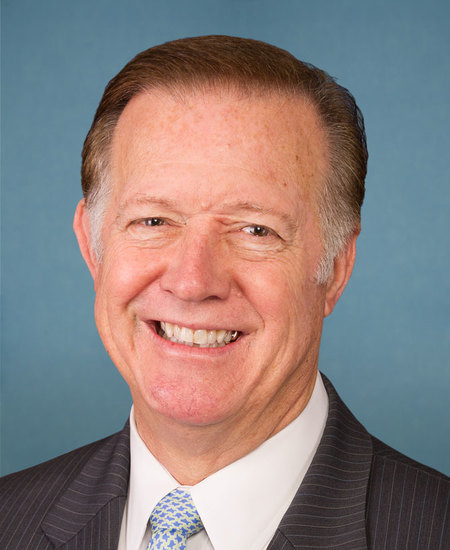
Rep. Randy K. Weber, Sr.
Sponsored bills
Maddy summaryThis bill protects licensed amateur radio operators' ability to install antennas for emergency communications by preventing homeowners' associations and private land use restrictions from blocking such installations. It requires communities to allow antennas that don’t impair emergency use, with exceptions only for safety, structural requirements, or minimal visual impact (e.g., screened enclosures). Small antennas (under 1 meter diameter), flagpoles (under 43 feet), and wire/vertical antennas don’t require prior approval, and communities must approve applications within 45 days. The law directly affects over 770,000 licensed amateur operators who rely on these antennas for life-saving emergency communications during disasters.
Maddy summaryHR 661, "Sarah’s Law," requires U.S. immigration authorities to detain certain immigrants charged with crimes causing death or serious injury. It applies to immigrants who entered without proper inspection, held revoked temporary visas, or fall under specific deportation categories, and who face charges for violent crimes. The bill mandates that immigration officials notify victims or their families (like parents or spouses) about the immigrant’s identity, immigration status, custody details, and removal efforts. This law does not change existing victim rights but adds specific notification requirements for these cases.
Maddy summaryThis joint resolution (HJRES 121) seeks congressional disapproval of a Consumer Financial Protection Bureau (CFPB) rule published on March 15, 2024, that would have limited credit card penalty fees under Regulation Z. If passed, it would block the CFPB's proposed rule from taking effect, preventing it from restricting how credit card companies charge late or over-limit fees. The resolution directly affects credit card issuers (who would retain current fee practices) and cardholders (who would not benefit from potential fee reductions). It uses the Congressional Review Act process (chapter 8 of title 5 U.S. Code) to halt the rule without altering existing law. This is a procedural measure, not a new policy.
Maddy summaryThis bill establishes new eligibility rules for women's and girls' amateur sports by defining "female" and "male" based on biological sex at birth. It prohibits individuals designated as male under these definitions from participating in athletic competitions designated for females, women, or girls. The law amends existing U.S. Code provisions to add this requirement, directly affecting athletes and organizations managing female-designated teams. The key change is a clear ban on male-identified participants in female sports, replacing previous eligibility standards with biological sex criteria.
Maddy summaryHR 6831, the VERDAD Reauthorization Act, extends existing U.S. sanctions and restrictions on Venezuela until December 31, 2025. It modifies four separate laws (the Russian-Venezuelan Threat Mitigation Act, Venezuelan Arms Restriction Act, Venezuela Emergency Relief Act, and Venezuela Defense of Human Rights Act) by updating their expiration dates from 2023 to 2025. The bill does not create new policies but ensures current measures remain in effect. This directly affects U.S. foreign policy enforcement toward Venezuela, maintaining economic restrictions and arms limitations. The key change is simply extending the sunset dates for these existing provisions.
Maddy summaryThe Protecting American Energy Production Act (HR 1121) states that Congress believes states should have primary authority to regulate hydraulic fracturing for oil and gas production on state and private lands. It prohibits the President from declaring a moratorium on hydraulic fracturing without specific authorization from Congress. This bill directly affects federal and state governments by limiting the executive branch’s power to halt hydraulic fracturing operations and reinforcing state regulatory control. The key provision ensures any federal restriction on hydraulic fracturing would require a new law passed by Congress, not a presidential order.
Maddy summaryThis bill requires public companies to disclose annual reports on financial risks tied to China and related regions. It mandates companies to describe their supply chain dependencies in covered markets (including mainland China, Hong Kong, Taiwan, Japan, and Korea), their operations there, and any material risks linked to Chinese government actions. Companies must detail steps taken to mitigate these risks, but are not required to predict risk likelihood or provide third-party assessments. The disclosure rules apply to all issuers filing annual reports under securities law, effective 180 days after enactment.
No Capital Gains Allowance for American Adversaries Act This bill treats gains and dividends derived from transactions involving countries of concern as ordinary income. The bill defines countries of concern to include China (including Hong Kong and Macao and excluding Taiwan), Russia, Belarus, Iran, and North Korea.
No China in Index Funds Act This bill prohibits index funds from investing in Chinese companies. Index funds with investments in Chinese companies on the date of enactment have 180 days to divest. The bill establishes civil penalties for violations.