

Maddy summaryHRES 1148 is a resolution passed by the U.S. House of Representatives that condemns the Iranian government for supporting terrorism, regional proxy conflicts, and internal suppression of dissent - including its crackdown on protests following Mahsa Amini's death in 2022. It specifically calls for maintaining sanctions against Iran, supporting the Iranian Resistance's Ten-Point Plan (which advocates for a democratic, secular, nonnuclear Iran), and protecting Iranian political refugees in Albania. The resolution also affirms the Iranian people's right to self-determination under international law and urges the U.S. to recognize their struggle for freedom. As a non-binding resolution, it does not create new laws but formally expresses congressional stance.
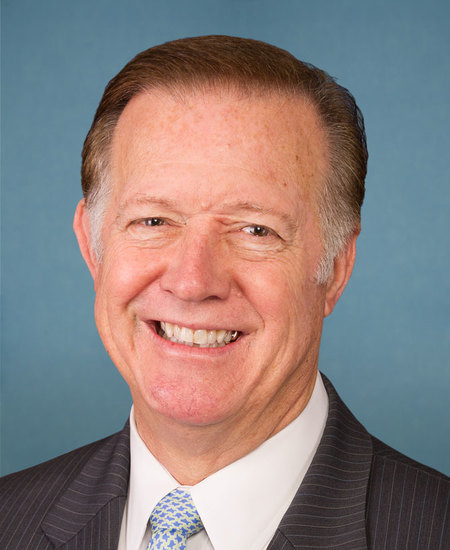
Rep. Randy K. Weber, Sr.
Sponsored bills
Maddy summaryHR 8011, the Iranian Terror Prevention Act, requires the U.S. Secretary of State to designate 12 Iranian-affiliated military groups and any entity controlled by Iran's Revolutionary Guard Corps as Foreign Terrorist Organizations within 90 days. It mandates the President to decide within 60 days whether to impose sanctions under existing law (Executive Order 13224) on these groups, which would block their U.S. assets and restrict transactions. The bill also requires the Secretary of State to submit regular reports to Congress on new entities meeting designation criteria and the President to explain any decisions not to impose sanctions. This law directly affects the listed Iranian military groups and any new entities linked to Iran's Revolutionary Guard Corps.
Maddy summaryHJRES 128 is a congressional resolution seeking to block an Environmental Protection Agency (EPA) rule that set emissions standards for oil and natural gas facilities. If passed, it would use the Congressional Review Act to formally disapprove the EPA's "Climate Review" rule, which established new requirements for emissions from new, modified, and existing oil and gas sources. The rule directly affects oil and gas companies operating in the U.S., as it would have imposed new regulatory standards on their emissions. This resolution does not create new law but aims to halt the EPA's existing rule from taking effect.
Maddy summaryHJRES 123 is a resolution seeking congressional disapproval of an Environmental Protection Agency (EPA) rule published on March 11, 2024, which would have required chemical facilities to implement new safety measures under the Clean Air Act to prevent accidental releases. The rule, titled "Accidental Release Prevention Requirements: Risk Management Programs Under the Clean Air Act; Safer Communities by Chemical Accident Prevention," aimed to strengthen existing risk management programs at chemical plants. If passed, this resolution would block the rule from taking effect by invoking a federal process for disapproving agency regulations. It directly affects the EPA's regulatory authority and the chemical industry's compliance obligations under the Clean Air Act.
Maddy summaryThis resolution (HRES 1117) is a formal statement by the U.S. House of Representatives opposing efforts to pressure Israel regarding Gaza. It specifically criticizes calls for an immediate ceasefire, including President Biden's April 4, 2024, statement and UN Security Council Resolution 2728, which the resolution claims was adopted due to the U.S. not vetoing it. The resolution affirms Israel’s right to self-defense following the October 7 Hamas attacks and emphasizes the U.S.-Israel relationship as a major strategic partnership. As a non-binding resolution, it does not change laws or policies but expresses the House’s position on diplomatic pressure related to Gaza.
Maddy summaryThis bill bans airlines from transporting non-citizens using three specific documents: the CBP One mobile app, DHS Form I-385 (Notice to Report), and DHS Form I-862 (Notice to Appear). It also prohibits the Department of Homeland Security from accepting these documents as valid ID for domestic air travel. The law directly affects airlines that might facilitate travel for individuals relying on these documents and travelers using them for flight boarding. Key provisions explicitly list the banned documents in federal law, removing them as acceptable identification for air travel under U.S. Code.
Maddy summaryThis bill would terminate 39 federal diversity, equity, and inclusion offices across multiple departments, including the State Department, Treasury, Health and Human Services, and Agriculture. It specifically prohibits cabinet-level agencies from developing or maintaining any diversity-related initiatives or plans. The law would take effect immediately upon enactment, eliminating these offices without requiring new funding or implementation steps. This is a structural change to federal agency operations, directly affecting how government departments manage workforce diversity programs.
Maddy summaryThis bill requires U.S. federal agencies and courts to use the International Holocaust Remembrance Alliance (IHRA) definition of antisemitism in specific contexts. It mandates that federal departments include this definition in anti-discrimination training (Section 3), directs courts to provide it in jury instructions for cases involving antisemitism (Section 4), and requires agencies to consider antisemitism as a motivating factor in civil rights investigations involving Jewish identity (Section 5). The law applies to existing civil rights enforcement under laws like the Civil Rights Act of 1964 and the Voting Rights Act. It does not create new penalties or alter existing protections but standardizes how antisemitism is recognized in federal processes.
Maddy summaryHR 7959, the SHIELD Act, adds trespass convictions to grounds for denying immigration entry or ordering deportation. It directly affects immigrants convicted of trespass under any state, local, tribal, or federal law, regardless of whether the trespass is classified as a misdemeanor or felony. The bill amends existing immigration law to make anyone convicted of trespass (or who admits to acts constituting trespass) inadmissible upon entry or deportable after entry. These provisions apply based on the jurisdiction where the trespass occurred, without considering the offense's classification under local law.
Maddy summaryThis bill prohibits U.S. federal funds from being provided to international financial institutions (like the World Bank) if those funds could finance foreign shrimp farming, processing, or shrimp exports. It directly affects international financial institutions receiving U.S. funding, requiring them to avoid supporting foreign shrimp operations. The bill also mandates an annual report from the Government Accountability Office (GAO) to Congress on whether U.S. representatives at these institutions are following this restriction. The key mechanism is conditioning U.S. financial support on the institutions' adherence to this prohibition.