

Maddy summaryThe BARRIER Act of 2024 restricts federal financial assistance to organizations that aid or facilitate illegal immigration. It makes entities - including nonprofits, corporations, and others - ineligible for federal funds starting in the first fiscal year after enactment if they provide transportation, shelter, financial support, or legal assistance to individuals entering or remaining in the U.S. without lawful status under immigration law. The law directly affects organizations offering services to people attempting unauthorized entry or living in the country without authorization. It does not change immigration laws but cuts off federal funding for those who assist violations of existing immigration statutes.
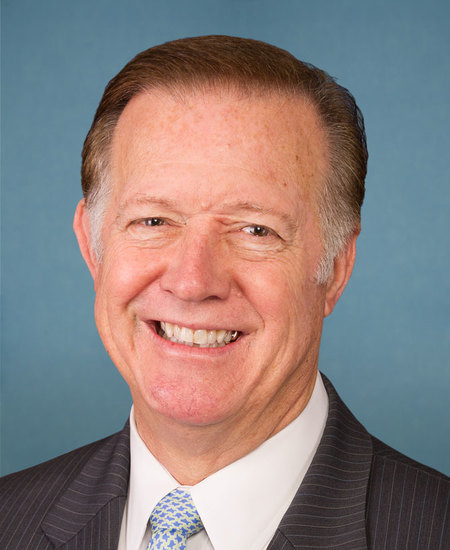
Rep. Randy K. Weber, Sr.
Sponsored bills
Maddy summaryThis bill amends the Clean Air Act to modify ethanol waiver processes and fuel volatility standards. It adds a new provision allowing fuel to enter commerce if it meets Reid Vapor Pressure requirements through similarity to certified vehicles or existing waivers, and adjusts vapor pressure limits from 10% to 10-15% in several sections. Small refineries that retired credits for 2016-2018 compliance years may now have those credits returned or applied to future years if their petitions remained pending as of December 1, 2022. The changes directly affect fuel retailers, ethanol producers, and small refineries by altering compliance pathways for fuel standards and credit management under the renewable fuel program.
Maddy summaryThis bill limits the Consumer Financial Protection Bureau's (CFPB) unused budget funds to 5% of its annual budget each fiscal year. Any excess funds above this 5% cap must be transferred to the U.S. Treasury. The CFPB must also report on how it uses any remaining unobligated balances, increasing transparency around its spending. The bill directly affects the CFPB's budget management practices.
Maddy summaryHRES 1509 is a symbolic resolution designating the week beginning November 11, 2024, as "National Pregnancy Center Week." It recognizes community-supported pregnancy centers across the U.S. for providing services like pregnancy testing, counseling, ultrasounds, parenting education, and material support to individuals facing pregnancy decisions. The resolution highlights that these centers, which serve approximately 2 million people annually through volunteer and staff efforts, operate as local, nonprofit organizations. It does not create new laws or funding but formally acknowledges their role in offering support to women and men.
Maddy summaryHRES 1469 is a formal House resolution condemning 15 specific officials in the Biden-Harris administration for their roles in the 2021 Afghanistan withdrawal. It alleges failures including inadequate planning for evacuations, disregarding warnings about Taliban actions, and misleading the public - leading to the Abbey Gate terrorist attack that killed 13 U.S. service members. The resolution does not create new legal requirements but formally condemns these individuals for "decisionmaking and execution failures" during the withdrawal. It directly addresses President Biden, Vice President Harris, National Security Advisor Jake Sullivan, Secretary of State Antony Blinken, and other senior officials named in the resolution. This is a symbolic statement of congressional disapproval, not a binding policy change.
Maddy summaryThis bill removes legal immunity for vaccine manufacturers by allowing individuals injured by vaccines to sue them directly in court after filing a claim with the federal vaccine injury compensation program (VICP). It eliminates time limits for filing VICP claims (previously 24-36 months) and explicitly excludes COVID-19 vaccines from the program's coverage. The changes affect people seeking compensation for vaccine injuries and vaccine manufacturers, who will no longer automatically avoid lawsuits. The bill also repeals provisions that previously restricted legal action after VICP claims.
Maddy summaryThis bill amends the budget baseline calculation method under the Balanced Budget and Emergency Deficit Control Act. It adds a specific exclusion for emergency funding and supplemental appropriations when determining the baseline deficit figure. This change directly affects how federal budget deficits are measured and reported under current law. The key provision prevents emergency and supplemental funds from being counted toward the baseline, altering the calculation used for deficit targets. The bill makes a technical adjustment to budget scoring rules without creating new spending or policy requirements.
Maddy summaryThe Next Generation Pipelines Research and Development Act creates a new demonstration initiative to fund research on advanced pipeline technologies. It authorizes $45 million for fiscal year 2024 (increasing to $50 million annually through 2028) for competitive grants to eligible entities including universities, research organizations, and private companies. The program will focus on developing technologies for leak detection, novel pipeline materials, sensor systems, computational modeling, and cybersecurity to improve pipeline safety and efficiency. The initiative requires coordination with the Department of Transportation and National Institute of Standards and Technology, and will be administered through a National Pipeline Modernization Center.
Maddy summaryHRES 1348 is a non-binding resolution urging Nigeria to immediately release Tigran Gambaryan, a U.S. citizen and former IRS agent detained since February 2024. The resolution cites his unlawful detention after legal deadlines expired, deteriorating health (including malaria), and poor conditions at Kuje Prison, where he was transferred despite a court order for hospital care. It calls for Nigeria to grant him medical access, consular support, and due process, while urging the U.S. government to use all resources to secure his release. The resolution highlights concerns that his detention appears linked to pressure on his employer, Binance, rather than legitimate legal grounds.
Maddy summaryThis bill clarifies Medicare rules to allow doctors to provide certain critical medications directly in their offices without extra administrative hurdles. It specifically amends a Medicare provision (Section 1877(b)(2) of the Social Security Act) to remove a requirement that drugs furnished in-office must follow specific administrative rules, effective May 11, 2023. The bill also directs the removal of conflicting Medicare guidance published in 2021 and 2023, which had previously restricted this practice. This change directly affects Medicare beneficiaries (seniors) and doctors' offices that supply covered medications during patient visits. It streamlines access to necessary drugs by eliminating an unnecessary barrier to in-office medication administration under Medicare.