

Maddy summaryThis bill would change how Social Security benefits are calculated for public servants who worked in jobs not covered by Social Security (such as many state and local government positions). It replaces the current Windfall Elimination Provision with a new formula that accounts for both covered and noncovered earnings when calculating benefits, rather than reducing benefits based on noncovered employment. The bill would provide additional monthly payments of $100 for some affected individuals and $50 for others, starting 270 days after enactment. It also requires Social Security account statements to show noncovered earnings and directs the Social Security Administration to study ways to improve information sharing with state pension systems about noncovered pensions. The changes would apply to benefits payable starting January 1, 2025.
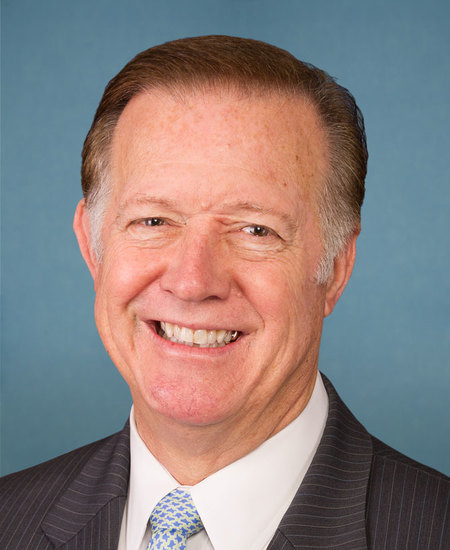
Rep. Randy K. Weber, Sr.
Sponsored bills
Maddy summaryHRES 1566 is a symbolic House resolution honoring all U.S. veterans on Veterans Day 2024. It recognizes the service and sacrifice of the estimated 15.8 million veterans living in the U.S. as of 2023, including those who served in conflicts from World War II to post-9/11. The resolution calls on the American public to observe Veterans Day to acknowledge veterans' role in preserving national freedom. As a non-binding resolution, it has no direct policy impact but formally expresses congressional recognition of veterans' contributions.
Maddy summaryThis bill provides one-time financial assistance to U.S. farmers growing specific crops (like corn, soybeans, wheat, cotton, and rice) during the 2024 crop year if their expected costs exceed expected returns. Payments equal 60% of the difference between the expected cost of production per acre (based on USDA cost forecasts) and the expected gross return per acre (based on projected farm prices and yields). Payments are calculated using actual planted acreage plus 50% of acreage prevented from planting due to natural disasters, with annual caps of $175,000 or $350,000 depending on the farm’s primary income source. The program uses existing USDA data sources and applies standard farm payment limits.
Maddy summaryHR 10083, the "No Funding for Illegal Migrant Billboards Act," prohibits the use of federal funds to advertise the Immigration Detention Ombudsman's office or functions through billboards or similar public advertising. This bill directly affects the Department of Homeland Security, specifically restricting how the Ombudsman's office can be promoted using public funds. The key mechanism is an amendment to the Homeland Security Act of 2002, adding a provision that bans obligating or expending funds for such advertising. The law applies to all public advertising methods, not just physical billboards, and takes effect immediately upon enactment.
Maddy summaryThis bill amends the tax code to change the requirements for 501(c)(3) tax-exempt status. It would require that a "substantial part" of an organization's activities must not involve providing goods or services to individuals who are not U.S. citizens or lawful permanent residents (green card holders). Nonprofits that primarily serve non-citizens or non-permanent residents would lose their tax-exempt status under this rule. The change applies to tax years beginning after the bill's enactment date. It directly affects organizations providing services to immigrants, including those with legal status.
Maddy summaryHR 10010, the Protect American Fisheries Act of 2024, amends the Magnuson-Stevens Act to address economic harm to U.S. fisheries. It adds "economic cause" to the definition of fishery disasters, specifically when foreign activities distort markets, disrupt sustainable harvesting, or threaten the economic viability of U.S. fisheries. The bill defines "foreign person" broadly to include foreign governments, companies, and U.S. entities controlled by foreign interests, and requires documentation of foreign activities like illegal fishing, predatory pricing, or harmful subsidies when declaring a disaster. This change directly affects U.S. fishing communities and industries by expanding the criteria for federal disaster assistance to include economic impacts from foreign actors.
Maddy summaryHRES 1537 is a non-binding House resolution condemning Hamas' October 7, 2023, attacks on Israel, which killed over 1,200 people and took 251 hostages, including 7 Americans still held captive. It calls on Hamas to immediately surrender, cease attacks, and release all hostages unconditionally, while reaffirming Israel's right to self-defense. The resolution also urges international organizations to condemn Hamas' actions and address the global surge in antisemitism following the attacks. As a symbolic statement, it does not create new laws or alter policy but expresses congressional position. The bill specifically references the ongoing captivity of seven U.S. citizens: Edan Alexander, Itay Chen, Sagui Dekel-Chen, Gadi Haggai, Judith Weinstein Haggai, Omer Neutra, and Keith Siegel.
Maddy summaryThis bill terminates all federal funding for FEMA's Shelter and Services Program effective upon enactment. It prohibits new appropriations for this program or any similar successor program. Any remaining funds from the program as of the enactment date will be transferred to support disaster relief efforts under the Robert T. Stafford Disaster Relief Act. The change directly affects FEMA's budget operations but redirects existing resources to broader disaster assistance.
Maddy summaryHR 9898 requires the Department of Energy to lead a federal task force that will analyze U.S. critical materials processing capacity and report to Congress within one year. The report must identify supply chain gaps, assess regulatory barriers (like Clean Air Act compliance), and evaluate opportunities for foreign investment from allied nations. It also mandates a GAO review of how current policies and permitting processes hinder domestic investment in processing critical minerals used in clean energy and technology. The bill directly affects federal agencies, domestic processing industries, and potential foreign investors seeking to build U.S. facilities.
Maddy summaryThis bill prohibits U.S. Small Business Administration (SBA) assistance - including loans, contracts, and other support - from going to small businesses that are either headquartered in China or have more than 25% of their voting stock owned by Chinese-affiliated entities. It directly affects small business concerns meeting either of these criteria, blocking their access to SBA programs. The bill amends the Small Business Act to add this restriction and requires the SBA to update its regulations (including specific sections of the Code of Federal Regulations) to implement the change. The policy change is a direct eligibility requirement for SBA programs, with no additional funding or program modifications.