

No taxpayer funding for United Nations Human Rights Council Act This bill requires the Department of State to withhold from the U.S. contribution to the United Nations (U.N.) the amount that would be allocated to the U.N. Human Rights Council. Such withheld funds must be rescinded and must not be considered arrears to be repaid to the United Nations. The bill also prohibits the State Department from making voluntary contributions to the U.N. Human Rights Council.
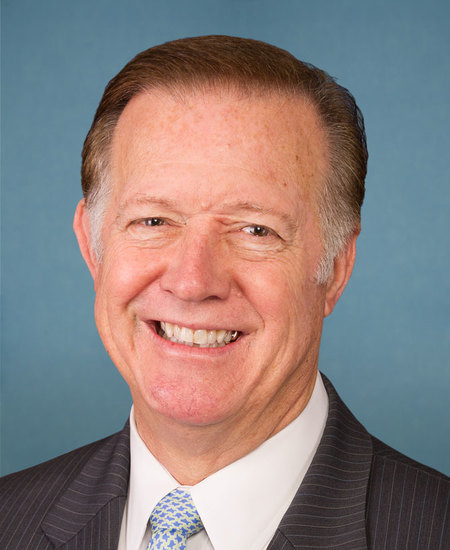
Rep. Randy K. Weber, Sr.
Sponsored bills
Maddy summaryThe Unauthorized Spending Accountability Act of 2023 establishes a process for handling federal programs that have expired authorizations (unauthorized programs). It requires a 10% budget reduction in the first year after authorization expires, followed by 15% reductions in the second and third years. If a program remains unauthorized for three years, it must be terminated unless Congress reauthorizes it with a 3-year sunset provision. The bill creates a Spending and Accountability Commission to review direct spending programs and propose spending reductions that could prevent these budget cuts from taking effect.
Maddy summaryHR 1492, the CBO Show Your Work Act, requires the Congressional Budget Office (CBO) to publicly publish its fiscal models, data, and detailed methodologies used when estimating the costs and effects of legislation. Specifically, the bill mandates that the CBO make available all models, data preparation routines, and the specific assumptions and computations behind its cost estimates - enabling independent verification by non-CBO staff. This applies to all estimates prepared under the law, with limited exceptions for data protected by other statutes (requiring only descriptive statistics and access details for such data). The changes take effect six months after the bill becomes law. The bill directly affects the CBO’s internal processes and transparency practices, not the legislative content itself.
Continuing Robust and Uninhibited Drilling and Exporting Act or the CRUDE Act This bill limits the President's authority to restrict the export of crude oil from the United States. Currently, the President may restrict the export of oil for up to a year if the President declares a national emergency; the restrictions apply to countries, persons, or organizations for reasons of national security; or the Department of Commerce finds and reports to the President that the export of crude oil has caused sustained material oil supply shortages or sustained oil prices significantly above world market levels and those shortages or price increases have caused or are likely to cause sustained material adverse employment effects. However, this bill only allows the President to make such restrictions if the restrictions apply to countries, persons, or organizations for reasons of national security; or the Department of Defense, the Department of Energy, and Commerce jointly make those findings and report them to the President and Congress.
Preventing Violence Against Female Inmates Act of 2023 This bill establishes a framework to prohibit correctional institutions at the federal and state levels from housing inmates of one biological sex with inmates of the other biological sex.
Maddy summaryThe POWER Act of 2023 prevents the President from blocking or delaying new oil, gas, coal, or mineral leases on federal lands without explicit Congressional approval. It specifically stops executive actions that would delay or cancel permits for energy development on National Forests, public lands, the outer continental shelf, or energy-managed lands. The bill requires Congress to pass new laws if it wants to restrict energy leasing or withdraw land from development under existing federal land laws. This directly affects energy companies seeking to develop resources on federal property by limiting executive authority over lease approvals.
Maddy summaryHJRES 41 disapproves a Department of Homeland Security (DHS) rule that expanded the "public charge" standard, which previously allowed officials to deny visas or green cards to immigrants likely to use public benefits like Medicaid or housing assistance. This resolution would nullify the rule (published in the Federal Register as 87 Fed. Reg. 5547), meaning it could no longer be enforced against immigrants applying for U.S. entry or residency. The bill directly affects noncitizens seeking visas, green cards, or adjustment of status who might use public benefits, as the rule had broadened the criteria for denying their applications. As a disapproval resolution under the Congressional Review Act, it stops the rule from taking effect without creating new immigration law.
Maddy summaryThis bill amends U.S. financial sanctions law to require the Treasury Secretary to specifically consider whether foreign banks knowingly provide banking services (including personal accounts) to entities designated under the Taylor Force Act, which targets groups that murder U.S. citizens. It directs Treasury to designate as "of primary money laundering concern" foreign banks that facilitate terrorism payments, particularly those using U.S. correspondent accounts. The law adds two new factors for Treasury to evaluate: (1) whether a bank knowingly serves entities listed in the Taylor Force Act regulations, and (2) whether the bank’s accounts or transactions help fund acts of terrorism. This directly affects foreign financial institutions operating in the U.S. financial system that may inadvertently or intentionally support terrorist organizations.
American Safety And Fairness through Expedited Removal Act of 2023 or the American SAFER Act of 202 3 This bill expands the classes of non-U.S. nationals ( aliens under federal law) who are subject to expedited removal (i.e., removal from the United States without further hearing or review). Specifically, the bill nullifies a 2004 Department of Homeland Security (DHS) rule that generally limits expedited removal to certain situations, such as for non-U.S. nationals encountered within 14 days of entry into the United States without inspection and within 100 miles of a U.S. international land border. The bill also (1) prohibits DHS from implementing a rule that limits expedited removal based on how far a non-U.S. national was from the border when encountered or apprehended, and (2) modifies the relevant statute to state that expedited removal authority applies regardless of where the non-U.S. national was encountered or apprehended.
Maddy summaryHR 1388 authorizes the minting of commemorative coins to honor the 1865 Sultana steamboat disaster, the deadliest maritime tragedy in U.S. history. It specifies three coin types ($5 gold, $1 silver, and half-dollar) with defined weights and compositions, to be sold at face value plus surcharges ($35, $10, and $5 per coin, respectively). All surcharges collected will fund the Sultana Historical Preservation Society for museum development, including exhibits, artifact preservation, and facility construction. The coins are legal tender but intended for collectors, with sales limited to a one-year period starting January 2023.