Taliban Are Not Our Friends Act This bill terminates Afghanistan's status as a major non-NATO ally and prohibits the President from designating Afghanistan with such status. (Major non-NATO ally status provides certain benefits, such as qualifying a country to receive excess defense articles.)
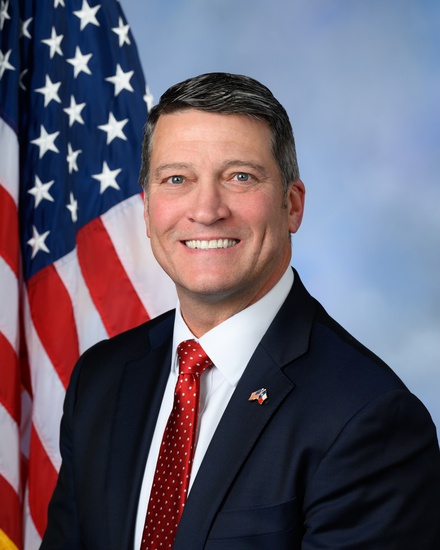
Rep. Ronny Jackson
Sponsored bills
Puppies Assisting Wounded Servicemembers for Veterans Therapy Act or the PAWS for Veterans Therapy Act This bill implements a program and a policy related to service dog therapy for veterans. Specifically, the bill requires the Department of Veterans Affairs (VA) to implement a five-year pilot program to provide canine training to eligible veterans diagnosed with post-traumatic stress disorder as an element of a complementary and integrative health program. Eligible veterans are those who are enrolled in the VA health care system and have been recommended for participation by a qualified mental health care provider or clinical team. The VA must seek to enter agreements containing specified elements with accredited nongovernmental entities that have demonstrated ability to provide canine training. Veterans who participate in the program are authorized to adopt the dog they assisted in training if their health provider determines it is in the best interest of the veteran. The VA must establish processes to document and track the progress of participating veterans with respect to health benefits and improvements. The Government Accountability Office must brief Congress and submit a report on the program. The bill also authorizes the VA to provide service dogs to veterans with mental illnesses, regardless of whether they have a mobility impairment.
This resolution condemns the President's failure to heed military and intelligence advisors about the speed and nature of the Taliban offense in Afghanistan and urges the President to commit to maintaining the evacuation operation as long as necessary to evacuate any U.S. citizen, lawful permanent resident, or Afghan partner who requests evacuation assistance .
This resolution commends Steve Verett for his lifelong dedication and service to the cotton industry and to Plains Cotton Growers, Inc. It also congratulates Mr. Verett on his retirement and extends him best wishes in all his future endeavors.
This resolution expresses respect for and solidarity with the families and friends of those killed, tortured, and imprisoned for participating in prodemocracy demonstrations during the spring of 1989 in Tiananmen Square. It also reaffirms support for those who continue to work for political reform, rule of law, and human rights in China.
UNRWA Accountability and Transparency Act This bill makes changes to U.S. foreign policy in matters concerning the United Nations Relief and Works Agency for Palestine Refugees in the Near East (UNRWA). For purposes of this policy, the bill defines Palestinian refugee as a person who (1) resided from June 1946 to May 1948 in Mandatory Palestine (a region controlled by Britain until 1948), (2) was personally displaced as a result of the 1948 Arab-Israeli conflict, and (3) has not accepted citizenship or other permanent adjustment in status in another country. The bill withholds U.S. funding for the UNRWA unless the Department of State makes certifications concerning the UNRWA's staff, partners, and funding. Specifically, the State Department must certify that neither UNRWA staff and partners nor its funding and facilities are affiliated with terrorism or engaged in the dissemination of anti-American, anti-Israel, or anti-Semitic ideologies. Additionally, the State Department must certify that the UNRWA is subject to comprehensive financial audits by an independent auditing firm and is unaffiliated with any financial institutions that the United States considers to be complicit in money laundering or terror financing. The bill also requires the State Department to implement a plan to encourage other countries to align their activities and efforts regarding the UNRWA with U.S. policy objectives, including the phase out of the UNRWA by resettling Palestinian refugees in countries other than Israel and in territories not controlled by Israel. The State Department must report to Congress on this plan.

Nuclear Security Enterprise Infrastructure Improvement Act of 2021 This bill increases the minor construction threshold, associated design threshold, and the notification requirement related to national security projects of the Department of Energy.
Health Agency Check-Up Act This bill establishes a bipartisan commission to review and recommend whether to modify or eliminate statutory reporting requirements that apply to the Centers for Disease Control and Prevention (CDC), the National Institutes of Health (NIH), and the Food and Drug Administration (FDA). To inform this effort, the CDC, the NIH, and the FDA must provide the commission with relevant recommendations and information about their respective staffing, budgets, programs, reports, and regulations. The bill automatically makes any provision of law requiring a report that the commission recommends for elimination ineffective after 45 days, unless Congress enacts a joint resolution disapproving of the recommendation.
This resolution supports the work of the United States African Development Foundation as it creates pathways to prosperity for underserved communities on the African continent through community-led development, and it commits to continue supporting the work of the foundation as an independent agency.
Listing Reform Act This bill modifies requirements concerning the review of petitions to add a species to the list of endangered or threatened species or to remove a species from the list. Specifically, the bill allows the Department of the Interior and the Department of Commerce to prioritize the consideration of petitions to list a species as endangered or threatened other than in the order in which the petitions are received. The appropriate department may not give general priority to petitions to add species to the list of endangered or threatened species over petitions to remove a species from the list. The deadline for the appropriate department to decide on whether or not a petition to list or remove a species should be granted is changed from within 12 months to as expeditiously as possible. The appropriate department is given the authority to preclude the listing of a species as threatened due to the likelihood of significant, cumulative economic effects that would result from such listing or from the likely resulting designation of critical habitat of the species. Once a petition is precluded due to those economic effects, the appropriate department may not reconsider that finding unless the department (1) determines there is endangerment of extinction of the species; or (2) receives a new petition to add the species to the list that includes an analyses concluding that alternative actions are possible other than those resulting in significant, cumulative economic effects.