

Health Freedom for All Act This bill prohibits the Department of Labor from issuing an emergency temporary occupational safety or health standard requiring employers to ensure that their employees receive a COVID-19 vaccine or undergo COVID-19 testing.
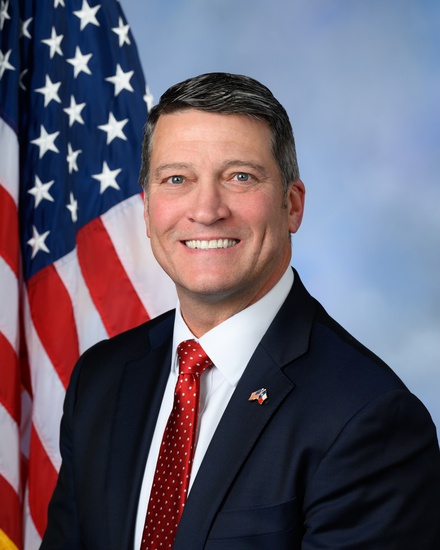
Rep. Ronny Jackson
Sponsored bills
Flights for Freedom Act This bill prohibits the U.S. government from charging U.S. citizens or lawful permanent residents for their evacuation during the withdrawal of U.S. Armed Forces from Afghanistan. Specifically, the Department of State must waive repayment for travel expenses incurred on behalf of such an individual as part of the evacuation from Afghanistan. Similarly, no federal employee may solicit or accept funds from such an individual as a condition of using government-provided transportation to repatriate the individual to the United States.
Israel Relations Normalization Act of 2021 This bill requires the Department of State to take certain actions promoting the normalization of relations between Israel, Arab states, and other relevant countries and regions. Specifically, the State Department must develop a strategy on expanding and strengthening the Abraham Accords (the term used to refer collectively to agreements between Israel and the United Arab Emirates and between Israel and Bahrain marking the public normalization of relations between the two Arab countries and Israel). The strategy must include a description of how the U.S. government will encourage further normalization of relations with Israel. In addition, the State Department must report on options for U.S. international efforts to promote the strengthening of ties between Israel, Arab states, and other relevant countries and regions. The State Department must also report on the status of the normalization of relations with Israel, including information on (1) laws that punish individuals for people-to-people relations with Israelis (i.e., anti-normalization laws), and (2) evidence of steps taken by Arab governments toward permitting or encouraging normalized relations between their citizens or residents and Israeli citizens.
Anti-BDS Labeling Act This bill provides statutory authority for the continuation of U.S. policy related to country of origin marking for imported goods that are produced in the West Bank or Gaza. Currently, such goods must carry specified markings that indicate their origin. Further, the bill prohibits the use of any funds made available to the Department of State or to U.S. Customs and Border Protection to rescind or change this policy.
Prevent Taliban Support Act This bill prohibits using federal funds to provide any kind of support to the Taliban or a Taliban affiliate. It also prohibits waiving any U.S.-imposed sanctions on the Taliban or a Taliban affiliate unless a law is enacted specifically providing for such a waiver.
This bill extends through December 31, 2026, the pilot program under which the Department of Veterans Affairs may accept donations of real property or facilities from specified entities (e.g., a state or local authority).
This bill designates the community-based outpatient clinic of the Department of Veterans Affairs in San Angelo, Texas, as the Colonel Charles and JoAnne Powell VA Clinic.
This resolution opposes the enactment of any federal law that voids state laws that prohibit employers from requiring workers to join a union as a condition of employment.
Curriculum Review of Teachings Transparency Act or the CRT Transparency Act This bill requires a local educational agency, in order to receive certain federal education grants, to post on a publicly accessible website the curriculum for each grade level of its elementary and secondary schools.
Countering Communist China Act This bill addresses issues related to China, tax incentives, and other topics. The bill imposes visa- and property-blocking sanctions on certain entities and individuals that (1) are involved in acts of malign disinformation on behalf of a foreign government or political party, or (2) have engaged in a pattern of significant infringement of intellectual property belonging to a U.S. entity or individual. It also authorizes sanctions on developers and owners of software that makes unauthorized transmissions of user data to servers that are located in China and are accessible by China's government. The bill also provides tax incentives for relocating pharmaceutical, medical supply, or medical device manufacturing to the United States, including by allowing accelerated depreciation of nonresidential real property acquired in connection with such relocation; eliminates the five-year amortization requirement for research and experimental expenditures scheduled to begin in 2022, thus allowing continued expensing of such expenditures in the taxable years in which they are incurred; prohibits an institution of higher education from receiving certain federal funds if the institution has a contractual partnership with an entity controlled by China's government or organized under China's laws; modifies presumptions and evidentiary standards in administrative patent validity challenges; bars China from asserting sovereign immunity in certain instances; requires U.S. representatives to the International Monetary Fund (IMF) to take certain actions, such as opposing any increase to the weight given to China's currency when determining the value of IMF Special Drawing Rights; and permanently rescinds unobligated funds previously made available for certain economic relief programs related to COVID-19.