This bill states that the United States should seek to support (1) improving Taiwan's asymmetric defense capabilities; (2) bolstering deterrence to preserve peace, security, and stability across the Taiwan Strait; (3) and deepening defense capability interoperability with Taiwan.
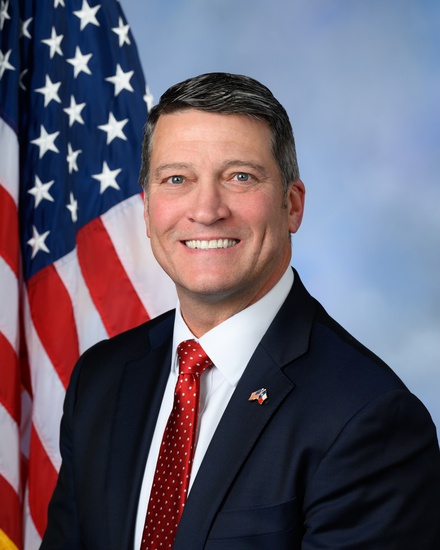
Rep. Ronny Jackson
Sponsored bills
Securing American Families from Exploitation at the Border Act or the SAFE Border Act This bill directs the Federal Emergency Management Agency (FEMA) to establish a temporary grant program to reimburse landowners for loss or damage to property caused by an individual illegally crossing the southern border or to improve the security of such property. Specifically, FEMA may provide grants to landowners who have experienced (or are at risk of experiencing) property theft or damage in areas within 10 miles of the U.S.-Mexico border.
Crucial Communism Teaching Act This bill directs the Victims of Communism Memorial Foundation to develop a civic education curriculum and oral history resources for high school students to promote understanding of certain political ideologies (e.g., communism and totalitarianism) that conflict with principles of U.S. democracy.
This bill requires the Department of Veterans Affairs to report on the pilot program under which it may accept donations of real property or facilities from specified entities (e.g., a state or local authority).
Conscience Protection Act of 2021 This bill provides statutory authority for certain protections for health care providers that refuse to participate in abortions based on religious beliefs or other convictions. Health care providers include individual professionals, medical facilities, health insurance organizations, and social services providers that refer clients to health care services. The federal government and entities that receive federal funding for health-related activities, including state and local governments, may not discriminate against a health care provider that refuses to be involved in, or provide coverage for, abortions. Currently, similar requirements apply to various related activities, including certain employment or personnel decisions (the Church Amendments), abortion services training (the Coats-Snowe Amendment), qualified health plans offered through health insurance exchanges, and annual appropriations bills for the Department of Health and Human Services (HHS) and other federal agencies (the Weldon Amendment). The HHS Office for Civil Rights must investigate complaints of this kind of discrimination. Furthermore, HHS may terminate or reduce HHS funding for health-related activities if a person or entity fails to comply with nondiscrimination requirements. Additionally, the Department of Justice or any entity adversely affected by such discrimination may bring a civil action to obtain appropriate relief. A plaintiff does not need to seek or exhaust administrative remedies before bringing the action. A plaintiff may also bring an action, including one for money damages, against a governmental entity. In many cases, principles of sovereign immunity shield states and some localities from these kinds of actions.

Parents Bill of Rights Act This bill outlines various rights of parents and guardians regarding the elementary or secondary school education of their children. Among other requirements, the bill (1) directs local educational agencies to publicly post the curriculum for each elementary and secondary school grade level; and (2) requires schools to notify parents and guardians of their rights, including the right to review the school's curriculum and budget.
Parental Rights Protection Act This bill restricts government entities from requiring that individuals age 18 or younger receive certain COVID-19 vaccines that were authorized through emergency use and related procedures. Specifically, a federal, state, tribal, territorial, or local government entity (including a local educational agency) that receives funding from either the Department of Education or the Department of Health and Human Services may not require such COVID-19 vaccinations for individuals age 18 or younger. In particular, a local educational agency that mandates COVID-19 vaccinations for students loses its eligibility for federal education funding. The bill also requires the prior, informed, written consent of a parent or guardian before administration of such COVID-19 vaccines to an individual age 18 or younger.
Natural Immunity Transparency Act This bill requires the Department of Health and Human Services to report within 30 days of the bill's enactment to Congress concerning natural immunity to COVID-19. In particular, the report must compare certain outcomes for individuals who recovered from a COVID-19 infection without having received the vaccination and individuals who received the vaccination.
Maddy summaryHR 6020, the Supporting Medicare Providers Act of 2021, extends temporary Medicare payment increases for physicians through 2022 instead of ending them on January 1, 2022. It updates specific dates in Medicare law (Section 1848(t) of the Social Security Act) to maintain current payment rates for doctors treating Medicare patients. This directly affects physicians and clinics participating in Medicare who rely on these temporary payment adjustments. The bill makes no new policy changes but ensures existing payment levels continue for providers during 2022.
This resolution modifies requirements for written statements required of nongovernmental witnesses who appear before standing committees of the House of Representatives. Specifically, the resolution eliminates a requirement that a witness disclose whether they are a fiduciary of an organization or entity that has an interest in the subject matter of the hearing, in favor of a requirement that they disclose whether they are a fiduciary of an entity that has received payments from a specified foreign entity. The resolution also requires nongovernmental witnesses to disclose in their written statement certain contracts with specified foreign persons or entities. If the committee determines that a witness knowingly and willfully failed to truthfully comply with such disclosure requirements, the witness is prohibited from testifying before the committee for three years.