

Circumspectly Reducing Unintended Consequences Impairing Alliances and Leadership Act of 2021 or the CRUCIAL Act of 2021 This bill establishes requirements relating to the President's ability to impose sanctions on individuals or entities that engage in a significant transaction with the defense or intelligence sectors of Russia's government if the transaction involves a member of the Quadrilateral Security Dialogue. (The dialogue is a coalition comprised of the governments of the United States, Japan, India, and Australia.) Specifically, before imposing such sanctions for a transaction involving a member of the dialogue, the President must certify to Congress that the government in question is not participating in the dialogue on security matters that are critical to U.S. strategic interests.
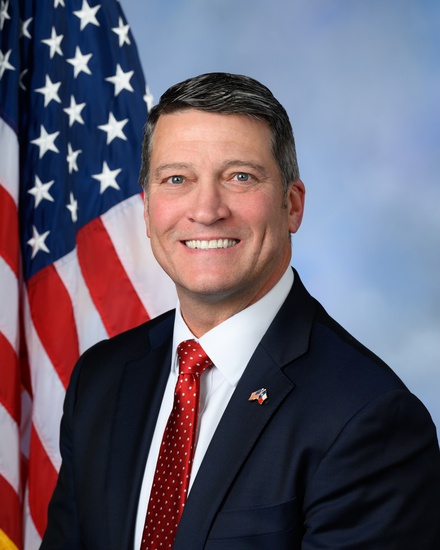
Rep. Ronny Jackson
Sponsored bills
Science-Based Emissions Standards Act of 2021 This bill prohibits the Environmental Protection Agency (EPA) from finalizing any rule to amend the new source performance standards for stationary sources under the Clean Air Act to reduce methane emissions from new and modified oil and natural gas facilities until the Department of Energy takes specified actions. Specifically, the Department of Energy must first (1) complete and publish the results of the study titled Quantification of Methane Emissions from Marginal (Small Producing) Oil and Gas Wells, and (2) provide a period of at least 90 days for public comment on the application of the study's results. The EPA must take the results of the study into consideration when finalizing the rule.
Pregnancy Loss Mental Health Research Act of 2021 This bill expands research and related activities that address mental health complications following a pregnancy loss (i.e., miscarriage, stillbirth, or abortion). Specifically, the National Institutes of Health and the National Institute of Mental Health (NIMH) must expand and intensify research on mental health complications following pregnancy loss. In particular, NIMH must conduct a longitudinal study to determine the prevalence and other information about such mental health complications. Additionally, the Department of Health and Human Services must award grants to health providers, state or local governments, or other appropriate nonprofits to deliver services to individuals with mental health conditions following a pregnancy loss. Funding made available under this bill may not be provided to an entity (or an entity's affiliate, subsidiary, successor, or clinic) that performs abortions other than in the case of a pregnancy (1) that is the result of rape or incest; or (2) when the life of the woman is in danger due to a physical disorder, injury, or illness.
This joint resolution nullifies a Department of Labor emergency temporary standard for preventing the transmission of COVID-19 in employment settings. Under the standard issued on November 5, 2021, employers with 100 or more employees must require their onsite employees to either be fully vaccinated against COVID-19 or undergo weekly COVID-19 testing.
Fairness and Accountability in Underwriting Chinese Institutions Act or the FAUCI Act This bill prohibits making any federal funding available to laboratories or research institutions in China for gain-of-function research. The President may waive this prohibition for national security interests. (Under the bill, gain-of-function research generally involves the enhancement of potential pandemic pathogens or related risky research with potentially dangerous pathogens.) Furthermore, if the Office of the Inspector General of the Department of Health and Human Services determines that a National Institutes of Health official, employee, or grantee has intentionally misled or omitted information in a relevant disclosure (e.g., to Congress) about federal funding for international gain-of-function research, such a person shall be ineligible for any federal funding or federal employment.
Protecting Religious Students from Vaccine Mandates Act of 2021 This bill requires public institutions of higher education (IHEs) to provide for a religious exemption from COVID-19 vaccination requirements. Through December 31, 2024, a public IHE that has a COVID-19 vaccination requirement must (1) provide a reasonable opportunity for individuals to receive a religious exemption from the vaccination requirement, and (2) notify individuals who are subject to the vaccination requirement about the procedures to apply for the religious exemption. An IHE must submit an annual report to the Department of Education certifying that the IHE meets these requirements. An IHE that denies a religious exemption to 20 or more individuals during a calendar year must provide additional information. The bill generally prohibits an IHE from receiving federal funds if it does not comply with the religious exemption requirements outlined by this bill.
Designates the facility of the United States Postal Service located at 1304 4th Avenue in Canyon, Texas, as the "Gary James Fletcher Post Office Building."
This concurrent resolution declares that Congress should not impose any new performance fee, tax, royalty, or other charge relating to the public performance of sound recordings on a local radio station for broadcasting sound recordings over the air, or on any business for such public performance of sound recordings.
Maddy summaryHRES 386 is a symbolic resolution introduced in the U.S. House of Representatives that expresses support for recognizing "National Police Week" each year. The resolution acknowledges law enforcement officers' sacrifices, particularly during the pandemic, and encourages the public to honor their service. As a non-binding statement, this resolution does not create new law or change policy but serves as a formal expression of support for law enforcement officers across the United States.
Honoring Our Promises through Expedition for Afghan SIVs Act of 2021 or the HOPE for Afghan SIVs Act of 2021 This bill authorizes the Department of State and the Department of Homeland Security (DHS) to postpone the medical exam requirement for qualifying citizens or nationals of Afghanistan seeking entry into the United States as special immigrants. Specifically, this bill applies to an existing program that provides special immigrant status to an individual (or the spouse or child of such an individual) who (1) faithfully performed sensitive and trusted duties for the U.S. government or the International Security Assistance Force in Afghanistan on or after October 7, 2001, and (2) has experienced or is experiencing an ongoing serious threat due to the performance of those duties. Under this bill, the State Department and DHS may jointly issue a blanket waiver of any requirement for such individuals to undergo a medical exam before admission into the United States. DHS shall ensure, to the greatest extent practicable, that individuals admitted under such a waiver undergo medical exams no later than 30 days after admission into the United States. Such an individual shall be admitted as a conditional permanent resident. DHS shall remove the conditions once the individual receives and passes a medical examination.