

Maddy summaryHR 6391, the Save Oak Flat from Foreign Mining Act, repeals Section 3003 of the 2014 National Defense Authorization Act that would have transferred Oak Flat (2,422 acres in Arizona’s Tonto National Forest) to Resolution Copper for mining. The bill withdraws Oak Flat from all public land use, preventing the foreign-owned mining venture (Rio Tinto/BHP) from extracting copper beneath the site for export to China. It directly protects the area, which is a sacred site for Indigenous peoples and a National Register Historic Property, from a mine projected to consume 250 billion gallons of groundwater over 40 years and cause significant land subsidence. The bill halts a process that would have allowed foreign corporations to mine copper from public land without requiring domestic smelting or benefiting U.S. consumers.
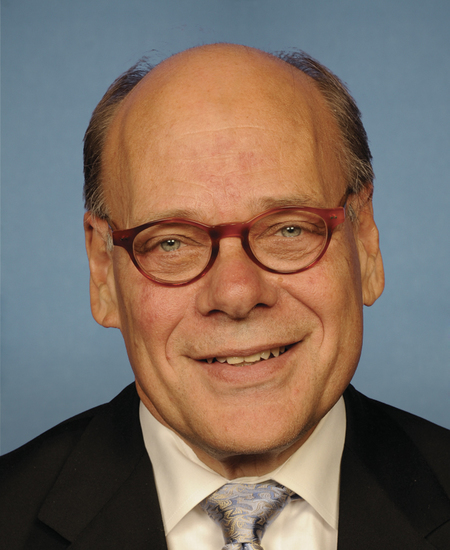
Rep. Steve Cohen
Sponsored bills
Maddy summaryHR 6393, the "DSH in Tennessee Act," permanently restores and guarantees specific federal hospital funding for Tennessee starting in fiscal year 2026. It directs the federal government to provide Tennessee with a Disproportionate Share Hospital (DSH) allotment equal to the state's 2015 level, adjusted annually for inflation based on the Consumer Price Index. This funding directly supports hospitals in Tennessee that serve large numbers of low-income patients, ensuring they receive consistent federal financial assistance. The bill treats Tennessee as a "low DSH state" for future funding calculations, establishing a permanent, inflation-adjusted funding formula.
Maddy summaryHRES 919 is a non-binding resolution commemorating World AIDS Day (December 1) and supporting global efforts to end the HIV/AIDS epidemic. It encourages achieving "zero new HIV transmissions, zero discrimination, and zero AIDS-related deaths" by 2030, promotes awareness of U=U (Undetectable=Untransmittable) treatment, and urges continued U.S. funding for HIV prevention, treatment, and research programs domestically and globally. The resolution does not create new laws but symbolically affirms support for existing initiatives like PEPFAR and the Ryan White CARE Act, while highlighting disparities affecting communities of color, transgender individuals, and people in the Southern U.S.
Maddy summaryThe Kidd's Stuttering Act requires Medicaid and CHIP to screen children aged 2-6 for stuttering and speech fluency during routine well-child visits starting January 1, 2027. It also mandates that Medicaid and CHIP cover specified speech therapy services for childhood stuttering (defined as "specified speech therapy services") with coverage rules no more restrictive than those for other speech disorders like language delays. The bill ensures these services include telehealth options and applies to all states administering Medicaid or CHIP. This directly affects children with stuttering who qualify for Medicaid or CHIP, aiming to improve early detection and access to treatment.
Maddy summaryHR 5804, the PRODUCE Act, extends and increases funding for the USDA's Office of Urban Agriculture and Innovative Production. It reauthorizes the office through 2030 (previously 2023) and doubles its annual funding from $25 million to $50 million for fiscal years 2025-2030. This bill directly affects urban communities by supporting existing programs that expand access to fresh, locally grown food through community gardens, urban farms, and innovative agricultural initiatives. The key change is the increased, long-term funding to strengthen urban agriculture efforts in cities nationwide.
Maddy summaryHR 5731, the School Food Modernization Act, provides funding to help schools upgrade facilities and equipment for healthier meal programs. It authorizes $300 million in loan guarantees (covering up to 80% of costs) and $35 million annually for grants to support kitchen renovations, equipment purchases, and food safety improvements for local schools and tribal organizations. The bill also allocates $10 million yearly to fund training programs for school food service staff, developed by third-party organizations, to meet nutrition standards. These provisions directly affect public school districts, tribal schools, and their food service operations by enabling infrastructure upgrades and staff training.
Give Kids a Chance Act of 2025 This bill expands the Food and Drug Administration’s (FDA’s) authority with respect to research on rare pediatric diseases, including by permitting the FDA to take enforcement action against drug sponsors that fail to satisfy pediatric study requirements and by reauthorizing programs that support pediatric research. Specifically, the bill modifies requirements relating to molecularly targeted pediatric cancer investigations to permit research on new drugs in combination with active ingredients that have already been approved, provided certain conditions are met; permits the FDA to take enforcement action against drug sponsors that fail to comply with pediatric study requirements, if such sponsors demonstrated a lack of due diligence in satisfying the requirement; renews the FDA’s authority to award priority review vouchers to sponsors of new products intended to treat rare pediatric diseases through September 30, 2029; and reauthorizes through FY2027 certain funding for the National Institutes of Health to support priority pediatric research. The bill also provides statutory authority for the FDA’s interpretation of the orphan drug exclusivity period. The bill specifies, consistent with FDA regulations, that the seven-year market exclusivity period for drugs for rare diseases or conditions (i.e., orphan drugs) prohibits the approval of the same drug for the same approved use or indication with respect to the disease or condition. (In Catalyst Pharmaceuticals, Inc. v. Becerra , a court rejected the FDA’s interpretation and held that orphan drug exclusivity extends to all uses or indications for the disease or condition.)
Maddy summaryThis bill prohibits federal funding for White House construction or renovations during any government shutdown (funding gap), except for projects directly related to health or safety. It directly affects White House maintenance and development projects by blocking non-essential work when Congress fails to pass a budget. The key provision bans all non-essential spending on White House grounds during budget lapses, with explicit health/safety exceptions. The bill aims to prevent new projects from starting during shutdowns without altering existing contracts or ongoing work.
Maddy summaryHR 4802, the Securing Infrastructure from Adversaries Act of 2025, bans the use of federal funds for certain foreign-made LiDAR technology in transportation projects. It prohibits the Secretary of Transportation from procuring, obtaining, or contracting for LiDAR technology from specified "covered foreign countries," "covered LiDAR companies," or "covered LiDAR technology" starting June 30, 2026. Contractors must certify they will not use banned technology, and the Secretary may grant limited waivers for national security reasons, requiring congressional notification. This directly affects transportation infrastructure projects funded by the Department of Transportation, including grants and contracts.
Maddy summaryThe FRESHER Act of 2025 requires the Secretary of the Interior to study stormwater runoff impacts from oil, gas, and mining operations on groundwater and aquifers. It mandates a specific analysis of measurable contamination, groundwater resources, and aquifer susceptibility to contamination in affected areas. The study must be completed within one year of the bill's enactment, with results reported to Congress. This bill directly affects oil, gas, and mining operations by establishing new federal study requirements for their stormwater runoff.