

Maddy summaryThis bill directs the American Battle Monuments Commission to correct historical errors by identifying Jewish World War I and II veterans buried overseas under incorrect Christian markers (Latin crosses) and replacing them with appropriate markers. It establishes a 10-year program to contact families of affected veterans, with the Commission funding the effort at $500,000 annually through nonprofit contracts. The program specifically targets veterans buried in foreign U.S. military cemeteries with markers indicating non-Jewish faith, addressing a documented mistake affecting approximately 900 Jewish servicemembers. This directly affects Jewish veterans' families by honoring their heritage and correcting past burial inaccuracies.
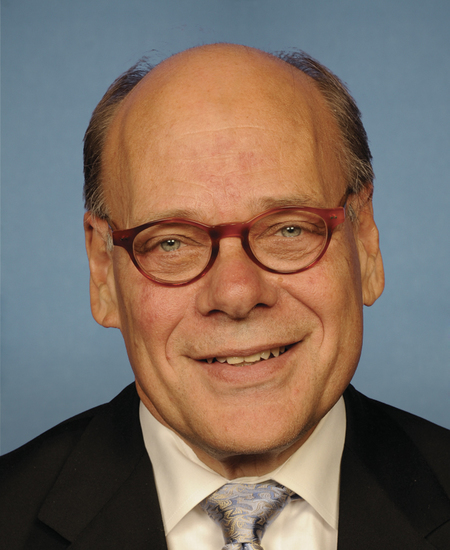
Rep. Steve Cohen
Sponsored bills
Maddy summaryThis bill removes barriers for people with past drug-related convictions to access federal assistance programs. It amends welfare law to allow states to provide Temporary Assistance for Needy Families (TANF) benefits to individuals with such convictions and prohibits states from denying Supplemental Nutrition Assistance Program (SNAP) benefits based on drug convictions. The bill also adds "incarcerated individuals scheduled for release within 30 days" to SNAP household eligibility criteria. These changes directly affect individuals with past drug convictions seeking welfare or food assistance, removing state-level restrictions that previously barred them.
Maddy summaryThis bill imposes a 20% tax on certain loans secured by assets like stocks or business property for individuals earning over $400,000 annually (or $450,000 for joint returns). The tax applies to the borrowed amount each year and is paid directly by borrowers. It specifically excludes home mortgages, home equity loans, margin loans, and farmland-secured loans. The tax targets high-value lending outside standard residential financing, with new rules taking effect after the bill's enactment.
Maddy summaryThe Freedom to Heal Act of 2025 creates a new federal registration process for physicians to directly administer Schedule I investigational drugs under the "Right to Try" framework. It requires physicians to apply to the Attorney General with evidence of state compliance, manufacturer agreements, and training, and limits the amount of drugs they may possess based on approved applications. The bill mandates the Attorney General to issue interim rules within 240 days and final rules within two years covering drug delivery, storage, recordkeeping, and registration management. This affects physicians treating eligible patients with Schedule I drugs under federal Right to Try provisions, not the patients themselves.
Maddy summaryThis bill establishes a National Center for Advanced Development in Education within the Institute to advance teaching and learning through research on effective practices, technology, and community-informed approaches. The Center will focus on developing innovative teaching methods, addressing achievement gaps, and promoting research on learning and development across all education levels from early childhood through adult education. It authorizes $500 million annually for 2026-2030 to support research, development, and improved statewide longitudinal data systems that connect educational data from early childhood through workforce outcomes while protecting student privacy. The bill also requires states to enhance their data systems to better track student progress and outcomes, with the goal of improving educational opportunities and closing achievement gaps.
Maddy summaryThis bill (HR 6469) requires the U.S. State Department, in coordination with the FCC and Treasury, to submit a report within 120 days of enactment assessing internet access options in Iran. The report must evaluate the feasibility of using direct-to-cell wireless technology to expand internet access there, including technical, security, and regulatory considerations. It also analyzes how drone-based systems and signal jamming could affect such technology, surveys Iranian telecom providers (including state ownership and foreign investment), and examines broader implications for communications freedom. The bill does not enact new policy but mandates a government review of potential technological solutions.
Maddy summaryHR 6423, the HELP Copays Act, requires health insurance plans and coverage to count financial assistance from non-profits or drug manufacturers toward patient cost-sharing limits like deductibles and copayments. This directly affects patients enrolled in health insurance who receive such assistance for prescription drugs, ensuring the help they get reduces their out-of-pocket costs faster. The bill amends key health laws to mandate that these payments are included when calculating whether a patient has met their deductible or copayment threshold. The change applies to all prescription drugs, including specialty drugs and those subject to prior authorization, but does not alter how insurers manage drug access through tools like step therapy. It takes effect for plan years starting in 2026.
Maddy summaryThe Dignity for Detained Immigrants Act establishes minimum standards for detention facilities operated by the Department of Homeland Security, requiring them to follow the American Bar Association's Civil Immigration Detention Standards. It mandates annual unannounced inspections by the DHS Inspector General, with penalties including fines for noncompliant private facilities and transfers of detainees from noncompliant facilities. The bill requires DHS to publicly report on facility compliance, phase out private detention facilities over three years, and prohibit solitary confinement. It also ensures detainees have access to legal orientation, counsel, and more frequent custody review hearings. The bill directly affects all individuals detained in DHS custody, including immigrants, asylum seekers, and refugees held in facilities operated by or contracted to DHS.
Maddy summaryThis bill creates several tax credits to increase housing affordability for individuals and families. It establishes a first-time homebuyer credit of up to $25,000 (or $50,000 for first-generation homebuyers) for purchasing a principal residence, with income limits based on household size. It also creates a starter home construction credit for building homes under 1,200 square feet priced below 80% of local median home prices, and a renter tax credit for tenants paying more than 30% of their income in rent. Additionally, it provides a credit for converting non-residential buildings to affordable housing that meets specific income and rent restrictions. The bill includes provisions for inflation adjustments and reporting requirements for these tax credits.
Maddy summaryThe "No Robot Bosses Act" (HR 6371) prevents employers from making final employment decisions (like hiring, firing, or promotions) using automated systems without human oversight. It requires companies with 11+ employees to test these systems for bias against protected groups, explain how they work in plain language to workers, and provide opportunities for workers to dispute automated decisions through human review. The bill creates a new Technology and Worker Protection Division within the Department of Labor to enforce these rules and requires annual public reports on bias testing. It also includes strong whistleblower protections for workers who report violations. The law applies to most employers but excludes certain government entities and labor organizations acting in their representative capacity.