

Maddy summaryHRES 180 is a non-binding House resolution supporting the designation of March 2025 as National Colorectal Cancer Awareness Month. It does not create new laws or funding but encourages public awareness and educational activities about colorectal cancer prevention, screening, and early detection. The resolution highlights that colorectal cancer is the second leading cause of cancer deaths in the U.S. and that regular screening could prevent up to 60% of related deaths. It urges the public and healthcare organizations to observe the month with educational efforts to address low screening rates among adults over 50. This resolution has no direct legal effect but aligns with annual awareness campaigns.
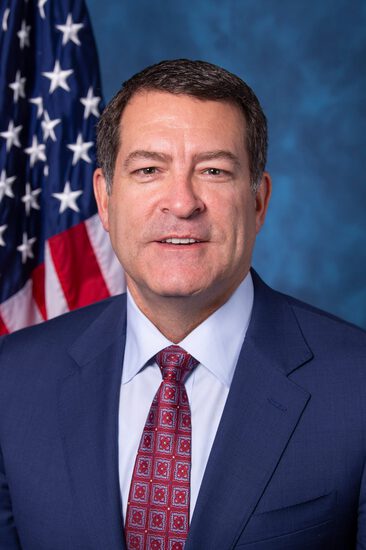
Rep. Mark E. Green
Sponsored bills
Maddy summaryHR 1787 authorizes the U.S. Mint to produce commemorative coins honoring baseball legend Roberto Clemente, including $5 gold, $1 silver, and half-dollar coins, with specific specifications for weight, size, and metal content. The bill requires the coins to feature Clemente's image and commemorative inscriptions, and mandates a surcharge ($35 for gold, $10 for silver, $5 for half-dollar) paid to the Roberto Clemente Foundation for its educational, youth sports, and disaster relief programs. All coins must be minted in 2027, sold at face value plus surcharge and production costs, and will be legal tender. The bill focuses solely on the coin program, not broader policy changes.
Federal Firearms Licensee Protection Act of 2025 This bill modifies criminal penalties for an offense involving the theft of a firearm from a licensed importer, manufacturer, or dealer, or from their business premises. Specifically, the bill does the following: increases from 10 to 20 years the maximum prison term, and creates a 3- or 5-year mandatory minimum prison term for an offense that occurs during the commission of a burglary or robbery. An attempt to commit an offense is subject to the same penalties as a substantive offense.
Maddy summaryHR 1690, the SCREEN Act, requires U.S. film companies receiving technical support or funding from the State Department to disclose any past submissions of film content to Chinese authorities for screening approval. Companies must list affected films (titles and submission dates) and agree in writing not to alter content in response to Chinese requests. The bill prohibits federal funding for films co-produced with Chinese entities under content conditions or for films where content was changed due to Chinese input. The State Department must submit annual reports to Congress detailing these disclosures and any content alterations related to Chinese requests.
Maddy summaryHRES 166 is a non-binding House resolution expressing U.S. support for the Iranian people's desire for a democratic, secular, and nonnuclear republic. It condemns the Iranian regime's terrorism, regional proxy wars, internal suppression of ethnic and religious minorities, and human rights abuses - including executions and repression of women-led protests. The resolution calls for holding the regime accountable through sanctions, supports the Ten-Point Plan for Iran’s democratic transition, and urges protection for Iranian political refugees in Albania. It does not create new laws but affirms U.S. policy alignment with Iranian protesters' demands.
Protecting Life from Chemical Abortions Act This bill nullifies certain changes made by the Food and Drug Administration (FDA) to dispensing requirements for mifepristone. (Mifepristone is a drug that is approved to end pregnancies through 10 weeks gestation when used in conjunction with the drug misoprostol. The procedure is often referred to as medication abortion or the abortion pill.) The FDA regulates mifepristone through the Mifepristone Risk Evaluation and Mitigation Strategy (REMS) program. The program requires health care providers to comply with certain requirements in order to prescribe or dispense mifepristone to end a pregnancy; the program previously included an in-person dispensing requirement that required mifepristone to be directly dispensed to patients in clinics, medical offices, or hospitals. During the COVID-19 public health emergency, the FDA stopped enforcing the in-person dispensing requirement, which allowed mail-order pharmacies to fill and dispense mifepristone prescriptions. In January 2023, the FDA modified program requirements so as to (1) remove the in-person dispensing requirement, and (2) require pharmacies to be program-certified in order to dispense mifepristone. The modifications allow certified retail pharmacies to dispense mifepristone pursuant to prescriptions that are written by certified prescribers. The bill nullifies the January 2023 changes and prohibits the FDA from (1) exercising any enforcement discretion with respect to program requirements, or (2) reducing program protections until every state submits certain data regarding abortions to the Centers for Disease Control and Prevention. The bill also generally prohibits the declaration of a public health emergency with respect to abortions.
Maddy summaryThis bill prohibits U.S. government funds from being used to support organizations (both foreign and domestic) that provide, promote, or fund abortion services abroad, including referrals, counseling, or training related to abortions. It directly affects foreign NGOs, multilateral organizations, and domestic groups receiving U.S. aid if they perform or support such activities, even within programs funded by the U.S. government. The restriction includes all forms of financial support and co-location of abortion services with other funded programs, with exceptions only for abortions resulting from rape or incest, or when the mother's life is endangered. This policy change alters how U.S. foreign aid is allocated to ensure funds do not support abortion-related services.
Maddy summaryThis bill amends the Food and Nutrition Act of 2008 to clarify that households must meet existing income and resource criteria to receive food assistance benefits. It directly affects households applying for or receiving SNAP (Supplemental Nutrition Assistance Program) benefits under the Food and Nutrition Act. The key provision explicitly states that eligibility requires compliance with current income and asset standards, reinforcing existing rules rather than creating new restrictions. The amendment takes effect one year after enactment, with existing benefit certifications unaffected if they began before that date.
Maddy summaryHR 1301, the Death Tax Repeal Act, would eliminate the federal estate tax and generation-skipping transfer tax for estates of individuals dying on or after its enactment date. It directly affects individuals inheriting significant assets, as it removes taxes on estates exceeding $10 million (adjusted for inflation) and repeals taxes on large transfers between generations. The bill modifies the gift tax by establishing a $10 million lifetime exemption with annual inflation adjustments, replacing previous tax brackets. It applies to estates, gifts, and transfers occurring on or after the bill's effective date.
Maddy summaryHR 1309, the "Protect America’s Lands Act," prohibits national securities exchanges from processing transactions involving securities issued by "natural asset companies." These are defined as companies that hold rights to manage specific land areas for conservation, restoration, or sustainable use, with the primary purpose of maintaining or growing natural assets and ecosystem services. The bill directly affects financial markets by restricting how securities tied to environmental land management are traded, not landowners or conservation efforts. It amends the Securities Exchange Act of 1934 to create this new regulatory barrier for such financial instruments. The bill focuses on securities regulation, not direct land protection or policy changes for land use.