

Maddy summaryThe FOCA Act of 2025 prohibits federal agencies from requiring or banning contractors from using union agreements in construction project bids or contracts. It directly affects federal agencies, contractors, and subcontractors working on federally funded or assisted construction projects (like buildings or infrastructure). The law requires bid documents to not favor or penalize contractors based on whether they have union agreements, aiming to promote open competition and prevent discrimination. This changes how agencies structure bids but does not affect union agreements themselves. The bill applies to all new contracts and subcontracts after enactment, with limited exemptions only for public health/safety emergencies or national security.
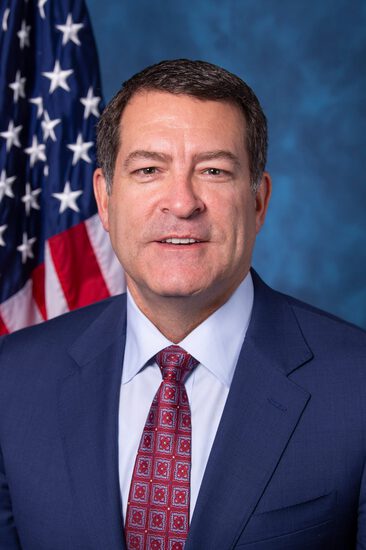
Rep. Mark E. Green
Sponsored bills
Maddy summaryHR 2052 requires the President to submit annual reports to Congress assessing the Houthis' military capabilities, their attacks on international shipping in the Red Sea and Gulf of Aden, and violations of the UN arms embargo against Yemen. These reports must detail Houthi funding sources (including Iran), weapons systems, economic impacts, and Iran's role in supporting attacks. The bill also authorizes sanctions against foreign individuals or entities that support Houthi attacks on shipping or provide military aid, including asset blocking and visa denials. The sanctions apply to those responsible for or complicit in such attacks, with limited waiver options for national security. The bill's reporting and sanction requirements expire five years after enactment.
Maddy summaryHR 2050, the Homeland Heroes Pay Act, ensures that U.S. Customs and Border Protection (CBP) agents and Immigration and Customs Enforcement (ICE) officers continue receiving pay during federal budget gaps. It directly affects CBP agents working at Southwest, Northern, and maritime border ports (preventing terrorism, drug trafficking, and illegal entry) and ICE officers handling immigration enforcement (detaining/removing individuals) and criminal investigations (drug trafficking, human smuggling). The bill automatically funds their salaries and expenses using existing Treasury money if discretionary appropriations lapse after the bill passes. This prevents pay interruptions for these frontline personnel during budget shutdowns while they perform critical border security and enforcement duties.
Maddy summaryThis bill ensures Coast Guard personnel and contractors continue receiving pay during Coast Guard-specific funding gaps. If the Coast Guard's annual appropriations bill isn't enacted before the fiscal year begins (without a continuing resolution), the bill automatically provides funds for military members (including reservists on active duty), civilian employees supporting operations, and qualifying contractors. It prevents furloughs for these groups during such gaps without requiring new legislation. The bill applies only to Coast Guard-specific funding lapses, not general government shutdowns.
Maddy summaryThis bill prohibits federal funding, support, or approval for research using human fetal tissue obtained from induced abortions. It allows research on tissue from miscarriages (under 20 weeks) or stillbirths (20+ weeks) under existing Public Health Service Act rules, and permits development of new cell lines for vaccines or genetic vectors if not derived from abortion tissue. The bill amends the Public Health Service Act to restrict federal research to tissue from miscarriages or stillbirths and clarifies definitions for terms like "miscarriage" and "stillbirth." It directly affects federal agencies like the NIH and researchers relying on federal grants for biomedical studies.
Maddy summaryHR 1166 prohibits the Department of Homeland Security (DHS) from using funds to buy batteries produced by specific Chinese companies, including CATL, BYD, and others listed in the bill, starting October 1, 2027. It directly affects DHS procurement for all its agencies, such as U.S. Customs and Border Protection, Immigration and Customs Enforcement, and the Transportation Security Administration. The bill defines "produced by" to include entities assembling final products or supplying most components of the batteries. DHS may waive the ban for national security reasons or research, but must report on cost and mission impacts within 180 days of enactment.
Maddy summaryThis bill requires the Department of Homeland Security (DHS) to create a new department-wide policy and process to protect sensitive research and development projects from unauthorized access or disclosure during acquisitions. It directly affects DHS research programs by mandating specific security safeguards for their work. Key provisions include requiring DHS to develop this policy within one year, submit a GAO report on compliance with existing national security guidelines (NSPM-33), and provide a congressional briefing on implementing the new security framework. The bill focuses on establishing concrete security protocols for DHS research, not on funding or broader policy changes.
Maddy summaryHR 708, the SHIELD Against CCP Act, establishes a DHS working group to coordinate efforts against security threats posed by the Chinese Communist Party. The working group examines DHS programs targeting terrorism, cyber threats, border security, and transportation security, specifically focusing on the CCP's nontraditional tactics (like identity theft and visa exploitation), predatory economic practices, fentanyl trafficking, and illicit financial activity. It requires annual reports to Congress on these threats, identifies gaps in current responses, and ensures privacy compliance and coordination with federal and local partners. The working group expires seven years after its creation.
Maddy summaryHRES 205 is a resolution condemning Cuba's labor export program for medical personnel, which the U.S. State Department identifies as involving forced labor and human trafficking. It cites a 2024 State Department report stating Cuba profits $6-8 billion annually by withholding workers' wages, confiscating passports, and restricting their movements. The resolution urges foreign governments to pay Cuban medical workers directly (bypassing Cuba) and calls for U.S. visa restrictions against officials from Cuba, Brazil, and other nations involved in the program. It does not create new law but expresses the House's position based on U.S. government findings.
Maddy summaryThis resolution formally censures Representative Al Green (D-TX) for disrupting President Trump's address during a joint session of Congress on March 4, 2025. It requires him to appear in the House chamber for the public reading of the censure resolution, which states his actions violated decorum rules and brought disrepute to Congress. As a procedural resolution, it does not enact policy changes but serves as a formal reprimand for conduct during a congressional session.